“I was happy when I walked the streets of Paris by myself.”

Featured

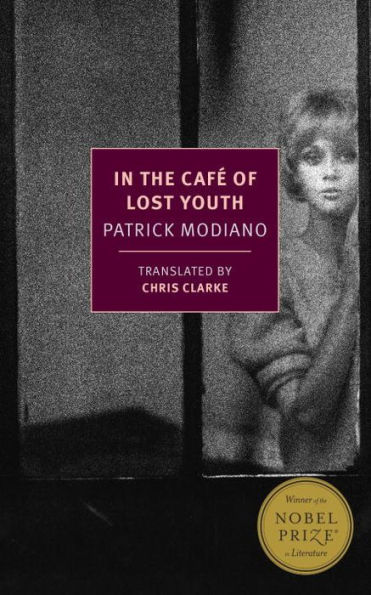
On Wednesday, 18 February, 2026, Another Look will present Nobel prizewinning Patrick Modiano’s 2007 novella, In the Café of Lost Youth (New York Review Books). The event will take place, as always, at 7 p.m. at Levinthal Hall, 424 Santa Teresa Street on the Stanford campus.
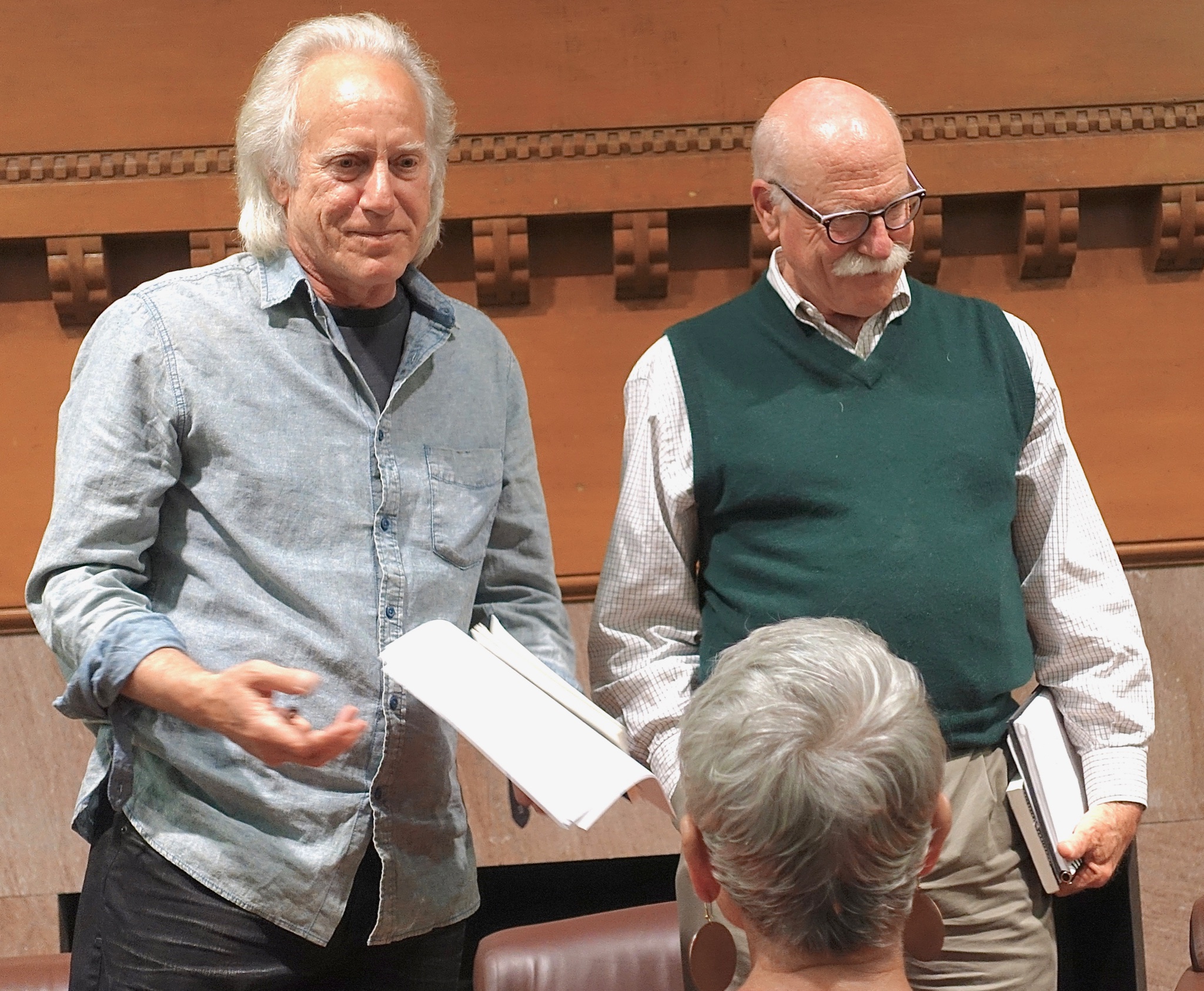
Panelists will include Stanford Prof. Robert Pogue Harrison, author, director of Another Look, host of the radio talk show and podcast series Entitled Opinions, and a regular contributor to The New York Review of Books, and Stanford Prof. Tobias Wolff, one of America’s leading writers and the founding director of Another Look, as well as a recipient of the National Medal of Arts. 

They will be joined by Chloe Edmondson, a lecturer in Stanford’s Department of French and Italian. She is the France-Stanford Center Fellow for the Roxane Debuisson Collection on Paris History. You will remember her from our event Madame de LaFayette’s The Princesse de Clèves in 2019. Actor, director, classicist, Stanford Prof. Rush Rehmwill round out the panel. (You will remember Rush from our 2016 event on Joseph Conrad’s The Shadow-Line: A Confession.)

The Nobel announcement recognized Modiano’s “consistent exploration of memory and the elusive nature of personal history, often set against the backdrop of occupied Paris.”
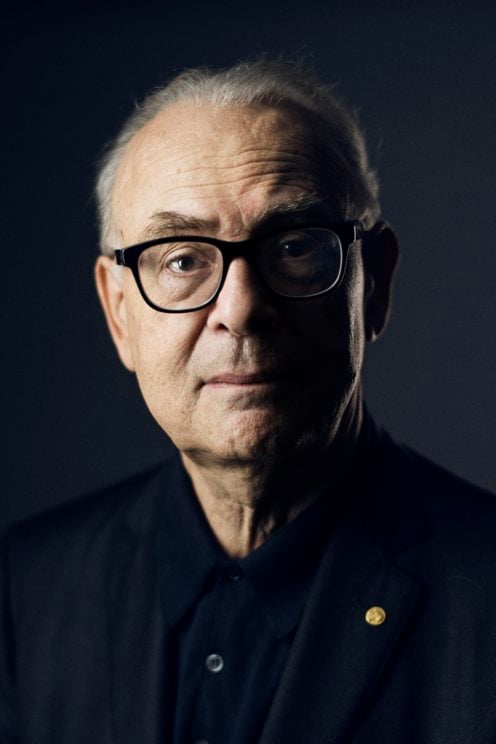
He has been praised for his “subtle, clear style and his ability to bring anonymous lives to light, making him a modern-day Proust in the eyes of some.”

According to World Literature Today, “Modiano’s fictional world is not postapocalyptic, like the fictional worlds of Beckett, but postrelational . . . a world where familiar patterns, whether placed in memory, neighborhoods, or situations, are dispersed and left to languish on the wind.”

Meanwhile, Another Look has done a Q&A interview with Modiano’s translator, Chris Clarke. You can read: “No one saw the Nobel coming”: A Q&A with Modiano’s translator on the Another Look website.

You can register for the event on the link below – and please share the link (and the poster and event square we’ve attached) with your friends:

https://stanford.zoom.us/webinar/register/WN_-03yUMbsSWWwJdijPIQg3w#/registration

Bonus reading: 

Nobel lecture:
https://www.nobelprize.org/prizes/literature/2014/modiano/lecture/

Nobel Award speech:
https://www.nobelprize.org/prizes/literature/2014/ceremony-speech/

In the Café of Lost Youth is on order at Kepler’s and should arrive shortly. Call 650-324-4321 to reserve a copy.

“We will become masters of the world!”

Featured

Please join us at 7 P.M. (PST) on Thursday, April 17, when Another Look presents Dino Buzzati’s 1960 The Singularity. The hybrid event will take place in Levinthal Hall at the Stanford Humanities Center at 424 Santa Teresa Street on the Stanford campus.

The Singularity, originally published in 1960, probes some of the deeper human questions surrounding artificial intelligence. It was republished last year in a new translation from the Italian by Anne Milano Appel for New York Review Books.

Will Dunn, writing in The New Statesman, called it “a stylish, compelling little mystery” that, although more than six decades old, “predicts … with unsettling accuracy. Its characters are confronted by the presumptuous arrogance of men whose brilliance in engineering disguises how morally and emotionally incapable they are.”

Kevin Brockmeier, writing in Electric Literature, called Buzzati “one of the great literary practitioners of the dark marvelous … one corner iin the triangle of indispensable twentieth-century Italian fantasists, along with Italo Calvino and Tommaso Landolfi.

Panelists will include Stanford Italian Prof. Robert Pogue Harrison, author, director of Another Look, host of the radio talk show and podcast series Entitled Opinions, and a regular contributor to The New York Review of Books, and Stanford Prof. Tobias Wolff, one of America’s leading writers and the founding director of Another Look, as well as a recipient of the National Medal of Arts.

We have two guest panelists as well:

Stanford Associate Prof. Laura Wittman, is a specialist in modern Italian literature. Some of you will remember her from our 2018 event on William Henry Hudson’s Green Mansions.

Bryan Cheong received his Bachelor of Science from Stanford University with a degree in applied and computational mathematics before receiving a Masters in Materials Science, also from Stanford. For the past few years he’s been working in the high-tech sector of Silicon Valley.

Register for the event here:

https://stanford.zoom.us/webinar/register/WN_3FhvEX50TvmwwLc_ou0uag


While walk-ins are always welcome, we encourage registration for both zoom and in-person attendance.

Kepler’s in Menlo Park will be carrying the book for us – you get a 15% discount at the register.

Buzzati was also a painter and journalist.

Another Look celebrates its 10th anniversary with Wescott’s Pilgrim Hawk and a high-spirited conversation!

Featured

Another Look director Robert Pogue Harrison introducing the event. (All photos by David Schwartz)

Another Look celebrated its tenth anniversary with another remarkable and too-little-known masterpiece: Glenway Wescott‘s 1940 novella The Pilgrim Hawk: A Love Story (NYRB Classics). And what a lively celebration it was! The Wednesday, October 5, conversation was spirited, controversial, and occasionally downright rowdy.

The panelists: Steve Wasserman, former book editor at the Los Angeles Times Book Review and editor at large for the Yale University Press, and now publisher of Heyday Books in Berkeley; Stanford Prof. Robert Pogue Harrison, author, director of Another Look, host of the radio talk show and podcast series Entitled Opinions, and a regular contributor to the New York Review of Books; Stanford Prof. Tobias Wolff, one of America’s leading writers, is the founding director of Another Look and a recipient of the National Medal of Arts; and author Cynthia L. Haven, a National Endowment for the Humanities public scholar.

You can view the video version of The Pilgrim Hawk: A Love Story here – or listen to the podcast here.

The occasion also marked our return to our long-ago beginnings. We held our inaugural event at Levinthal Hall in the Stanford Humanities Center for William Maxwell’s So Long See You Tomorrow in 2011. We outgrew that friendly and intimate setting seven years ago, on June 1, 2015. The occasion? Another Look took on Albert Camus‘s The Stranger.

On that astonishing evening, we filled the hall to the bursting point, with Another Look friends sitting on the floor and crowding the doorways. The size of the event had surprised even us, and necessitated a move to the more spacious Bechtel Conference Center in Encina Hall. Now we’re changing venues again. COVID inaugurated the era of zoom: now Another Look offers hybrid events – a virtual presence for those who live across the country, world, or who, for other reasons, have to stay close to home, along with our traditional in-person events, where you can chat with the panelists and enjoy the energy of a lively literary discussion.

The reason for the crowd that June night in 2015: Another Look’s founding director Tobias Wolff had just announced his retirement, and it looked like that would be the end of Another Look. But it was also the night Prof. Robert Pogue Harrison, who was in the audience that night (some will remember his spirited exchange with Toby on The Stranger), stepped forward to fill Toby’s shoes. Now the two directors team up on the panel for most of our events – and what a great duo they are! Thanks to our night with Camus, we continued a full decade of events for a program that is perhaps unique in the nation – including the most recent presentation of Glenway Wescott’s brilliant novella.

The Pilgrim Hawk: A Love Story traces a single afternoon in a French country house during the 1920s. Alwyn Tower, an American expatriate and sometime novelist, is staying with a friend outside Paris when a well-heeled Irish couple drops in — with Lucy, their tamed hawk, a restless, disturbing presence. The story that unfolds is both harrowing and farcical. Novelist Michael Cunningham in his introduction calls the book “murderously precise and succinct.” 

A bonus: NYRB publisher Edwin Frank, a former Stegner fellow at Stanford and a longtime supporter of Another Look, contributed to our fête with an interview about The Pilgrim Hawk: A Love Story. The Q&A “Subtlety and ferocity, despair, and some genuine camp” is here.

Photos below taken by Another Look photographer David Schwartz, working virtually from home. Thanks, David! This Another Look also marks another transition: Roger Winkelman, who did a heroic job film and recording our events at Bechtel and became a treasured member of the Another Look family, has retired and moved to New York. His colleague. Robert Edgar, has taken up the challenge of guiding Another Look into its second decade. Welcome, Bob!

Another Look’s 10th Anniversary pick: Glenway Wescott’s The Pilgrim Hawk: A Love Story on Wednesday, October 5!

Featured

Another Look was launched in November 2012, with William Maxwell’So Long See You TomorrowNow we celebrate our tenth anniversary with another wonderful and too-little-known book, Glenway Wescott‘s 1940 novella The Pilgrim Hawk: A Love Story (NYRB Classics)The event will take place at 7 p.m. on Wednesday, October 5, at Levinthal Hall in the Stanford Humanities Center, 424 Santa Teresa Street, on the Stanford campus. The event will also be livestreamed. Come celebrate our tenth with us! 

Registration is encouraged, but walk-ins are always welcome. Register here.

The Book

The Pilgrim Hawk: A Love Story traces a single afternoon in a French country house during the 1920s. Alwyn Tower, an American expatriate and sometime novelist, is staying with a friend outside Paris when a well-heeled Irish couple drops in — with Lucy, their trained hawk, a restless, sullen, disturbingly totemic presence. Lunch is prepared, drink flows, and the story that unfolds is both harrowing and farcical.

Novelist Michael Cunningham in his introduction calls the book “murderously precise and succinct.” Critic and author Susan Sontag said, “The ever-astonishing Pilgrim Hawk belongs, in my view, among the treasures of twentieth-century literature, however untypical are its sleek, subtle vocabulary, the density of its attention to character, its fastidious pessimism, and the clipped worldliness of its point of view.”


The Panelists

The panelists will include a special guest, Steve Wasserman, former book editor at the Los Angeles Times Book Review and editor at large for the Yale University Press, and now publisher of Heyday Books in Berkeley. Other panelists will include: Stanford Prof. Robert Pogue Harrison, author, director of Another Look, host of the radio talk show and podcast series Entitled Opinions, and a regular contributor to the New York Review of Books; Stanford Prof. Tobias Wolff, one of America’s leading writers, a founding director of Another Look, and a recipient of the National Medal of Arts. Author Cynthia L. Haven, a National Endowment for the Humanities public scholar, will round out the panel.


The Venue

Some of you may remember that Levinthal Hall is where Another Look began a decade ago. You’re right! Our audience attendance outgrew that venue in 2015, and we moved to a larger space. However, now we are offering virtual as well as in-person attendance, which allows us to return to our former home. We will announce how to register for the virtual event in our next email, as we are still finalizing arrangements.

Parking

Metered parking spaces are available along Santa Teresa Street. Parking is free after 4 p.m. Free parking is also available on the lot adjacent to the Stanford Humanities Center after 4 p.m.

How to get the book

Books are available at Kepler’s Books in Menlo Park (650-324-4321) and Books Inc at Town & Country in Palo Alto (650-321-0600). We’d recommend calling first to make sure a book is waiting for you. Books are also available at Amazon and at Abebooks. If all else fails, you can order directly from the publisher here.

Our October 5 event is sponsored by Stanford Continuing Studies, the Stanford Humanities Center, and the Division of Literatures, Cultures, and Languages.

A triumph for Sándor Márai’s little-known classic Embers

If you felt a slight tremor in the earth on Wednesday, October 18, the epicenter was at Stanford’s Encina Hall. The Another Look book club took on Sándor Márai‘s Embers – and the whole room rocked!

The event was close to a record-breaker, with about two hundred participants – not bad for an off-the-beaten track Hungarian novel (and only equaled by Zora Neale Hurston‘s Their Eyes Were Watching God).

Sándor Márai’s taut and mesmerizing novel, published in 1942, opens in a secluded Hungarian castle, where an old general awaits a reunion with a friend. It is 1940, and he has not appeared in public for decades. The long-estranged companions talk all night – or rather, the general talks, as the evasive visitor listens to the general discuss love, intimacy, honor, betrayal, and a beautiful, long-dead wife.

The novel is set against the backdrop of the disintegrated Austro-Hungarian empire, and shares the melancholy wisdom of its narrator: “We not only act, talk, think, dream, we also hold our silence about something. All our lives we are silent about who we are, which only we know, and about which we can speak to no one. Yet we know that who we are and what we cannot speak about constitutes the ‘truth.’ We are that about which we hold our silence.”

Acclaimed author Robert Pogue Harrison moderated the discussion. The Stanford professor who is Another Look’s director writes regularly for The New York Review of Books and hosts the popular talk show, Entitled Opinions. He was joined by renowned author and National Medal of Arts winner Tobias Wolff, professor emeritus of English at Stanford, and Jane Shaw, Stanford’s Dean for Religious Life at Stanford.

Toby Wolff, Another Look’s founding director, opened by praising the courage of author Márai to sit down and create a remarkable novel about an all-night conversation – two men meet, but only one of them talks, and they persevere till dawn. The end. A daunting creative challenge that Márai pulls off magnificently.

We were happy to see a lively Hungarian contingent in the audience, too – including the Hungarian Consul General for the Bay Area. And boy, did the Hungarians have a different take on the book – they praised Carol Brown Janeway‘s translation, but said that the richness of their native tongue is AWOL. And while Márai is little known west of the Danube, they assured us his books are everywhere in Budapest.

The podcast is here. And all photos, as always, are by by loyal Another Look aficionado David Schwartz.

From Another Look’s new director, Robert Pogue Harrison

When I attended the last meeting of Another Look this past spring, I knew that no one had offered to take over for Tobias. Seeing the crush of people at Levinthal Hall fifteen minutes before starting time, with standing room only, eager to hear a discussion of Albert Camus’s The Stranger, I realized how much this book series means to people at Stanford and in the surrounding community. I felt it would be a real shame to let it let it die, so I offered to take over the directorship from Tobias.  We worked things out with Continuing Studies, which has generously agreed to sponsor the series’ continuation – and here we are, ready to go.
.
I read A Month in the Country about ten years ago and was enchanted by its style, landscapes, and themes. If any book fits the bill of Another Look – namely, a short novel from the past that richly deserves another look – it is Carr’s gem of a narrative, which takes on all sorts of different sorts of hues, depending on how you view it.
.