Book clubs have proliferated across the United States, though most stick to middle-of-the-road bestsellers. Once in a while, however, you run across an off-the-beaten-track book you may not know about, praised by a leading literary figure. Where do you go to talk about this unfamiliar, top-notch fare?
Look no further. Stanford is allowing readers to get an insider’s look at literature via a seasonal book club, “Another Look,” which will be offered by one of the top-ranked English and creative writing departments in the nation.
“Another Look” is the brainchild of award-winning writer Tobias Wolff, a Stanford professor of English, who will kick off the unconventional book club with William Maxwell‘s 144-page novel So Long, See You Tomorrow.
Interested readers are invited to a discussion of the book at 7:30 p.m. Monday, Nov. 12, in the Levinthal Room of the Stanford Humanities Center. The event is free. Wolff will talk about the book with Bay Area novelist, journalist and editor Vendela Vida and Stanford Assistant Professor Vaughn Rasberry, to be followed by an audience discussion.
For Wolff, “Another Look” started in a conversation with colleagues: “We had occasionally held lunchtime discussions of a story or novel or poem for interested students and members of the department, and these had proved popular. Well, why not open our arms a little farther and invite the university community to participate; or, better yet, open our arms out wide to the community at large?”
Said Wolff, “Each of the faculty members are choosing books that really matter to them, and that they feel have not earned the readership they deserve.”
The books will be on the short side as well. “We recognize that the Bay Area is a busy place – and we recognize that people have limited resources of time. We don’t want to suggest books of discouraging length,” said Wolff.
So Long, See You Tomorrow was originally published in two parts in TheNew Yorker in 1979. The book, set in rural Illinois, describes the effects of a murder on the friendship of two boys – one of whom, in old age, narrates the story. Wolff called it “a beautifully written, complex, haunting story of a boy’s attempt to find warmth and companionship following the death of his mother in the Spanish Influenza epidemic – which killed more people than the Great War it so quickly followed.”
Maxwell and friend: Brookie Maxwell
He called it “a cry from the heart that, once heard, cannot be forgotten.”
“It’s been a project of mine since 1980 to make people read that book. Whenever I sit down with people to talk about books I love, I always make sure that I mention that one. I give it to people as a gift,” he said. “This is my attempt to give this novel to the whole Bay Area as a gift.”
Wolff hopes to encourage a rich community discussion of the book on Nov. 12. “The conversation will be much richer if people have read and thought about the book first,” he said.
“The book club offers a wonderful opportunity for the writers and scholars of the English Department and the Creative Writing Program to introduce these neglected classics to a broader audience,” said Gavin Jones, chair of the English Department. “I’m excited at this opportunity to continue our literary conversations beyond the classroom.”
For the second event in February, poet Kenneth Fields will present Janet Lewis’ 1941 TheWife of Martin Guerre, a 109-page novel. The name might ring a bell with some Bay Area readers: Poet Janet Lewis was also the wife of Stanford’s eminent poet-critic Yvor Winters.
On Lewis’ death in 1998, the New York Times wrote: “There are many who will assure you that when the literary history of the second millennium is written … in the category of dazzling American short fiction her Wife of Martin Guerre will be regarded as the 20th century’s Billy Budd and Janet Lewis will be ranked with Herman Melville.”
Although the Nov. 12 event is free, seating is limited. Reservations on the website anotherlook.stanford.edu are encouraged, or phone (650) 723-0011. The website includes Wolff’s introductory remarks, as well as Cynthia Haven’s retrospective on Maxwell’s life, with interviews of his colleagues and daughter.
Cynthia Haven is the director of communications for the English Department and its Creative Writing Program.
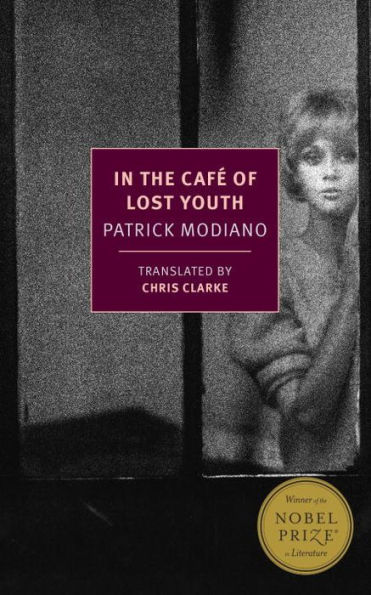
On Wednesday, 18 February, 2026, Another Look will present Nobel prizewinning Patrick Modiano’s 2007 novella, In the Café of Lost Youth(New York Review Books). The event will take place, as always, at 7 p.m. at Levinthal Hall, 424 Santa Teresa Street on the Stanford campus.
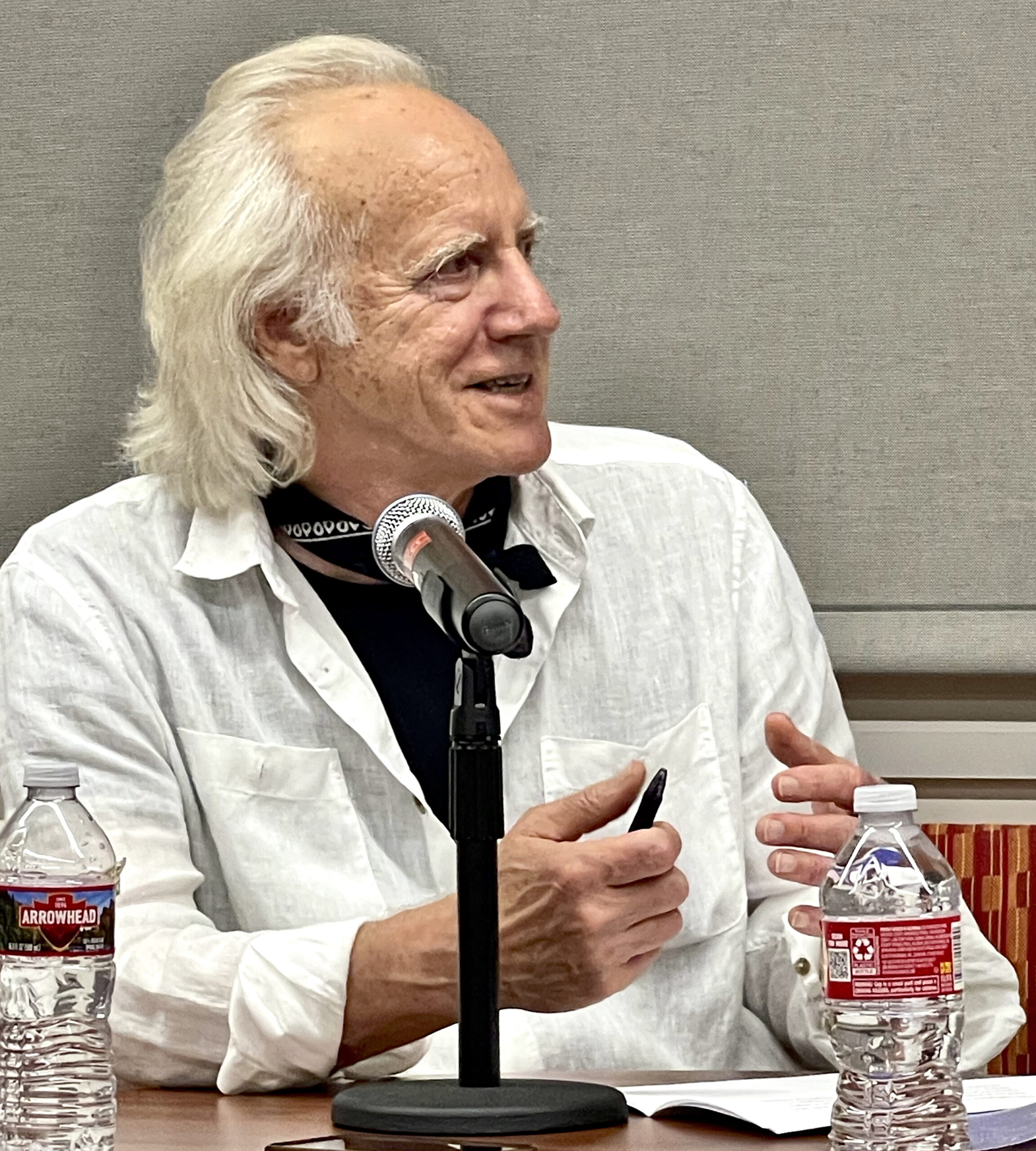
Panelists will include Stanford Prof. Robert Pogue Harrison, author, director of Another Look, host of the radio talk show and podcast series Entitled Opinions, and a regular contributor to The New York Review of Books, and Stanford Prof. Tobias Wolff, one of America’s leading writers and the founding director of Another Look, as well as a recipient of the National Medal of Arts.
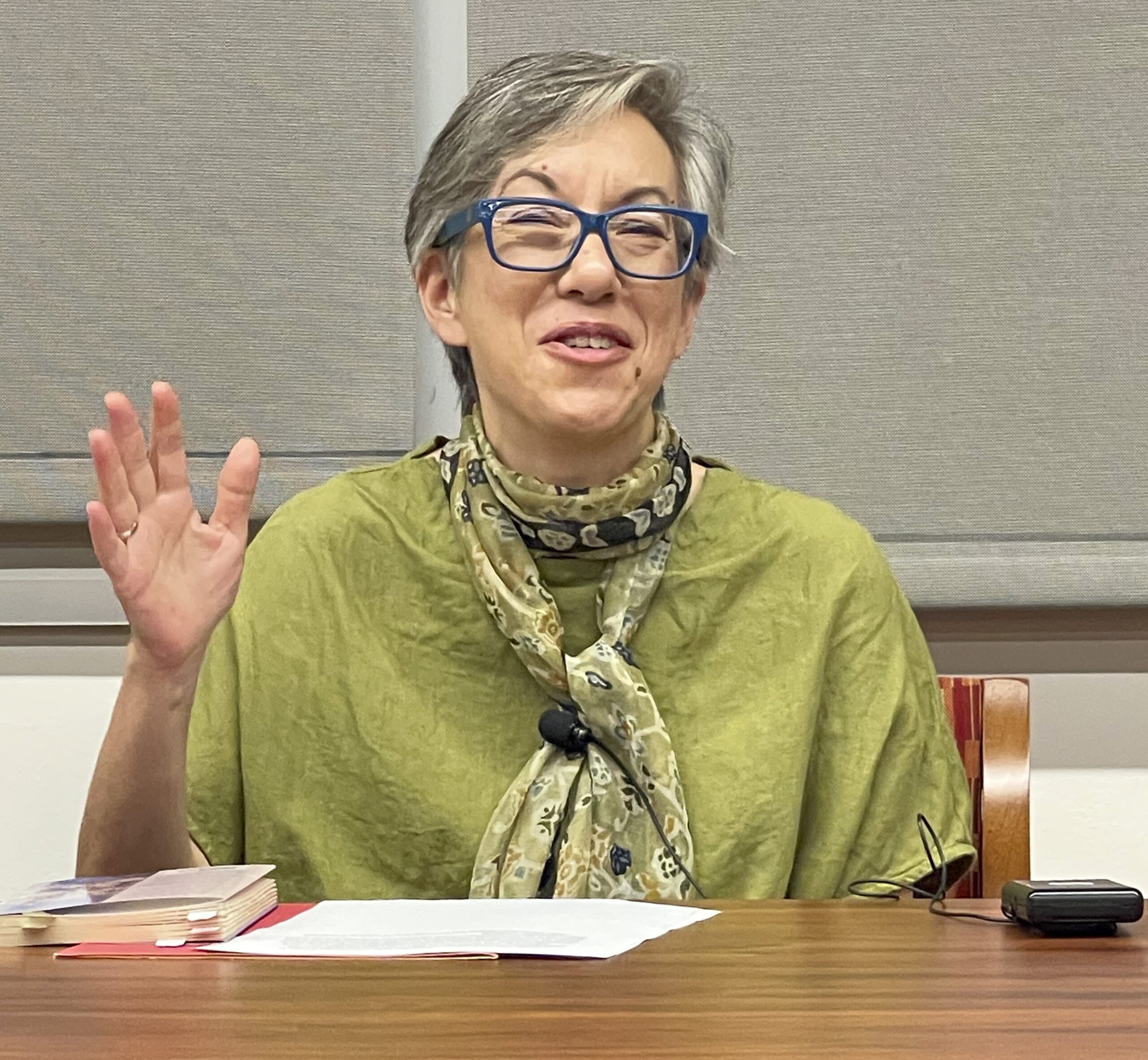
They will be joined by Chloe Edmondson, a lecturer in Stanford’s Department of French and Italian. She is the France-Stanford Center Fellow for the Roxane Debuisson Collection on Paris History. You will remember her from our event Madame de LaFayette’s The Princesse de Clèves in 2019. Actor, director, classicist, Stanford Prof. Rush Rehm, will round out the panel. (You will remember Rush from our 2016 event on Joseph Conrad’s The Shadow-Line: A Confession.)
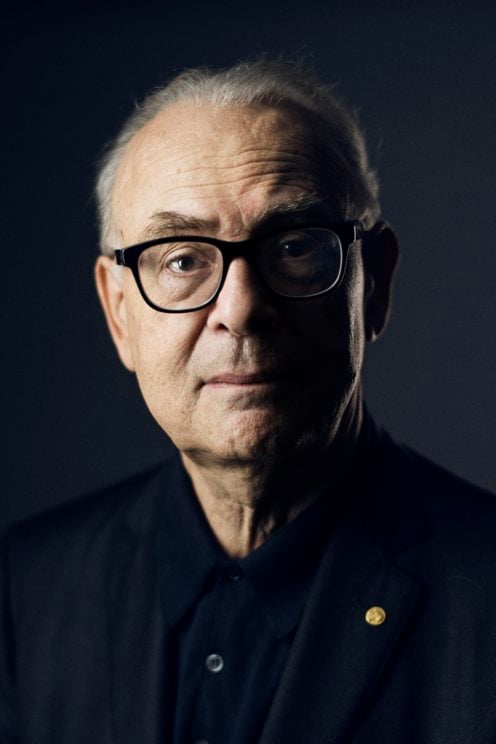
The Nobel announcement recognized Modiano’s “consistent exploration of memory and the elusive nature of personal history, often set against the backdrop of occupied Paris.”
He has been praised for his “subtle, clear style and his ability to bring anonymous lives to light, making him a modern-day Proust in the eyes of some.”
On Wednesday, 18 February, 2026, Another Look will present Nobel prizewinning Patrick Modiano’s 2007 novella, In the Café of Lost Youth (New York Review Books). The event will take place, as always, at 7 p.m. at Levinthal Hall, 424 Santa Teresa Street on the Stanford campus. You can read more about the event here. Meanwhile, Modiano’s eminent translator, Chris Cooke, has kindly agreed to answer a few questions about the collaboration.(Photo courtesy Chris Cooke)
“In novel upon novel Modiano has developed his ability to use almost non-existent documentation – old telephone numbers, street addresses – to endow the past with entrancing life and his Parisian cityscape with a singular voice.” ~ Nobel award ceremony speech)
1.You are considered Patrick Modiano’s foremost translator of the Nobel writer into English. How did that collaboration begin?
I’m just one of several translators who have translated Modiano, although I was perhaps early in releasing a translation during the buzz caused by his Nobel win. Many other excellent translators have translated Modiano. Daniel Weissbort translated Rue des Boutiques Obscures (Missing Person) in 1980; Barbara Wright translated Voyage de noces (Honeymoon) in 1990; these were both important translations of key works, well before Modiano came to international renown. Mark Polizzotti has translated nine or ten, Damion Searls and Frank Wynne have translated or retranslated works in recent years as well.
The situation around my translation was quite unique, in that I had already completed the translation for another, smaller publisher when the Nobel Prize was announced. That publisher had been negotiating the contract for many months, and no one saw the Nobel coming. The French rightsholder immediately cut off negotiations with that small publisher and the book went to “auction” with his other key works. Fortunately for me, NYRB Classics agreed to use the translation I had already completed, although the book was made available in a different translation in the U.K., as MacLehose Press chose to publish a translation by Euan Cameron.
How closely did you work with the author?
I was not in communication with Patrick Modiano while translating the book; when translating living authors, sometimes we exchange with them or send them some questions, other times not. Modiano as reputed to be quite reclusive. Vox magazine even once wrote a bit about the adjective “modianesque,” which they say “has come to refer to a particularly ambiguous person or situation, as a nod to Modiano’s reclusive, mysterious nature.” According to The Guardian, the Nobel Academy couldn’t get in touch with him ahead of time to let him know he was the winner of the prize. In the Café of Lost Youth was also one of my first book-length translations, begun in 2011, and back then I wouldn’t have known how to contact him if I tried.
2. What are the particular difficulties in working with Modiano’s text? What observations have you made about how Modiano’s French translates into your English?
In French, Modiano’s writing is pleasant because of an understated simplicity. He isn’t ornate, his lexicon isn’t overly complicated. Compared to many French authors, his syntax is quite simple: his sentences are on the short side, and he doesn’t string together clauses or pepper the text with commas in the way that many French writers tend to do. Of course, finding a similar flow and simplicity in the English version was a goal for me, but it wasn’t as easy as I had expected.
I discovered that if I stuck too closely to a sentence structure that mirrored Modiano’s French structure, the resulting English sentences felt quite choppy in places; at times it felt a bit like reading a grocery list. I went here. I did this. Next, I did that. I looked over at the bananas. Then I found the carrots. Et cetera.
To correct for this, and to end up with an English style that flowed in a simple but natural way that felt similar to the flow of Modiano’s French, I found myself having to do the opposite of what we so often need to do when translating literature from French to English: instead of turning a long and overly complex sentence held together by commas into several shorter, simpler sentences, which is quite common, I found myself sometimes having to stitch two or three short sentences together with commas. It was an eye-opener for me to see this difference between the languages, and in how similar structures can “feel” different in different languages.
The project led to some interesting research. First, a few of the characters were based on real people. The patrons of the Condé include several real writers, and the book draws on the Situationist movement in certain ways. Adamov was a playwright and translator, for example, connected with the Surrealist group in the 1920s and the Theatre of the Absurd in the late 40s and 50s. He got himself into political trouble both during and after World War II.
Maurice Raphaël was also a real writer, this was a pseudonym. He mostly published under the name Ange Bastiani. He wrote some crime novels, and also a kind of argot-laden prose reminiscent of Louis-Ferdinand Céline. His past was also rather mysterious, and it is said he was a noted collaborator during the War who managed to avoid the worst fates of the épuration after the fall of Germany and the Vichy government. His first novels are said to have been written while he was in prison.
Finally, there are also the connections between several of the characters and their literary preoccupations with movements like the Lettrists and the later Situationist International, concepts like the dérive, and so on.
Even more than these historical and literary references, Modiano’s work often leads to a lot of research into one of his most important reoccurring characters: the city of Paris itself. I often had a map of the city on hand when working on this book, but the project led to some interesting archival work, too: Paris has changed since the days this book takes place. Streets have been renamed, building went on all over the city in the decades that followed the War, new roads and metro stations and parks and squares have since come and gone. Modiano is quite clever at anchoring his stories in the history of the city, using the odd old street name or the earlier incarnation of a station that isn’t there anymore. Another fine technique he uses to focus his novels on an uncertain past that lives in memories and, at least in this case, in old maps and books.
Modiano’s entire list has as its primary concern the uncertainty of past time and memory. His protagonists seek proof, but typically end up sifting through fragments, traces, disconnected memories, faulty memories or lacunae. Inevitably, this leads to a text rich in disparate details, any trace that can remain of lives and events.
5. Modiano has worked with other translators as well as you, including Mark Polizzotti, and Damion Searls. Translation is a hidden world to most of us. How would you describe your different approaches?
All translators have their own methods, their own approaches, their own idiosyncrasies, and to some extent—in my belief—their own voices. I couldn’t tell you how Mark Polizzotti’s and Damion Searls’s approaches differ from my own approach to a text. I first met both Damion and Mark at the launch event held in Brooklyn for this particular Modiano novel. Damion had translated Une Jeunesse (Young Once) for NYRB Classics, and our two translations were released on the same day. Mark was the moderator for our discussion.
If you’d like to learn more about either of their views on translation, they have both written books on the craft: Mark’s book Sympathy for the Traitor: A Translation Manifesto was published by M.I.T. Press back in 2018; Damion’s book The Philosophy of Translation was published by Yale University Press in 2024. They are both insightful and approachable works, even if the titles sound a bit heavy, and are both infused with their author’s own personalities.
6. Why did you choose to translate In the Café of Lost Youth and not another of Modiano’s many novels?
I discovered Modiano’s novels on an extended trip to France in 2009. I brought several back home with me (Canada at that point) and picked up translations when I saw them. Rue des Boutiques Obscures (Missing Person) in Daniel Weissbort’s translation, Du plus loin de l’oubli (Out of the Dark) in Jordan Stump’s translation, Dora Bruder in Joanna Kilmartin’s translation. His themes of memory & forgetting, the instability of the past, the traces we leave behind with our lives, these all spoke to me. The feeling that you’ve forgotten something, or somebody, the bubbling up of random, unanchored fragments of memory, the way we at times construct memories from photographs that we don’t actually remember, the way two people who shared an event can remember it so differently, these were all feelings I had long wondered about, and they are all present in Modiano’s work. Having recently completed my first book-length translation, I thought I’d try my hand at translating one of his books. But which one?
Modiano had made his first appearances in English translations long before. A trickle early on, then a handful of translations from Harper Collins and Bison Books in the late 80s and 90s, then a handful from Godine in the early 2000s. He had never really gained much traction, however, and I reflected on why.
My take on this led to my choice of In the Café of Lost Youth. One of the principal criticisms I’ve read from people who don’t enjoy Modiano, whether they’ve read him in English or in French, is that he “just writes the same novel over and over again.” In many ways, this is true, but I feel it’s also missing the point. To me, none of these books are the same, even if there is a fair amount of overlap between them. The themes I’ve mentioned above are always present, but in each work, Modiano explores them from a slightly different angle.
I like to think of it this way: when faced with a very difficult (or impossible) question, what is the best way to approach it? From every possible angle. This is how I’ve always read Modiano. Each additional volume helps you connect a few more dots or shade in a bit more of the image, but that image will never be entirely available to you. Still, the more angles you approach it from, the closer you come to seeing something.
This led to my choice of In the Café of Lost Youth, which I find to be slightly atypical of him, in that it in a way works as a microcosm of his full book list. What I mean is this: for Modiano to really work for a reader, it’s best to read a bunch of his books. This wasn’t possible in English at the time. The handful that had been translated were mostly out of print and not easy to obtain.
In the Café of Lost Youth offers readers a shortcut to this, in that its multiple narrator format (the student, the detective, Roland, Louki) do this within one single work: each of them approaches the same past from a different angle, from a different perspective, and each one sees it differently.
By combining their four perspectives, the reader comes closer to seeing a truth, but it remains elusive in certain ways. This shortcut led me to believe that I could offer English-language readers a better taste of what makes Modiano great in a single read, and hopefully he could gain some traction, which would allow more of his work to be translated.
Then, of course, the 2014 Nobel Prize in Literature was awarded, and suddenly the translations came pouring out and it was moot. Café is still one of my favorite Modiano novels, however, and I think that these qualities make it a good place to start, or a good choice for people who only want to read one of his books.
On Wednesday, 18 February, 2026, Another Look will present Nobel prizewinning Patrick Modiano’s 2007 novella,In the Café of Lost Youth(New York Review Books). The event will take place, as always, at 7 p.m. at Levinthal Hall, 424 Santa Teresa Street on the Stanford campus.
Panelists will include Stanford Prof. Robert Pogue Harrison, author, director of Another Look, host of the radio talk show and podcast series Entitled Opinions, and a regular contributor to The New York Review of Books, and Stanford Prof. Tobias Wolff, one of America’s leading writers and the founding director of Another Look, as well as a recipient of the National Medal of Arts.
They will be joined by Chloe Edmondson, a lecturer in Stanford’s Department of French and Italian. She is the France-Stanford Center Fellow for the Roxane Debuisson Collection on Paris History. You will remember her from our event Madame de LaFayette’s The Princesse de Clèves in 2019. Actor, director, classicist, Stanford Prof. Rush Rehm, will round out the panel.
The Nobel announcement recognized Modiano’s “consistent exploration of memory and the elusive nature of personal history, often set against the backdrop of occupied Paris.”
He has been praised for his “subtle, clear style and his ability to bring anonymous lives to light, making him a modern-day Proust in the eyes of some.”
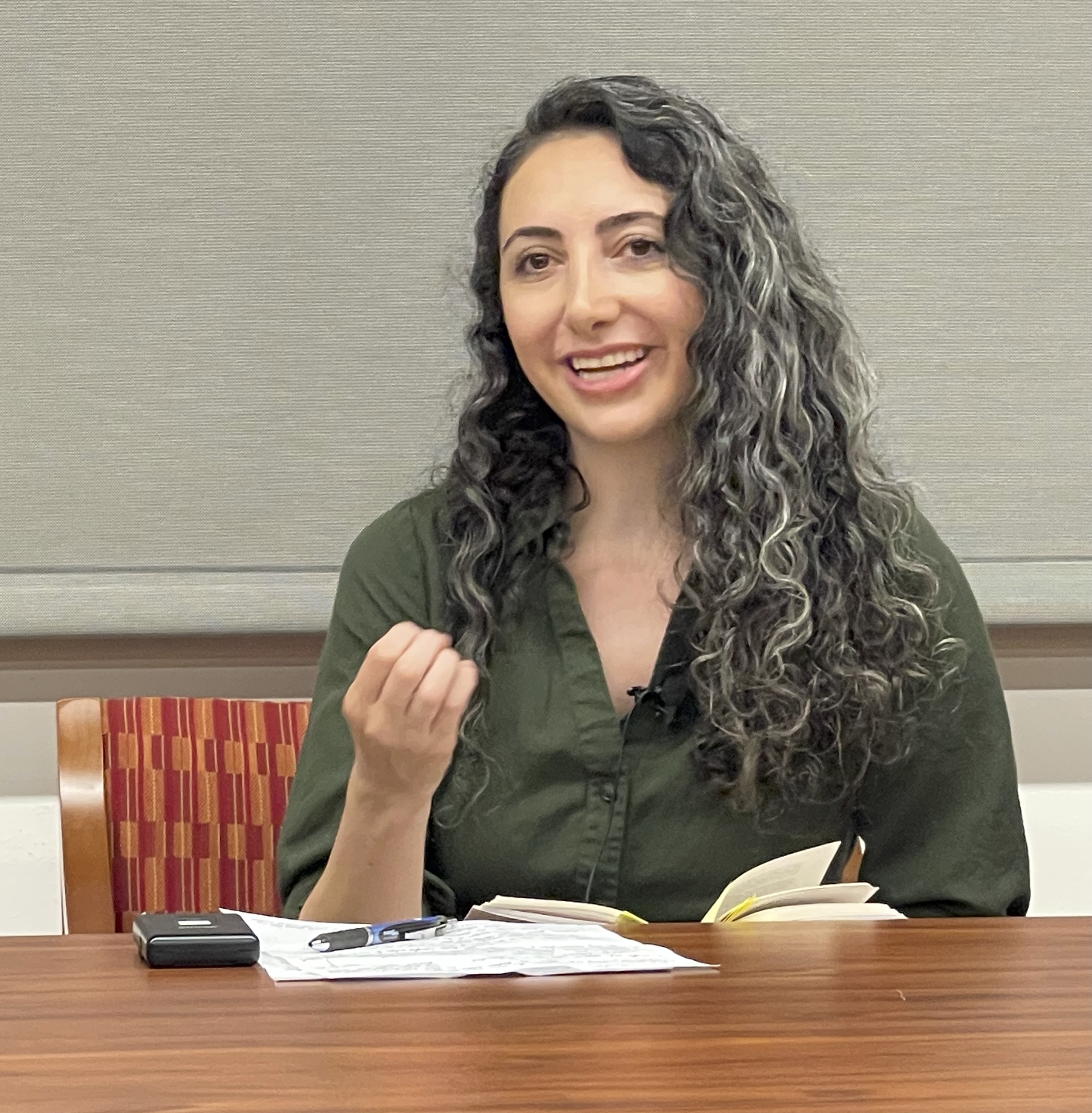
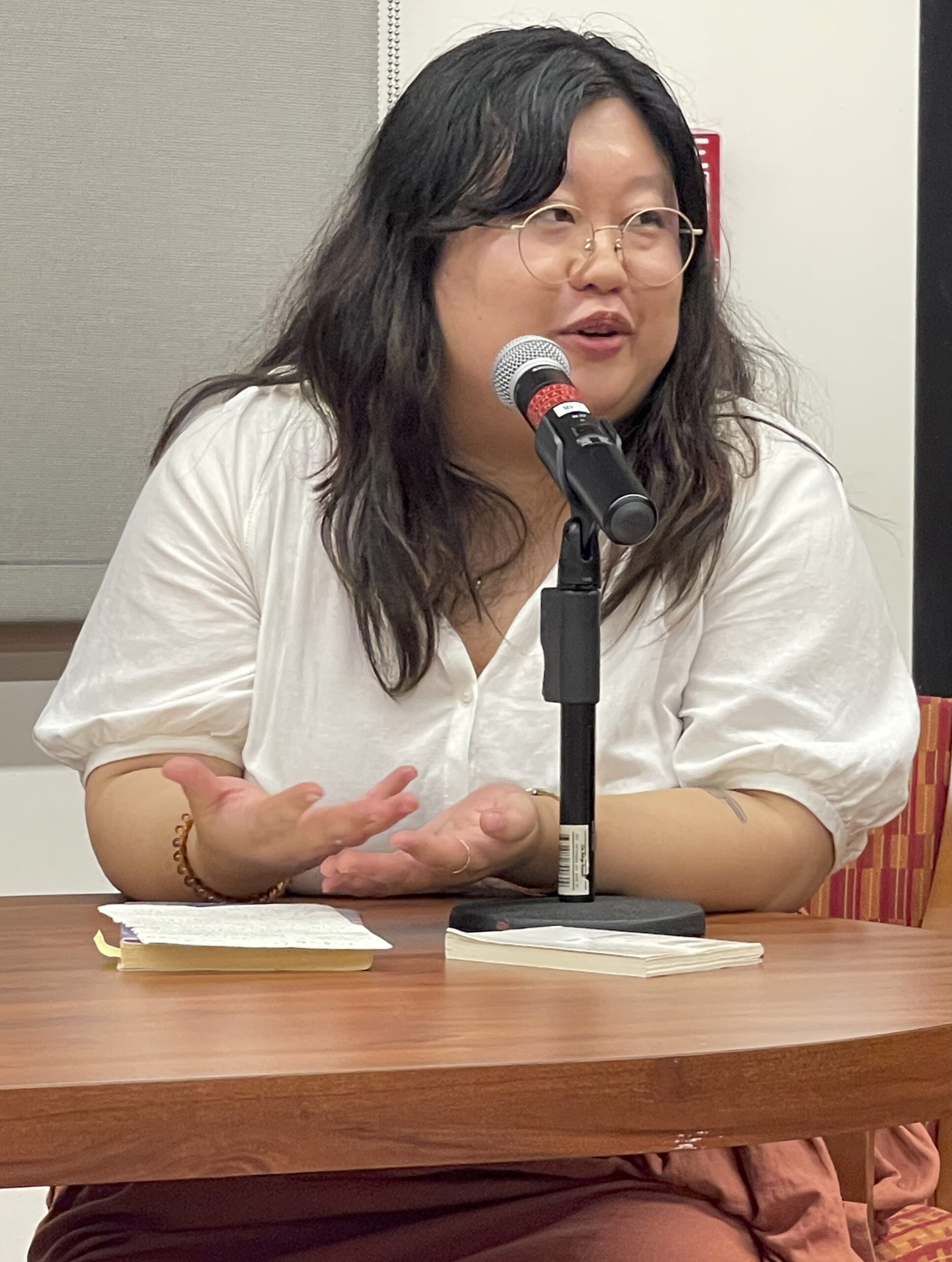
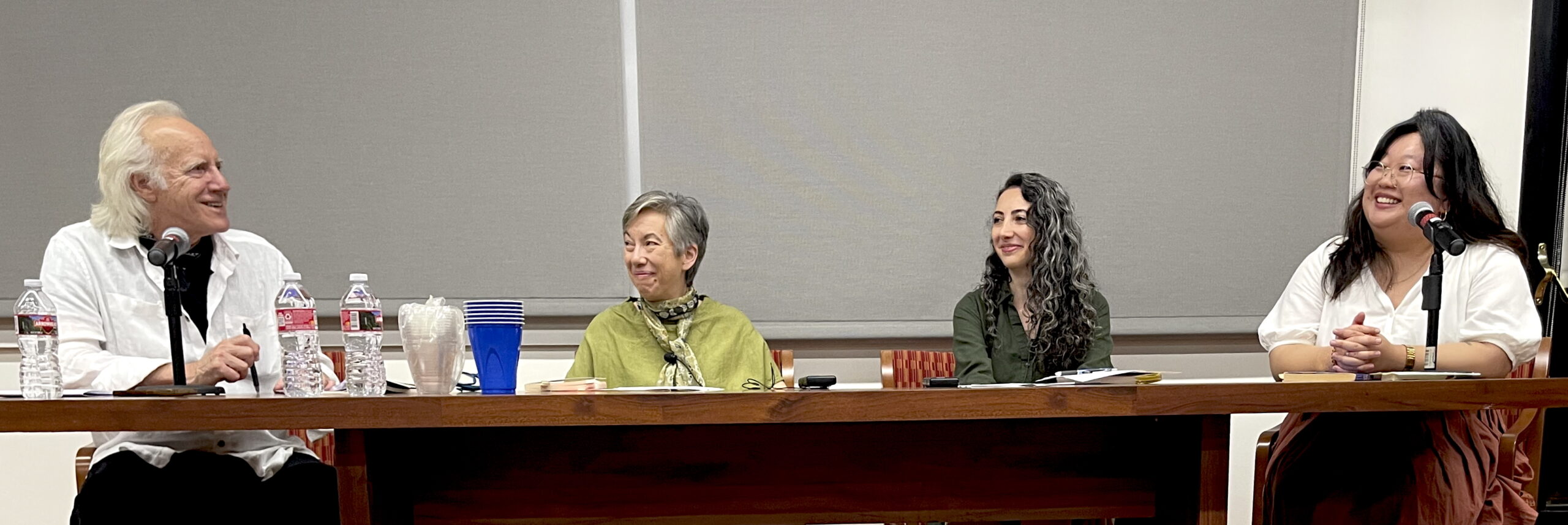
A brilliant math professor has a peculiar problem: ever since a traumatic head injury in a car accident in 1975, he has lived with only eighty minutes of short-term memory. That’s the story of Yōko Ogawa‘s The Housekeeper and the Professor. We’ve already posted links to the podcast and video from our September 16, 2025 event. Here are David Schwartz’s photos from the popular event.
His brain is like a tape that begins to erase itself every eighty minutes. An astute young housekeeper is hired to care for him. Her 10-year-old son becomes intrigued by the mysteries of math and befriends him. And every morning, as the Professor and the Housekeeper are introduced to each other anew, a strange and beautiful relationship blossoms between them. the Professor’s mind is still alive with elegant equations from the past. And the numbers, in all of their articulate order, reveal a sheltering and poetic world to both the Housekeeper and her young son.
Listen to the Stanford discussion on September 16, 2025, at the podcast on the Stanford Humanities Center link below. Or go to the YouTube video at the bottom of this post.
Listen to the Stanford discussion on September 16, 2025, at the podcast on the Stanford Humanities Center link above. Or go to the youtube video at the bottom of this page.
A terrific night and a full house! Yōko Ogawa’s The Housekeeper and the Professor was a lovely success at the Stanford Humanities Center last week, and we’re very glad so many of you could join us, virtually and in person.
A recap of the 2003 novel: A brilliant math professor has a peculiar problem. Ever since a traumatic head injury in a car accident in 1975, he has lived with only eighty minutes of short-term memory. His brain is like a tape that begins to erase itself every eighty minutes. An astute young housekeeper is hired to care for him. Her 10-year-old son becomes intrigued by the mysteries of math and befriends him. And every morning, as the Professor and the Housekeeper are introduced to each other anew, a strange and beautiful relationship blossoms between them. The Professor’s mind is still alive with elegant equations from the past. And the numbers, in all of their articulate order, reveal a sheltering and poetic world to both the housekeeper and her young son.
Listen to the Stanford discussion on September 16, 2025 here, watch the youtube video below. And find out why the rare date of our event 9/16/25 represents a Pythagorian triple over at National Public Radio here.