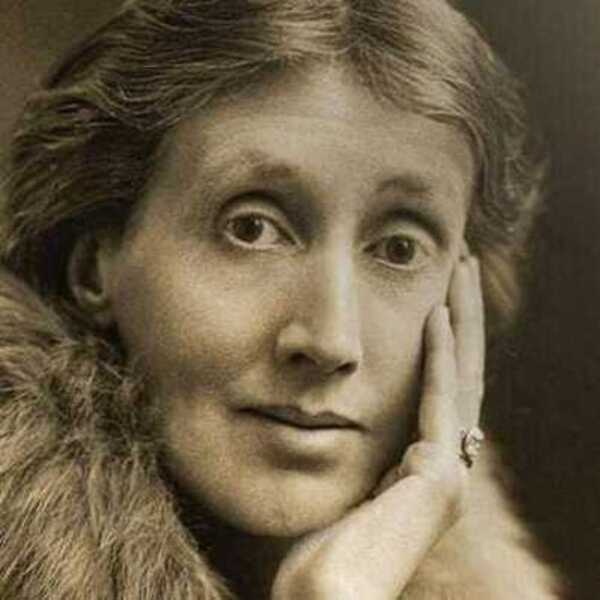
Please join us for a discussion of Virginia Woolf‘s 1929 A Room of One’s Own at 7 p.m. (PST) on Tuesday, April 11, in Levinthal Hall, Stanford Humanities Center, 424 Santa Teresa Street on the Stanford campus.
The Guardian called the book “a landmark in feminist thought and a rhetorical masterpiece” and rated it one of the top 100 non-fiction books of all time. Read about that here.
According to a contemporary review in The Los Angeles Times: “If you miss this book, which is profound and subtle and gently ironic and beautifully written, you will have missed an important reading experience.” Another Look will consider the work’s legacy a century later. The Bloomsbury author’s iconic book, an extended essay, is in public domain and widely available.
Panelists will include: Stanford Prof. Robert Pogue Harrison, author, director of Another Look, host of the radio talk show and podcast series “Entitled Opinions,” and a regular contributor to The New York Review of Books and Stanford Prof. Tobias Wolff, one of America’s leading writers, a founding director of Another Look, and a recipient of the National Medal of Arts.
Constance Solari is a writing coach and the author of four novels, including 2012’s Sophie’s Fire: The Story of Saint Madeleine Sophie Barat. Maria Florence Massucco, is a PhD candidate in Italian Studies who specializes in the 20th century novel. You’ll remember her from our discussion of Dorothy Strachey‘s Olivia.
Join us in person or virtually, but please register here.
Another Look director Robert Pogue Harrison introducing the event. (All photos by David Schwartz)
Another Look celebrated its tenth anniversary with another remarkable and too-little-known masterpiece: Glenway Wescott‘s 1940 novella The Pilgrim Hawk: A Love Story(NYRB Classics). And what a lively celebration it was! The Wednesday, October 5, conversation was spirited, controversial, and occasionally downright rowdy.
The panelists: Steve Wasserman, former book editor at the Los Angeles Times Book Review and editor at large for the Yale University Press, and now publisher of Heyday Books in Berkeley; Stanford Prof. Robert Pogue Harrison, author, director of Another Look, host of the radio talk show and podcast series Entitled Opinions, and a regular contributor to the New York Review of Books; Stanford Prof. Tobias Wolff, one of America’s leading writers, is the founding director of Another Look and a recipient of the National Medal of Arts; and author Cynthia L. Haven, a National Endowment for the Humanities public scholar.
You can view the video version of The Pilgrim Hawk: A Love Storyhere – or listen to the podcast here.
On that astonishing evening, we filled the hall to the bursting point, with Another Look friends sitting on the floor and crowding the doorways. The size of the event had surprised even us, and necessitated a move to the more spacious Bechtel Conference Center in Encina Hall. Now we’re changing venues again. COVID inaugurated the era of zoom: now Another Look offers hybrid events – a virtual presence for those who live across the country, world, or who, for other reasons, have to stay close to home, along with our traditional in-person events, where you can chat with the panelists and enjoy the energy of a lively literary discussion.
The reason for the crowd that June night in 2015: Another Look’s founding director Tobias Wolff had just announced his retirement, and it looked like that would be the end of Another Look. But it was also the night Prof. Robert Pogue Harrison, who was in the audience that night (some will remember his spirited exchange with Toby on The Stranger), stepped forward to fill Toby’s shoes. Now the two directors team up on the panel for most of our events – and what a great duo they are! Thanks to our night with Camus, we continued a full decade of events for a program that is perhaps unique in the nation – including the most recent presentation of Glenway Wescott’s brilliant novella.
The Pilgrim Hawk: A Love Story traces a single afternoon in a French country house during the 1920s. Alwyn Tower, an American expatriate and sometime novelist, is staying with a friend outside Paris when a well-heeled Irish couple drops in — with Lucy, their tamed hawk, a restless, disturbing presence. The story that unfolds is both harrowing and farcical. Novelist Michael Cunningham in his introduction calls the book “murderously precise and succinct.”
Photos below taken by Another Look photographer David Schwartz, working virtually from home. Thanks, David! This Another Look also marks another transition: Roger Winkelman, who did a heroic job film and recording our events at Bechtel and became a treasured member of the Another Look family, has retired and moved to New York. His colleague. Robert Edgar, has taken up the challenge of guiding Another Look into its second decade. Welcome, Bob!
Edwin Frank: “A book of concrete observations and endless reflections and lapidary sentences.”
Stanford’s Another Look book club has often showcased New York Review Books’ excellent offerings, so as we celebrate the tenth anniversary of the Stanford book event series, we’re pleased that our fall event on October 5 will feature Glenway Wescott‘s too-little-known 1940 novella, The Pilgrim Hawk: A Love Story. New York Review Books founder Edwin Frank (and, incidentally, he’s also a former Stanford Stegner Fellow), agreed to answer a few questions about the book, one of he first NYRB Classics published in 2001. (The Book Haven also ran an interview, “Great literature is literature that remains news,” between Edwin Frank and another Stanford alum, Daniel Medin, at Shakespeare & Company in Paris, 2016, here.) Another Look was launched in November 2012, with William Maxwell’s So Long See You Tomorrow. Tobias Wolff, founding director of Another Look, talked about his choice in a short video here. Our tenth anniversary event for Wescott’s novel will take place at 7 p.m. on Wednesday, October 5, at Levinthal Hall in the Stanford Humanities Center, 424 Santa Teresa Street, on the Stanford campus. The event will also be livestreamed. Come celebrate our tenth with us! It’s not to late to register here, for the virtual and live event. Walk-ins are always welcome, too. The panelists will include a special guest, Steve Wasserman, former book editor at the Los Angeles Times Book Review and editor at large for the Yale University Press, and now publisher of Heyday Books in Berkeley. Other panelists will include: Stanford Prof. Robert Pogue Harrison, author, director of Another Look, host of the radio talk show and podcast series Entitled Opinions, and a regular contributor to the New York Review of Books; Stanford Prof. Tobias Wolff, one of America’s leading writers, founding director of Another Look, and a recipient of the National Medal of Arts. Author Cynthia L. Haven, a National Endowment for the Humanities public scholar, will round out the panel.
The interview with Edwin Frank …
CYNTHIA HAVEN:Wescott’s prose is meticulous, keenly observed, epigrammatic, profound – and often very funny. Do we have any idea how he wrote? How he crafted this perfect novel? His papers and manuscripts are at Yale, do they give us any idea?
EDWIN FRANK: I don’t know how Wescott worked and haven’t seen the papers. Nor am I conversant with the details of his life, except in the vaguest way, and I hadn’t even realized that Yvor Winters was his mentor. Interesting! As to his neglect as a writer, in America, or perhaps anywhere, not writing a lot, and essentially giving up writing novels, as Wescott did, is not a great recipe for a career as a writer. Why he wrote so little is another question—I don’t know the answer—though both Pilgrim Hawk (with its ambisexual Alex) and Apartment in Athens can be read as tales of the closet, suggesting that Wescott found himself more and more caught out by not being able to write frankly as a gay man.
HAVEN:Pilgrim Hawk features a lot of complicated relationships: painful love, unhappy love, unrequited love, non-existent love—often suggested in glances, or a quip, or in silence. How much do you think this evasiveness reflects Wescott’s own ambiguities, as a gay man at a time when it was far less acceptable than it is today?
FRANK: The Pilgrim Hawk is clearly enough about frustration, in love and as a writer. Counting the triangles it traces is an interesting exercise: there’s Madeleine, Larry, and Lucy; Jean, Eva, and Rickert; Tower, Alex, and Tower’s brother (and one might treat these three triangles as constituting a higher order triangle in their own right of different—or are they all alike at some level?—kinds of marriage); and perhaps most importantly, Tower, Alex (and all the rest of them for that matter), and The Pilgrim Hawk, the story of a day (and his life) that Tower finally can be deemed to have put down (though the narrator of a book is never quite its writer, close as they may be), fulfilling himself as observer, even as central to his observation is his own inability to love. The narrator is left as one of “The lovers [who are] to be pitied…are those who have no one to hate, whose rough shooting can take place only in the imagination, and never ends” (page 34).
“More and more caught out by not being able to write frankly as a gay man.”
The rough shooting was about to hit a different order of magnitude in 1940…
FRANK:“Rough shooting” reminds me that the book also has World War II in the background, and here another triangle can be discerned, between the late 20s, when the action takes place—the past—1940, the date of narration and of publication, when the war had begun but the U.S. had yet to enter it—the present—and the future, undetermined apart from the war going on (perhaps parallel to the narrator’s loveless future). In that light the book can be read as a very subtle allegory of the feckless fashionable interwar years that the Cullens, and Alex’s showy but “not splendid” house with its big glass modern windows, epitomizes, as the senile French politician in the chateau next door does the corruption of the Belle Epoque. Implicit is the question of what future is there for the world at war (so ostentatiously charted in the first paragraph) and what kind of world was it that led to that war. (You could read the book alongside Civilization and Its Discontents.) But this question is very much implicit, and maybe I am making too much of it, though the central presence of the hawk inevitably puts questions of entrapment and predation in the air (or on a bloodstained gloved hand). The narrator’s predatory gaze is also emphasized increasingly throughout.
But as Michael Cunningham nicely says in the introduction the poor hawk is doomed from the get-go to be a symbol and yet triumphs for all that, becoming, in the telling, wonderfully, electrically, real and distinct. Those burning claws! And there is a lot of edgy, self-aware humor, too: “Still, I felt rather as if I had a great thought of death concentrated and embodied and perched on me” (page 47). Rather!
A book of concrete observations and endless reflections and lapidary sentences: “She said this in a great sad false way” (page 88); “airy murderess like an angel; young predatory sanguinary deluxe hen” (page 94).
HAVEN :The falcon’s name Lucy is usually linked with Walter Scott’s novel, The Bride of Lammermoor. But it also has associations with Donizetti’s opera Lucia di Lammermoor. Its final act is one of the most frenzied in all opera. Certainly Westcott’s fierce and ominous Lucia has a good deal of madness about her. Can you channel Westcott for a moment and connect the Lucys—Wescott’s Lucy with Scott’s and Donizetti’s?
FRANK: There is nothing subtle about Donizetti’s Lucia, but there is nothing but subtlety in Wescott’s book, subtlety and ferocity, despair, and some genuine camp. That mix, so unusual, may explain why its audience has always been a little select.
Our October 5 event is sponsored by Stanford Continuing Studies, the Stanford Humanities Center, and the Division of Literatures, Cultures, and Languages.
Another Look was launched in November 2012, with William Maxwell’s So Long See You Tomorrow. Now we celebrate our tenth anniversary with another wonderful and too-little-known book, Glenway Wescott‘s 1940 novella The Pilgrim Hawk: A Love Story(NYRB Classics). The event will take place at 7 p.m. on Wednesday, October 5, at Levinthal Hall in the Stanford Humanities Center, 424 Santa Teresa Street, on the Stanford campus. The event will also be livestreamed. Come celebrate our tenth with us!
Registration is encouraged, but walk-ins are always welcome. Register here.
The Book
The Pilgrim Hawk: A Love Story traces a single afternoon in a French country house during the 1920s. Alwyn Tower, an American expatriate and sometime novelist, is staying with a friend outside Paris when a well-heeled Irish couple drops in — with Lucy, their trained hawk, a restless, sullen, disturbingly totemic presence. Lunch is prepared, drink flows, and the story that unfolds is both harrowing and farcical.
Novelist Michael Cunningham in his introduction calls the book “murderously precise and succinct.” Critic and author Susan Sontag said, “The ever-astonishing Pilgrim Hawk belongs, in my view, among the treasures of twentieth-century literature, however untypical are its sleek, subtle vocabulary, the density of its attention to character, its fastidious pessimism, and the clipped worldliness of its point of view.”
The Panelists
The panelists will include a special guest, Steve Wasserman, former book editor at the Los Angeles Times Book Review and editor at large for the Yale University Press, and now publisher of Heyday Books in Berkeley. Other panelists will include: Stanford Prof. Robert Pogue Harrison, author, director of Another Look, host of the radio talk show and podcast series Entitled Opinions, and a regular contributor to the New York Review of Books; Stanford Prof. Tobias Wolff, one of America’s leading writers, a founding director of Another Look, and a recipient of the National Medal of Arts. Author Cynthia L. Haven, a National Endowment for the Humanities public scholar, will round out the panel.
The Venue
Some of you may remember that Levinthal Hall is where Another Look began a decade ago. You’re right! Our audience attendance outgrew that venue in 2015, and we moved to a larger space. However, now we are offering virtual as well as in-person attendance, which allows us to return to our former home. We will announce how to register for the virtual event in our next email, as we are still finalizing arrangements.
Parking
Metered parking spaces are available along Santa Teresa Street. Parking is free after 4 p.m. Free parking is also available on the lot adjacent to the Stanford Humanities Center after 4 p.m.
How to get the book
Books are available at Kepler’s Books in Menlo Park (650-324-4321) and Books Inc at Town & Country in Palo Alto (650-321-0600). We’d recommend calling first to make sure a book is waiting for you. Books are also available at Amazon and at Abebooks. If all else fails, you can order directly from the publisher here.
Our October 5 event is sponsored by Stanford Continuing Studies, the Stanford Humanities Center, and the Division of Literatures, Cultures, and Languages.
Welcome back to the Bechtel Conference Center for our spring event! Robert Louis Stevenson’s The Strange Case of Dr. Jekyll and Mr. Hyde will be the subject of our next discussion at 7 p.m., Tuesday, April 12. It will be a hybrid event. Register here to attend virtually or in-person. Walk-ins welcome too. Please bring your friends!
The event marks our first in-person event since the beginning of COVID in 2020. The occasion will also be offered virtually for those who cannot attend on the Stanford campus. (Currently, face masks are recommended, but not required, for attendance; the situation is in flux and we will keep you updated as the situation changes.)
Stevenson’s short 1885 novel is universally known but little read today. Vladimir Nabokov called it “a fable that lies nearer to poetry than to ordinary prose fiction.” He compared it to Flaubert’s Madame Bovary or Gogol’s Dead Souls. Stevenson’s dark vision had come to him in a dream – as it had for Mary Shelley, who went on to write Frankenstein, a book that Another Look featured in 2018. Both works share a fascination with the limits of science, medicine, and technology on our humanity.
Acclaimed author Robert Pogue Harrison will moderate the discussion. The Stanford professor who is Another Look’s director writes regularly for The New York Review of Books and hosts the popular talk show, Entitled Opinions. He will be joined by eminent novelist Tobias Wolff, founding director of Another Look and a National Medal of Arts winner, and Ana Ilievska, Andrew W. Mellon Postdoctoral Fellow and Stanford Humanities Center and a lecturer in Stanford’s Department of French and Italian.
The short book is available in many editions, and is available online. As always, this event is free and open to the public.