More honored than read? Stanford’s Another Look book club reconsiders Camus’ The Stranger

Iconic photo of a French cultural legend, Paris 1944. (Courtesy Magnum/Henri Cartier-Bresson)

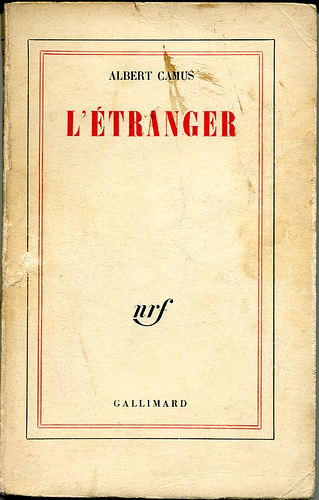
Albert Camus’ 1942 classic, “The Stranger,” raises tough questions about culture clash and how we find meaning in our lives – and the narratives we create to absolve ourselves. The final event in the three-year “Another Look” series will take place on June 1.

BY CYNTHIA HAVEN

I was poised midway between poverty and sunshine,” wrote Albert Camus, describing his impoverished childhood in French Algeria. “Poverty prevented me from judging that all waswell in the world and in history, the sun taught me that history is not everything.”

Albert Camus’ The Stranger is drenched in the North African sun, but heat and light take an ominous turn. The Nobel Prize-winning author’s tale of a senseless murder on the hot Mediterranean beach has been a staple of high-school classes for decades, ever since it was published by the up-and-coming writer in 1942. But does it carry a new meaning for our time?

Acclaimed novelist Tobias Wolff has chosen The Stranger for the Another Look book club event at 7:30 p.m. on Monday, June 1 at the Stanford Humanities Center.  With Tobias Wolff’s retirement at the end of this academic year, the spring event on Camus’ The Stranger will be the last in the popular three-year series.

Wolff, professor of English and the founding director of Another Look, will moderate the final event. He will be joined by cultural and intellectual historian Caroline Winterer, director of the Stanford Humanities Center; and Stanford lecturer Marie-Pierre Ulloa, a scholar of French intellectual life in 20th-century Algeria who has received France’s Chevalier de l’Ordre des Arts et des Lettres, one of the nation’s highest cultural honors. The event is free and open to the public.

According to Wolff, “The Stranger is not an overlooked book. But I believe that among adult readers it is more honored than read. We usually encounter it in our student days, and I doubt that many of us read it again later on.

“Yet it’s very much worth our renewed attention in this moment for the questions it raises about our attempts to find meaning in our lives, about the often violent encounters of different cultures, about the way we create consoling, even heroic, narratives to explain and absolve ourselves while remaining willfully blind to the personal and social forces that actually drive us, about the question of free will – do we have it? –  and about the problematic nature of institutional justice and punishment, indeed of all human judgment.

Stanford alumnus Matthew Ward translated the edition of Camus’ “The Stranger” chosen for Another Look.

The event will spotlight the translation of Matthew Ward, who learned French at Stanford (a profile of him here). He died of AIDS in 1990, two years after his translation was published, and a year after it received a PEN award. In a New York Times article, Ward said he used an “American method” to translate Camus.

Read the rest here.
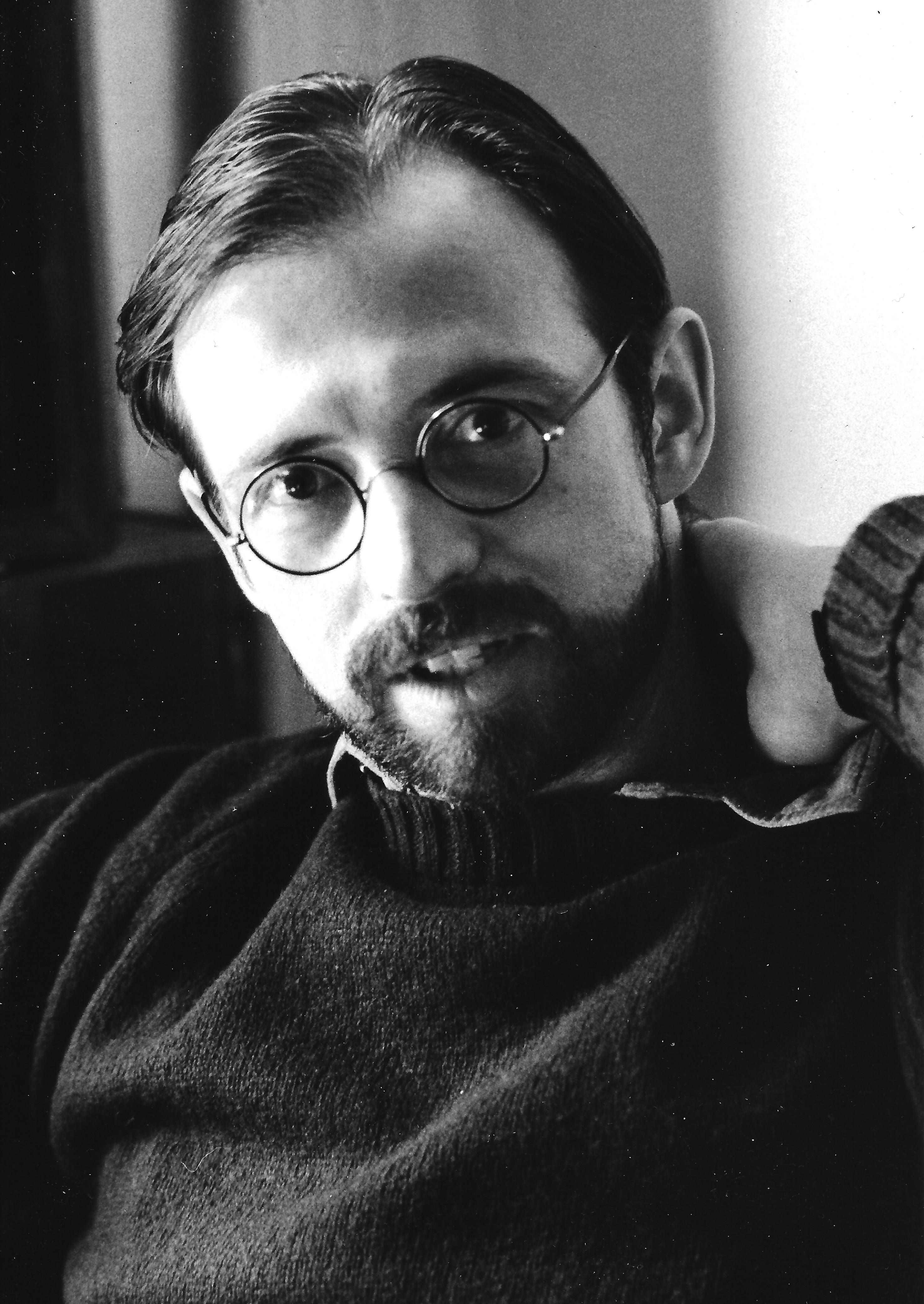
Translator Matthew Ward: “He had an immense intellectual hunger.”

Translator extraordinaire. (Courtesy the Ward family)

BY CYNTHIA HAVEN

In his brief life, Matthew Ward translated works by Colette, Jean Giraudoux, and Roland Barthes into English – but his favorite project was Albert Camus’s The Stranger. His celebrated “American” translation of the classic earned him a PEN award in 1989, as well as critical acclaim.

In a sense, the translation was born at Stanford, where Ward learned French and fell in love with France during his stay in Tours as part of Stanford’s Overseas Studies program in 1971 (he earned his B.A. From Stanford in 1973). Clearly, Ward’s translation of The Stranger is a perfect choice for the “Another Look” book club discussion at 7:30 p.m., Monday, June 1, at the Stanford Humanities Center – and not only for aesthetic reasons. It represents a sort of homecoming.

If Ward’s Stanford roots are not widely recognized, part of the reason may be that he was known in those days as “Gary,” an energetic, gregarious presence who was very, very smart. “He had an immense intellectual hunger,” recalled Stanford English Prof. John Bender, who was the faculty advisor in Tours the year Ward attended, and recalled the poet and translator’s “eagerness and sparkle.”

“He wanted to know everything, whatever he could know.” Most of all, recalled Bender, “he was passionately interested in French.”

During the six-month sojourn in Tours, Ward also forged an important friendship with Monika Greenleaf, now an associate professor of Slavic literature at Stanford, but then a “scholarship kid” as he was. “I have an intense memory of his face and body when he became enthused about something:  his big brown eyes would glow, then a huge mocking grin and demonic chuckle, and a flurry of gestures. It was always a manifesto about literary style, freedom, religion, young men’s conquests of their world, and above all, Joyce” – and, she quickly added, Kerouac, Hemingway, Ginzburg, Camus, and Proust, too.

“He and I bonded above all in our mutual and rivalrous pursuit of le mot juste,” she said. “Being Irish, he had the scintillating verbal gift that comes with the territory.”

Continue reading

The Camus-Sartre spat and a “unique dissident voice.”

In autumn 1951, Albert Camus published his explosive L’homme révolté  [Rebel: An Essay on Man in Revolt ]. The book would trigger an equally explosive reaction from his friend and rival, Jean-Paul Sartre. The medium for the message was another French intellectual, Francis Jeanson. 

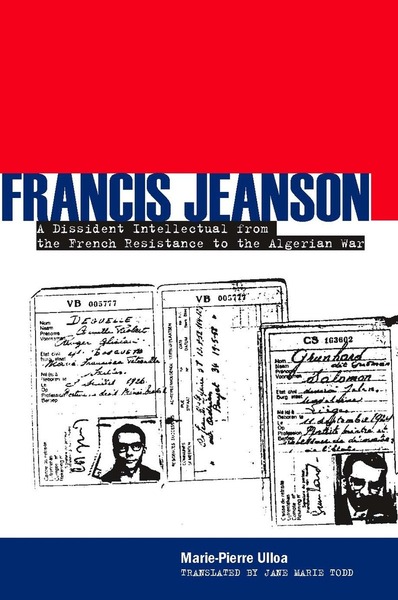
The following excerpts are taken from Marie-Pierre Ulloa’s Francis Jeanson: A Dissident Intellectual from the French Resistance to the Algerian War (Stanford University Press, 2007), a book that “seamlessly blends political, intellectual, and cultural histories in this superb and moving biography of a unique dissident voice,” according to one reviewer.  Ulloa will be one of the panelists discussing The Stranger at Another Look’s June 1 event.

If 1943 was Sartre’s year, 1942 was Camus’s. L’Étranger  [The Stranger ] and Le mythe de Sisyphus [The Myth of Sisyphus ] were both published that year. Unlike Sartre’s shilly-shallying during the war years, Camus was fully involved in the Résistance in metropolitan France. Beginning in 1944, he contributed to the underground newspaper Combat, becoming its director upon liberation. He too wrote for the theater and had an immediate success with Caligula, with Gérard Philipe in the title role. Media success did not turn Camus away from politics, and as early as 1946, in his Ni victimes ni bourreaux [Neither victims nor tormentors], he denounced Stalinism and its methods. But that was not the last word on the question. In 1951 his indictment Communist barbarism went even further in L’homme révolté. In that study, which caused a scandal at the time, he attempted to elucidate a fundamental mystery: how can man, in the name of a revolutionary ideal, be led to sanction collective murder and thus create totalitarian systems? He meant to submit a certain idea of revolution, both the Soviet notion and that of the crypto-Communist left, to critical examination. That was not the only interest of the book, but contemporaries and posterity would essentially reduce it to that. The essay also had a literary dimension, in that it analyzed the rebel’s artistic creativity. …

Les Temps Modernes received the book in proofs in September 1951. Previously, Jeanson’s publications in the review had not concealed the misgivings Camus’s work inspired in him. In 1947, in his first two articles for La France Intérieure, “This Scourge of Our Times” and “The Myth of the Absurd,”Jeanson analyzed Camus’s writings in rather tepid terms. He argued in particular that Le mythe de Sisyphe constituted “the negation of all philosophy.” He repeated the offense in Sud-Ouest, the Bordeaux daily that succeeded La Petite Gironde, in an article titled “Respective Positions of Sartre and Camus.” In it he claimed that Camus’s absurdism, which could not be assimilated to Sartre’s existentialism, lay “in the mind’s powerlessness to confer a rational meaning on things. [ . . . ] For man, dignity consists of a voluntary renunciation of any effort whose goal would be to confer a meaning—always illusory—on the world.” He made use of a metaphor to characterize Camus’s argument: “It is [the reasoning] in the name of which the fool Gribouille dives into the water for fear of the rain.” And Jeanson adds: “There are things. There is us. [ . . . ] All of that has no meaning in itself. [ . . . ] But all of that, which constitutes my situation to be precise, is not part of my condition as a consciousness. At that new level, I can accede to a mode of existence different from that of things, I can escape things to return to them later, and to impose on them by that very movement a meaning they will owe to my freedom. [ . . . ] Far from being nonsensical, my life is a perpetual act of meaning.” Camus’s attitude “closes off all hope” and “crystallizes everything that, from Greek skepticism to the most modern preoccupation with abdicating one’s responsibilities, characterizes man’s inclination toward defeatism.” …

Continue reading

Immortel René Girard: “How can a man commit a murder and not be responsible for it?”

René Girard is one of only 40 members, or immortels, of the Académie Française, France’s highest intellectual honor. The Andrew B. Hammond Professor of French Language, Literature, and Civilization has been at Stanford since 1981.

In 1964, René Girard published “Camus’s Stranger Retried,” in Modern Language Association’s PMLA. The essay earned a $1,000 “best essay” award from the Modern Language Association – important early recognition from the American academy for the Frenchman, and one that pleased him enormously.

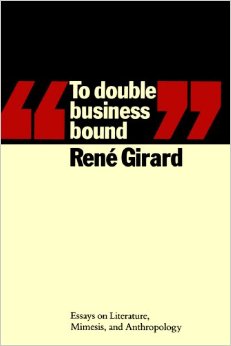
The seminal essay was eventually included in his 1978 collection, To Double Business Bound: Essays on Literature, Mimesis and AnthropologyThe book was selected by Choice as one of the outstanding academic books of the year.

An excerpt:

On the purely phenomenological level, Meursault’s condemnation is almost unrelated to his crime. Every detail of the trial adds up to the conclusion that the judges resent the murderer not for what he did but for what he is. The critic Albert Maquet expressed this truth quite well when he wrote: “The murder of the Arab is only a pretext; behind the person of the accused, the judges want to destroy the truth he embodies.”

Let there be no murder and a good pretext to get rid of Meursault will, indeed, have been lost, but a pretext should be easy to replace, precisely because it does not have to be good. If society is as eager to annihilate Meursault as it is pictured by Maquet, the remarkable existence of this hero should provide more “pretexts” than will ever be needed to send an innocent to his doom.

Is this assumption well founded? We ask this question in all awareness that we are abandoning, for the time being, pure literary phenomenology for common sense realism. If we feel, when we are reading the novel, that Meursault lives dangerously, this impression evaporates under examination. The man goes to work regularly; he swims on the beaches of the Mediterranean and he has dates with the girls in the office. He likes the movies but he is not interested in politics. Which of these activities will take him to a police station, let alone the guillotine?

Continue reading

Camus on justice, guilt, and “la sympathie”

Marilyn Yalom is a feminist author and historian. She is a senior scholar at the Clayman Institute for Gender Research at Stanford University, which she co-founded. She is also a French scholar, and the author of the acclaimed How the French Invented Love (Harper Collins, 2012).

Here is a short excerpt from her early article, “Albert Camus and the Myth of the Trial,” published by Modern Language Quarterly in 1964:

The trial of L’Etranger, undoubtedly indebted to Kafka’s trial, ultimately constitutes a rejection of the Kafkaesque Weltanschauung, according to which the shame of submission lingers on after an ignominious death. The youthful Camus, romantic rebel championing the outcast individual, indicts society and reserves for his hero the sleep of the innocent. That the more mature Camus could not so easily dismiss the Kafkaesque vision is clearly revealed in La Chute. Before turning to this later work, I should like to examine the trial situation as Camus presents it in L’Etranger, La Peste, and La Chute; for the manner in which he transforms this situation to suit its new habitat gives us an insight into the development of his views on the nature of guilt.

During the trial scene of L’Etranger, a young journalist fixes his attention upon Meursault with such intensity that he gives the defendant the impression of being observed by himself. Although there are only five short references to this character within the novel, the fact that Meursault searches out his eyes at significant moments of the trial suggests his importance. The reader is left with the impression of a silent, sensitive young man who conveys his compassion for the defendant, in contrast to the callous assembly concerned with passing judgment.

Continue reading

“If that is justice, then I prefer my mother”: Stanford student discusses Camus’ stance on non-violence

Stanford philosophy major Truman Chen clearly has a passion for Albert Camus. As a freshman, he used Sophia Coppola’s film Lost in Translation as a vehicle to explain Camus’ concept of the absurd and absurd freedom, from The Myth of Sisyphus and The Fall
More writing is in the future. He wrote, “Over the summer, I will be writing a comparative piece on Camus’ political theory, as outlined in The Rebel, and its similarity to some of Hannah Arendt’s and John Dewey’s critiques of modern representative democracy and Bolshevism. In addition, I will be a writing a piece on Camus’ metaphysics and its relation to Heidegger’s.”
 
He recently wrote a political piece on violent resistance in The Stanford Political Journal, grounded very much in Camus’s arguments from The Rebel to refute the justifiability of violent resistance and opt for a more nuanced approach to combatting oppression. The immediate prompt for the article was student Manny Thompson’s quarrel with Provost John Etchemendy. Read Truman’s whole article  here, but meanwhile, here’s an excerpt:
.

Peaceful protesters in Baltimore (Photo: Creative Commons)

… It is far from clear that to condemn violent resistance is to endorse the oppressor. This is the very problem that alienated Albert Camus from both the French and the Algerians during the Algerian War of Independence. Camus, an Algerian native raised in poverty, of course morally favored an Algerian freedom from colonial oppression, but violence complicated everything. He had always condemned the horrifyingly violent occupation of Algeria by the French, but at the same time he could not endorse the violent means used by the Algerian revolutionaries. He attempted to escape what he understood to be a false dichotomy. Camus expressed his problem poignantly: “People are now planting bombs in the tramways of Algiers. My mother might be on one of those tramways. If that is justice, then I prefer my mother.” Still, the Algerians accused him of supporting the French colonizers, and the Stalinist French intellectuals of his time accused him of being spineless and self-absorbed. But, in the end, like in most wars, there was a truce, a political act pleaded for by Camus since the beginning. …

Thompson is correct that there are those who act violently because they “hold life sacred,” but he has forgotten that there are also those who hold the lives of others too sacred to act violently. In The Rebel, Camus wrote that the act of rebellion is a simultaneous denial and affirmation: a “no” against the condition the rebel finds himself in, and a “yes” for the human dignity he and all human beings deserve. A limit is drawn to protect that which is worthwhile in all humans. The rebel knows what is and what ought to be but is careful in his actions to prevent his “no” from violating the “yes” of others through violence. If he were to act violently against another, his own “yes” predicated upon a universal human dignity would be logically undermined, and if “men cannot refer to a common value, recognized by all as existing in each one, then man is incomprehensible to man.” This comprehensibility is essential for the thinking of political discourse, the only means we have to correct the oppressive power structures. To preserve this avenue for change, it is imperative we renounce violence in all forms, even in the form of resistance.