Marguerite Duras on writing and “the doubt of solitude”

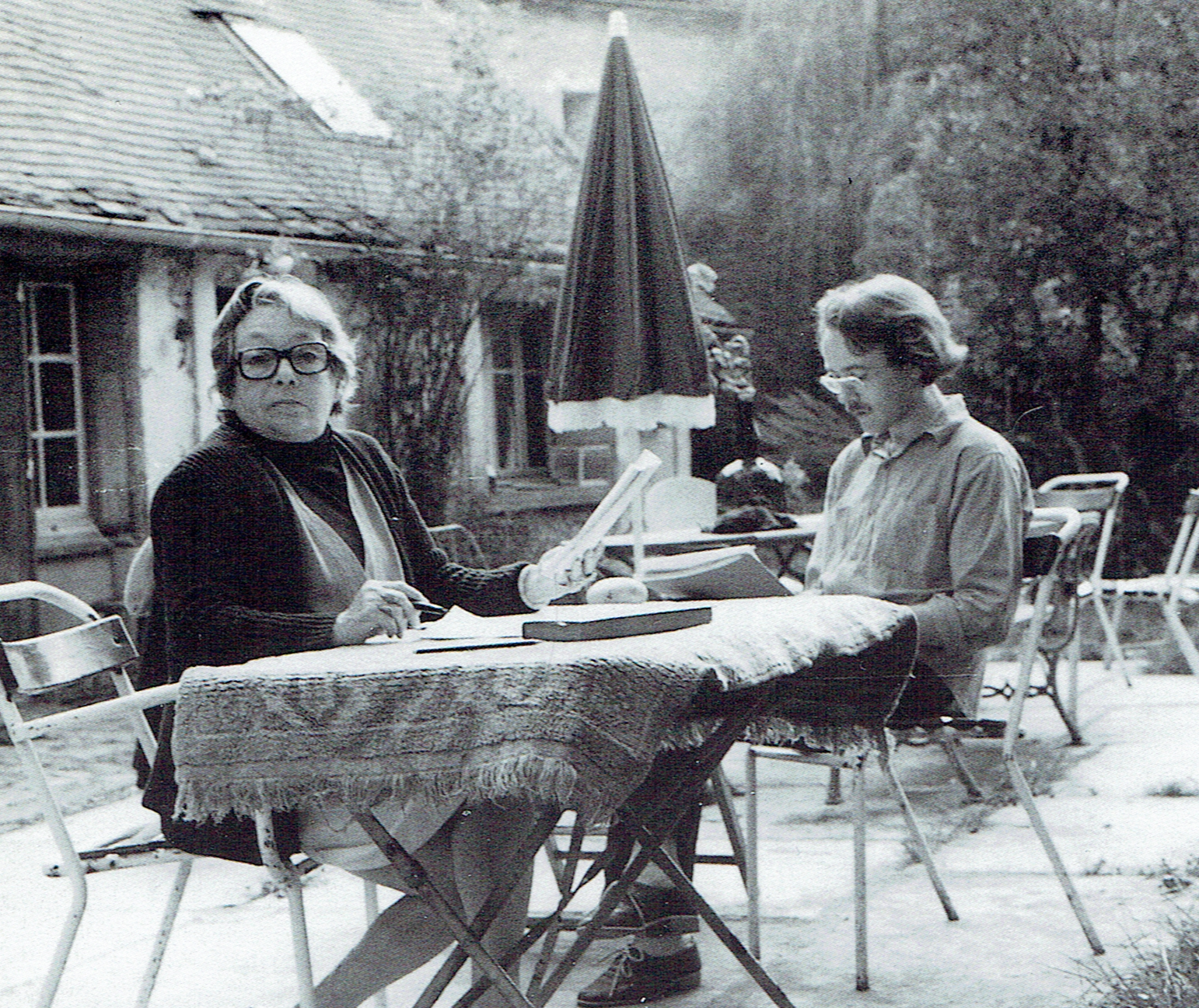
At the “house of writing” with Yann Andrea in the 1990s

One does not find solitude, one creates it. Solitude is created alone. I have created it. Because I decided that here was where I should be alone, that I would be alone to write books. It happened this way. I was alone in this house. I shut myself in – of course, I was afraid. And then I began to love it. This house became the house of writing. My books come from this house. From this light as well, and from the garden. From the light reflecting off the pond. It has taken me twenty years to write what I just said.

***

Finding yourself in a hole, at the bottom of a hole, in almost total solitude, and discovering that only writing can save you. To be without the slightest subject for a book, the slightest idea for a book, is to find yourself, once again, before a book. A vast emptiness. A possible book. Before nothing. Before something like living, naked writing, like something terrible, terrible to overcome. I believe that the person who writes does not have any ideas for a book, that her hands are empty, her head is empty, and that all she knows of this adventure, this book, is dry, naked writing, without a future, without echo, distant, with only its elementary golden rules: spelling, meaning.

***

In life there comes a moment, and I believe that it’s unavoidable, that one cannot escape it, when everything is put in doubt: marriage, friends, especially friends of the couple. Not children. Children are never put in doubt. And this doubt grows around one. This doubt is alone, it is the doubt of solitude. It is born of solitude. We can already speak the word. I believe that most people couldn’t stand what I’m saying here, that they’d run away from it. This might be the reason why not everyone is a writer. Yes. That’s the difference. That is the truth. No other. Doubt equals writing. So it also equals the writer. And for the writer, everyone writes. We’ve always known this.

I also think that without this primary doubt, there can be no solitude. No one has ever written in two voices. One can sing in two voices, and make music, and play tennis; but write? No, never. From the start I wrote books that were called political. The first was Abahn Sabana David, one of the ones I still hold dearest. I think that’s a detail, that a book can be more or less difficult to lead than ordinary life. It’s just that difficulty exists. A book is difficult to lead toward the reader, in the direction of his reading. If I hadn’t begun writing, I would have become an incurable alcoholic. It’s a practical state in which one can be lost and unable to write anymore… That’s when one drinks. As soon as one is lost with nothing left to write, to lose, one writes. So long as the book is there, shouting that it demands to be finished, one keeps writing. One is forced to keep up with it. It’s impossible to throw a book out forever before it’s completely written – that is, alone and free of you who have written it. It’s as horrible as a crime. I don’t believe people who say, “I tore up my manuscript, I threw the whole thing out.” I don’t believe it. Either what was written didn’t exist for them, or else it wasn’t a book. And when it isn’t a book, one always knows it. When it can never be a book, no, that one doesn’t know. Ever.

– From Marguerite Duras’s Writing, 1993

Marguerite Duras as Vietnamese heroine

Marguerite Duras’s 1950 The Sea Wall is one of several autobiographical novels, along with The Lover. The earlier book, which takes place in Indochina of the 1920s, tells of her mother’s desperate fight against the sea. Tricked by the local administrators into purchasing a useless concession of land with her life’s savings, she builds a sea wall to prevent the annual monsoon from flooding the land – but the wall is swept away with the first rains.  In Laure Adler’s Marguerite Duras: A Life, the biographer describes one unintended consequence of the widow’s hopeless struggle:

“Even today in Ho Chi Minh City learned old Vietnamese men will speak to you of Marguerite’s book The Sea Wall with their eyes full of tears. They’re moved not so much by the mother’s despair as by the passion with which Marguerite pays tribute to the men who died in the blistering heat, cutting and laying roads through the swamps for France. The men were chained together. Ordered to work them till they dropped, military leaders, veterans of the French colonial army, rounded up and oversaw political prisoners and poor peasants dying of starvation. Numerous testimonies speak of having seen groups of them dragging dead bodies around. This orally transmitted historical fact has never been properly recorded. Marguerite paid tribute to these unsung heroes who gave their lives for France. There are students in Vietnam today who still tremble with gratitude towards Marguerite Duras. She was the only one to speak of the children of the plain who the moment they were born were condemned to die of hunger, cholera or dysentery. ‘The children simply went back to the land like wild mountain mangoes, like the little monkeys from the mouth of the lagoon.'”

All-star panel to discuss Philip Roth’s The Ghost Writer at Stanford

Michael Chabon and Ayelet Waldman will join Tobias Wolff to discuss Roth’s 1979 classic, The Ghost Writer, on Feb. 25. In an interview with Another Look, Philip Roth discusses the book. (Interview with Philip Roth here.)

BY CYNTHIA HAVEN

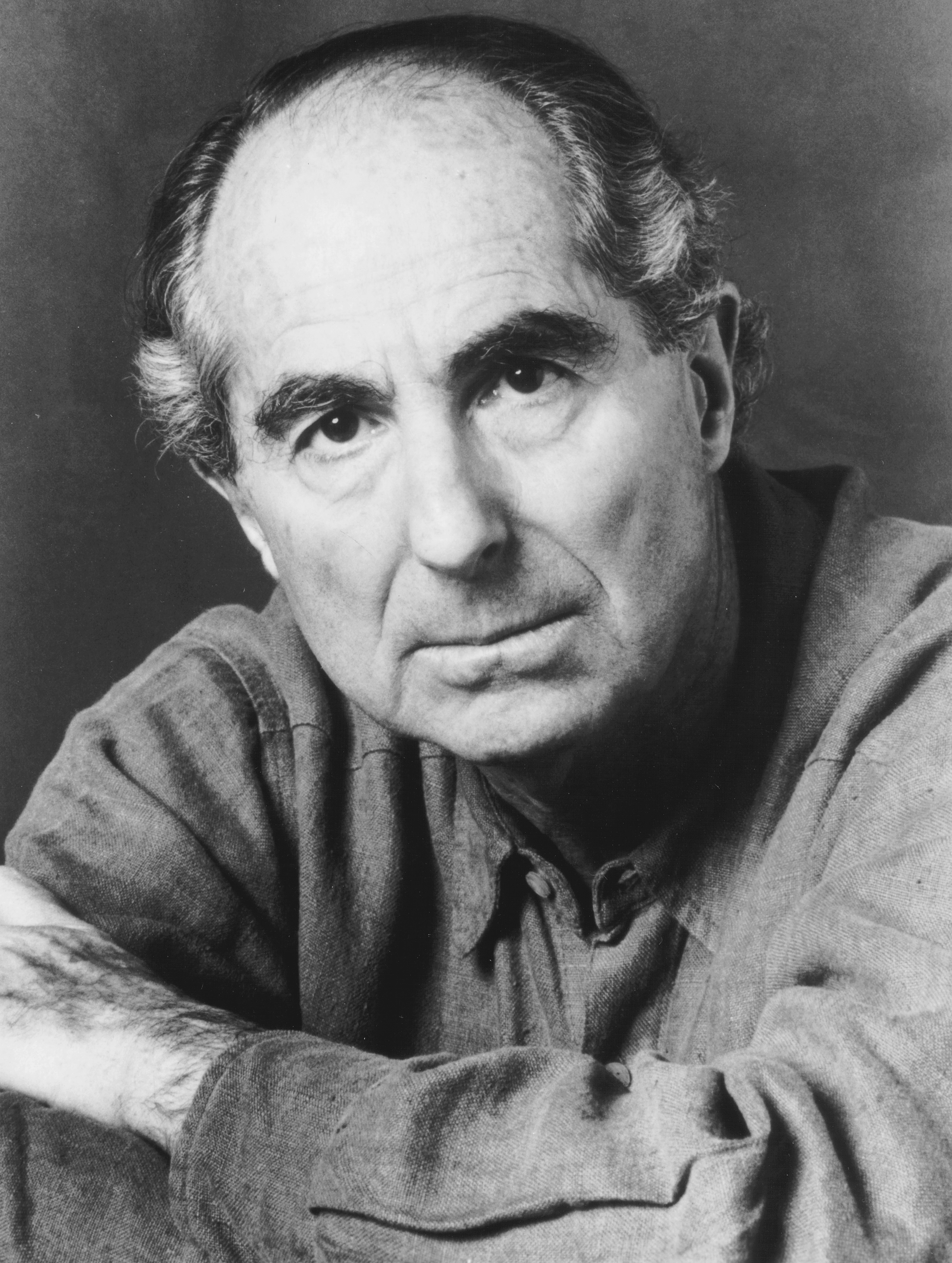
An undisputed literary giant (Photo Nancy Crampton)

Philip Roth is one of the nation’s undisputed literary giants. He’s received the Pulitzer Prize, the Man Booker International Prize, the National Medal of Arts, the National Humanities Medal, the American Academy of Arts and Letters Gold Medal in Fiction and two National Book Awards. Every year he appears on the Ladbroke’s list of Nobel contenders.

Provocative, pugnacious, eloquent, he’s always caused a buzz – and he’ll do so again at Stanford this month. He will appear on campus, at least in spirit, with his 1979 classic, The Ghost Writer. The seasonal Another Look book club event will take place at 7:30 p.m. Tuesday, Feb. 25, at the Stanford Humanities Center. Award-winning author Tobias Wolff, a professor of English, will join two of the nation’s leading novelists, Michael Chabon and Ayelet Waldman, for a discussion. The event is free and open to the public.

The occasion marks the first time Another Look has featured a living author. Though the 80-year-old author of Goodbye, Columbus and Portnoy’s Complaint won’t be able to attend, Roth took a few moments to discuss The Ghost Writer, his obsession with language, book clubs and other topics in an interview with Another Look.

Roth’s novels famously veer between lacerating wit, penetrating observation, historical tragedy and, in his most recent works, mortality. Writing with a cathartic energy and anger, angst and sexual obsession, his works have outraged and delighted readers for years.

Although he draws on his Jewish background, Roth steadfastly refuses to be labeled as a Jewish American writer. “‘An American-Jewish writer’ is an inaccurate if not also a sentimental description, and entirely misses the point. The novelist’s obsession, moment by moment, is with language: finding the right next word,” he said in the Stanford Report interview. “I flow or I don’t flow in American English. I get it right or I get it wrong in American English.”

The Ghost Writer tells the story of an ambitious young writer, Nathan Zuckerman, visiting a famous one, E.I. Lonoff, at the older author’s home in western Massachusetts in 1956. A winter storm leaves Zuckerman and the Lonoffs snowbound with a young Jewish refugee from Europe. Zuckerman, estranged from his community for portraying Jewish families in an irreverent light (rather like Roth himself), imagines the beautiful young stranger is Anne Frank, mysteriously survived and in America, who will somehow vindicate him.

Wolff says it’s among his favorite novels.

“Among the many distinguished, indeed essential, novels Philip Roth has given us over the past 50 years, The Ghost Writer is one of the most remarkable – remarkable for its formal mastery, for the subtle, persuasive voice through which Roth brings his narrator to life, and for the sheer audacity of its conception,” he says. “In the enigmatic figure of Amy Bellette, Nathan Zuckerman is led to consider a possibility that will challenge our understanding of history, and the way in which history is shaped to the purposes of those who demand something from it – a lesson, a consolation, a hero, a martyr. The novel makes us feel the necessity, and pain, of recognizing our illusions – personal, artistic, historical.”

Claudia Roth Pierpont, author of the newly published Roth Unbound: A Writer and His Books, said ofThe Ghost Writer: “Like The Great Gatsby or Willa Cather’s The Professor’s House, it is one of our literature’s rare, inevitably brief, inscrutably musical and nearly perfect books.”

While Another Look generally features off-the-beaten-track books and authors, in this case it is burnishing an established legacy, one so long that its earlier masterpieces may be overlooked. “This is not a lost book,” said Wolff. “This isn’t the Dead Sea scrolls. Roth has written so much, so well, for so long, that it’s possible for books to fall under the shadow of his late monumental works, such asAmerican Pastoral and Sabbath’s Theater.”

In any case, Roth insists that his oeuvre is now complete, so perhaps it’s time to give another look to all his books. Will there really be no more novels from America’s most famous pen? “Well, you better believe me, because I haven’t written a word of fiction since 2009,” Roth told Another Look. “I have no desire to write fiction. I did what I did and it’s done.”

The “Another Look” book club focuses on short masterpieces that have been forgotten, neglected or overlooked – or may simply not have gotten the attention they merit. The selected works are short to encourage the involvement of the Bay Area readers whose time may be limited. Registration at theAnother Look website is encouraged for regular updates and details on the selected books and events.

‘The novelist’s obsession is with language’: Philip Roth on writing, the future of language and The Ghost Writer

Philip Roth’s 1979 classic, The Ghost Writer, will be spotlighted at Stanford at a February 25 “Another Look” book club event. Cynthia Haven interviewed the author in preparation for the event. His weapon-of-choice was the email interview, rather than a telephone conversation. Roth was precise, nuanced and to the point. He turned around a thoughtful and polished transcript in one quick weekend.

BY CYNTHIA HAVEN

“Each book starts from ashes.” (Photo: Nancy Crampton)

Cynthia Haven: “There is no life without patience.” This thought is expressed at least twice in The Ghost Writer. Could you expand on it a little?

Philip Roth: I can expand on it only by reminding you that the six words are spoken not by me but by a character in a book, the eminent short-story writer E.I. Lonoff. It is a maxim Lonoff has derived from a lifetime of agonizing over sentences and does a little something, I hope, to portray him as writer, husband, recluse and mentor.

One of the several means of bringing characters to life in fiction is, of course, through what they say and what they don’t say. The dialogue is an expression of their thoughts, beliefs, defenses, wit, repartee, etc., a depiction of their responsive manner in general. I am trying to depict Lonoff’s verbal air of simultaneous aloofness and engagement, and too his pedagogical turn of mind, in this case when he is talking to a young protégée. What a character says is determined by who is being spoken to, what effect is desired, and, of course, by who he or she is and what he or she wants at the moment of speaking. Otherwise it’s just a hubbub of opinions. It’s propaganda. Whatever signal is being flashed by those six words you quote derives from the specificity of the encounter that elicits them.

Haven: You’ve said of your two dozen or so novels, “Each book starts from ashes.” How did The Ghost Writer, in particular, rise from the ashes? Could you describe how it came about, and your labor pains bringing it into being?

Roth: How I began The Ghost Writer almost 40 years ago? I can’t remember. The big difficulty came with deciding on the role Anne Frank was to have in the story.

Haven: It must have been a controversial choice, since she has held a somewhat sacrosanct space in our collective psychic life – even more so in 1979, when the book was published, and even more than that in 1956, when the action of your book takes place, a little over a decade after the war’s end. Were you criticized for this portrayal? How has the perception of her changed in the years since the book was published, especially given Cynthia Ozick’s landmark 1997 essay, “Who Owns Anne Frank,” which decried the kitschification of Frank?

Roth: I could have had Amy Bellette be Anne Frank, and don’t think I didn’t put in some hard time trying to pull that off. The attempt wasn’t fruitful because, in Cynthia Ozick’s words, I did not want to “own” Anne Frank and assume a moral responsibility so grand, however much I had been thinking about bringing her story, which had so much power over people, particularly Jews of my generation –her generation – into my fiction as early as 10 and 15 years earlier. I did want to imagine, if not the girl herself – and in truth, I wanted to imagine that too, though in some way others had ignored – the function the girl had come to perform in the minds of her vast following of receptive readers. One of them is my protagonist, young Nathan Zuckerman, trying to get used to the idea that he was not born to be nice and for the first time in his life being called to battle. One is Newark’s sage Judge Wapter, watchdog over the conscience of others. Another is Zuckerman’s poor baffled mother, wondering if her own son is an anti-Semite dedicated to wiping out all that is good.

Read the rest here

Tobias Wolff on The Ghost Writer

Among the many distinguished, indeed essential, novels Philip Roth has given us over the past 50 years, The Ghost Writer is one of the most remarkable – remarkable for its formal mastery, for the subtle, persuasive voice through which Roth brings his narrator to life, and for the sheer audacity of its conception. In the enigmatic figure of Amy Bellette, Nathan Zuckerman is led to consider a possibility that will challenge our understanding of history, and the way in which history is shaped to the purposes of those who demand something from it – a lesson, a consolation, a hero, a martyr. The novel makes us feel the necessity,and pain, of recognizing our illusions – personal, artistic, historical. In short, Zuckerman is forced to think the unthinkable, which is exactly what his art requires.

On Anne Frank: a few words from John Felstiner

Anne Frank: A bright Jewish girl born 1929 in Frankfurt; forced to move with her family in 1933 to Amsterdam, Netherlands; murdered by Nazism in 1945. Anne would have been no one at all if not for her consistent diary, written toward her “Kitty” from 13 to 15. Her family’s helper, Miep Gies, preserved Anne’s Diary of a Young Girl. Once that was published, she became and still is the Holocaust adolescent, almost daily discovering everything from ruinous Nazis and ruined Jews to families, friends, boys, her body, and more: writing.

Perhaps the simplest yet hardest question is this: Would you rather have Anne Frank’s uniquely sad and heartening diary, reaching about 50 million readers, or would you rather have somewhere a fine person living her fine life? This question, if it is one, has much to do with Philip Roth’s gripping book The Ghost Writer—not to mention his brilliant short story “Eli, The Fanatic,” pulling Jewish identity against home in America.

New York’s Museum of Modern Art, in 1955, published The Family of Man, pictures of humanity around the world. One double-page has 11 photos of mainly normal young handsome women. In the center of them is this: “I still believe that people are really good of heart. Anne Frank, Diary.” Go to her diary, two weeks before it ends, and you’ll see this teen-ager: “It’s really a wonder that I haven’t dropped all my ideals, because they seem so absurd and impossible to carry out. Yes I keep them, because in spite of everything I still believe that people are really good of heart. I simply can’t build up my hopes on a foundation consisting of confusion, misery, and death. I see the world gradually being turned into a wilderness, I hear the ever approaching thunder, which will destroy us too …” Somewhat crushing the good.

After a Gestapo arrested Anne and her family in their two-year hiding place, they were sent to Holland’s Westerbork camp, then Auschwitz-Birkenau, then Bergen-Belsen. There, broken, she tried to keep her sister alive. Margot died, then Anne.

– John Felstiner