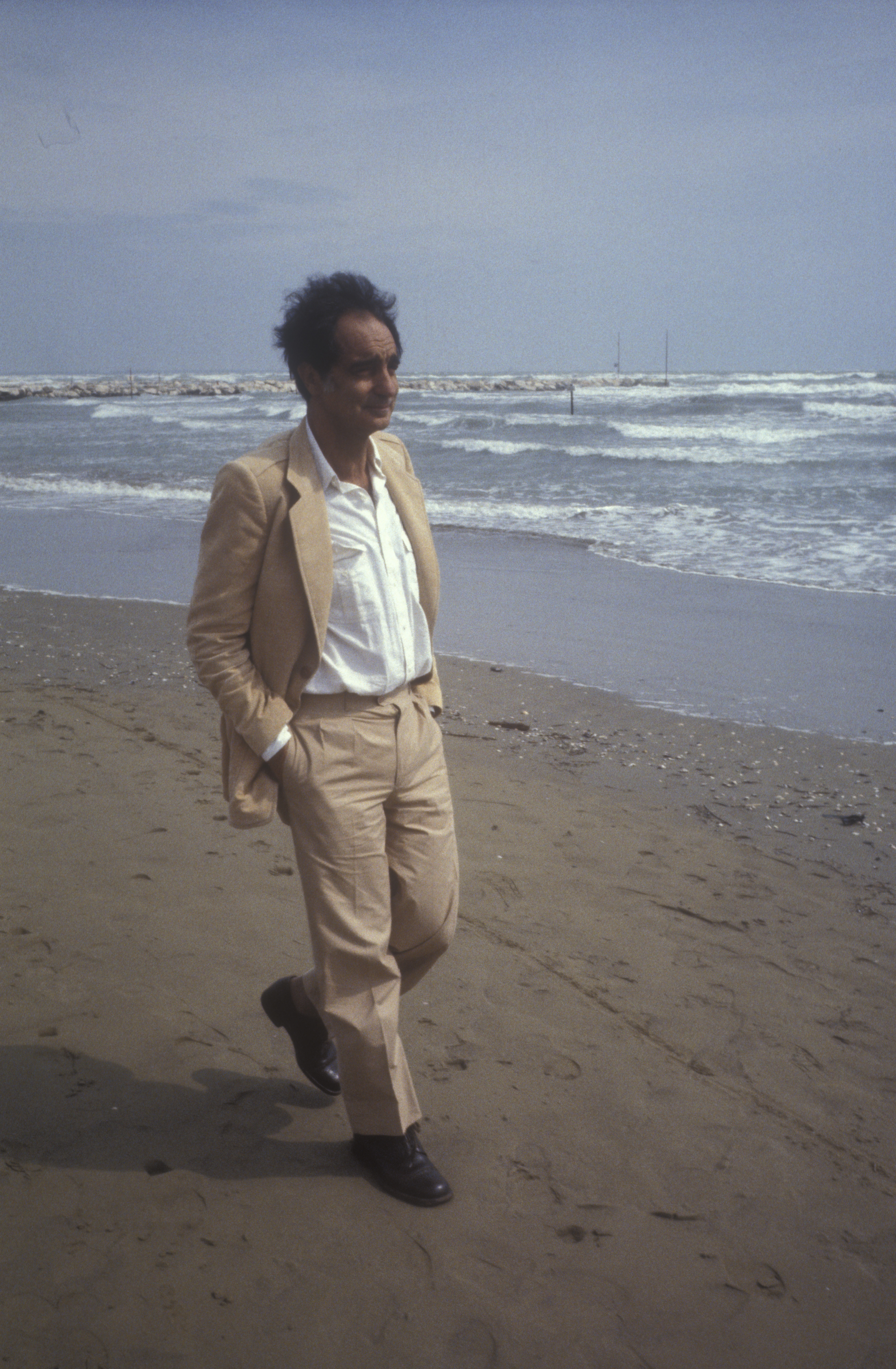
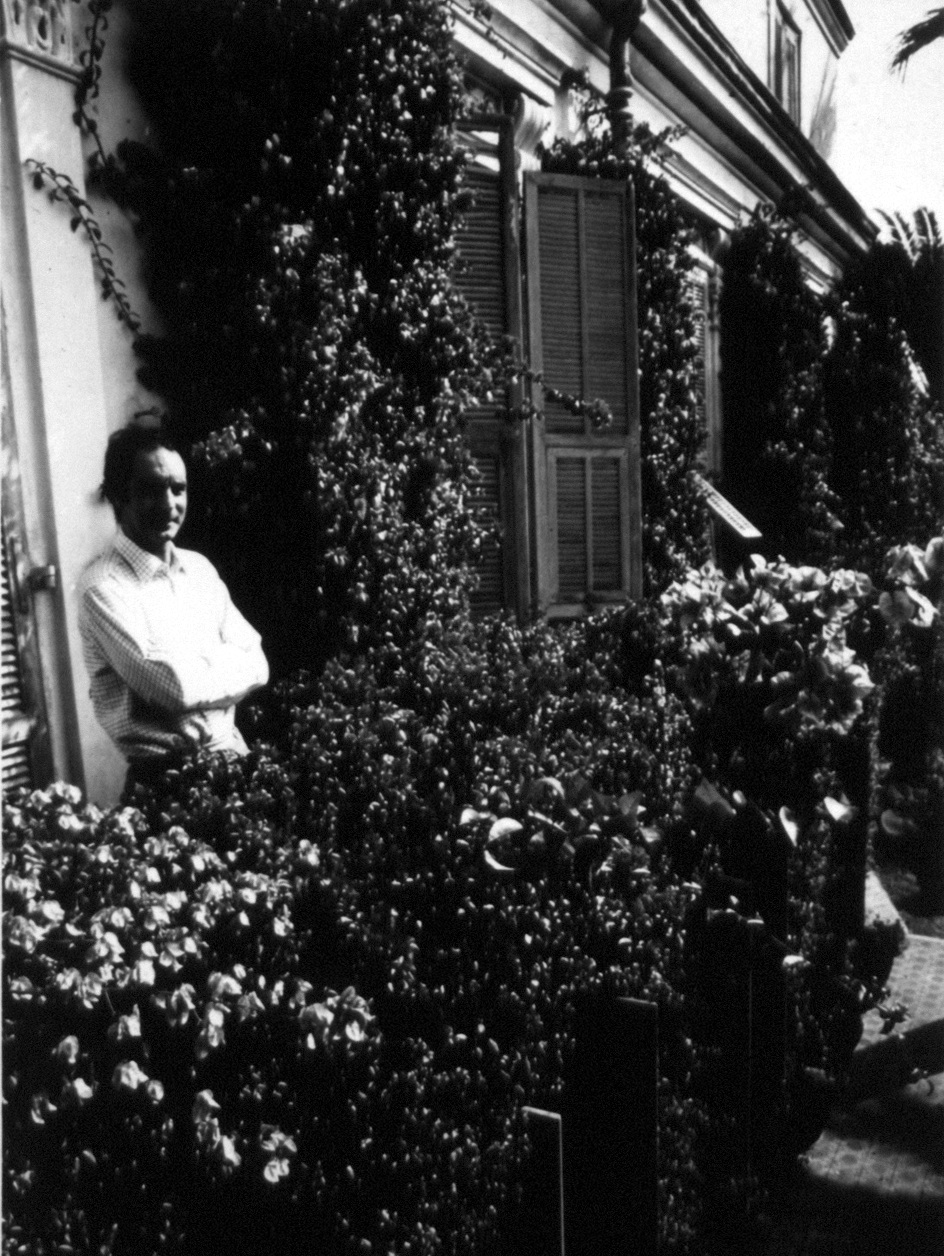
Robert Pogue Harrison will moderate the October 27 “Another Look” discussion on Cosmicomics, a collection of science-inspired fantasies by one of the greatest European writers of the last century, Italo Calvino. Harrison is the author of several acclaimed books – the newest, Juvenescence: A Cultural History of Our Age will be published later this year. Stanford’s Rosina Pierotti Professor in Italian Literature also hosts the popular and cerebral radio talk show, Entitled Opinions, available on iTunes. He contributes regularly to the New York Review of Books. He is a member of the American Academy of Arts and Sciences and was recently named chevalier de l’Ordre des Arts et des Lettres, one of the highest cultural honors France offers.
“Another Look”’s Cynthia Haven spoke with him in preparation for the upcoming event.
 Haven: Calvino once wrote, “I like telling things in cartoon form,” and even suggested that readers try to visualize his Cosmicomic stories as comic strips. Is this a hint about why he is calling this first 1965 collection of the tales Cosmicomics?
Harrison: Well, there’s a connection with the comic strips, as you mentioned. But I think it’s important to keep in mind that the Italian literary tradition is so rich in comic genres, broadly understood. Just think of Dante’s Divine Comedy, which he called the Commedia. It’s a cosmic comedy that takes Dante through the other world – hell, purgatory, and finally the heavens.
One aspect of Calvino’s title has to do with this literary predecessor, Dante. Another has to do with the role that comedy has played in so much of the history of “serious” Italian literature – Dante, Ariosto, Machiavelli, Goldoni, Pirandello, and many others.
Haven: So why are you drawn to these stories, and why did you pick them for “Another Look”?
Harrison: I like them because of their imaginative vitality and flair. I thought it would be a book of the sort that hardly anyone in the group would have read. Frankly, I find that Anglo-American fiction, which is a great tradition, is far too dominated by the genres of realism, with its lifelike characters, plots, setting, and so forth. From that point of view, Cosmicomics completely scrambles the readers’ expectations.
In addition, Calvino’s book deals directly with the whole phenomenon of evolution, which is the huge scientific obsession of our own time. I’m not referring to the debates about evolution versus creation. It’s more that in so many different areas of the sciences, the forces of evolution are more and more being brought in as an explanatory mechanism for understanding anything that is under investigation. The force of evolution, the anthropomorphic imagination that you have in these stories, along with the sheer charm of the book – that’s why I chose it.
 Haven: Let’s see. Calvino was born in Santiago de Las Vegas, a suburb outside Havana in 1923, to Italian parents who were both botanists. That’s why Calvino’s friend Gore Vidal wrote that “he instinctively looks to the natural world for illumination of his own interior” – rather as you do in your own book Gardens: An Essay on the Human Condition. But science, as well as nature, was clearly a powerful legacy from his parents.
Harrison: That’s right. Calvino makes it clear in several of his interviews that he’s been interested in science all along. For him, science and fantasy are not two separate things. There’s nothing more fantastical, in essence, than science. So he’s taking these scientific theses, which he prints at the beginning of each story, and then gives them each a story.
Continue reading →