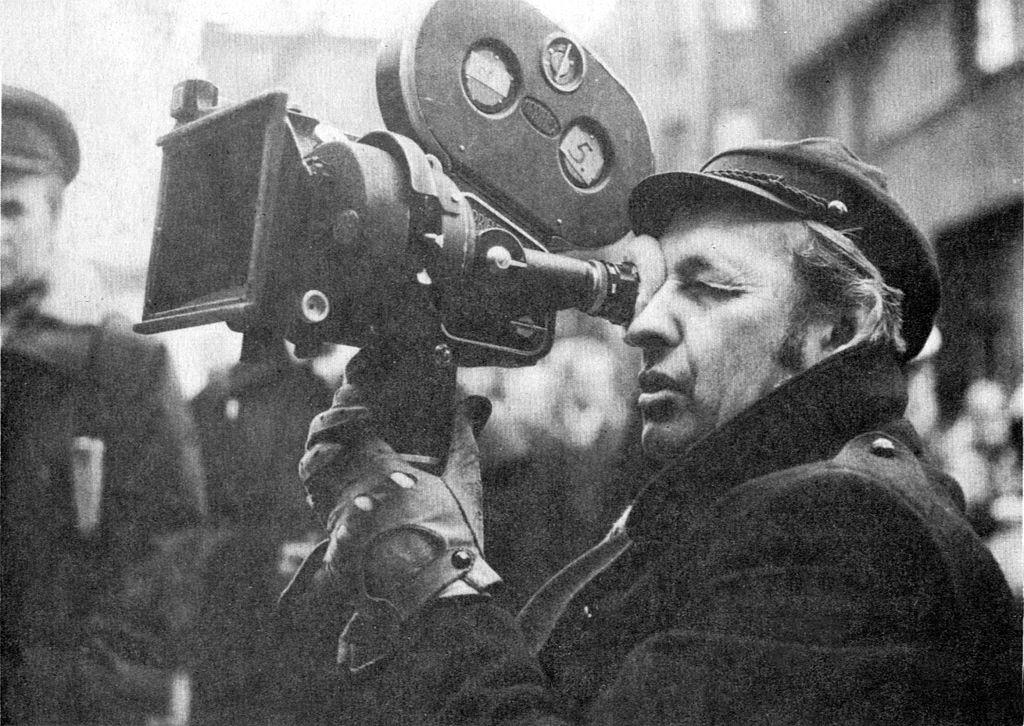
Andrzej Wajda in 1974
The Shadow-Line is the story of the inner life of its characters, told through a series of events – and that’s the very quality that defeated the eminent Polish film director, Andrzej Wajda when making his 1976 film, one of his few cinematic failures: “I pursued the mood, the elusive nature of words, understatement. And so I created an inarticulate, elusive, and uncommunicative film.” The film, Smuga Cienia, nevertheless won the Special Jury Prize at the 1976 Polish Film Festival.
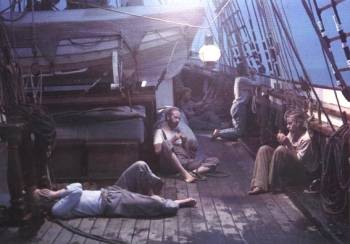 The director wrote years later that the book has “a clear, easy-to-follow plot; nonetheless, this prose is difficult to adapt for film.” He made the film in English – another decision that caused misgivings: “Why the hell do I need an English film?” he would ask himself.
Wajda, who turned 90 in March, bypassed a more straightforward idea to make this film – and we can only regret that he made one, not two, films. Screenwriter Bolesław Sulik approached him to make a film about a little-known incident in Conrad’s life. During World War I, Conrad had enlisted on a decoy ship designed to trace German U-boats. The small merchant ship was equipped with a hidden cannon.
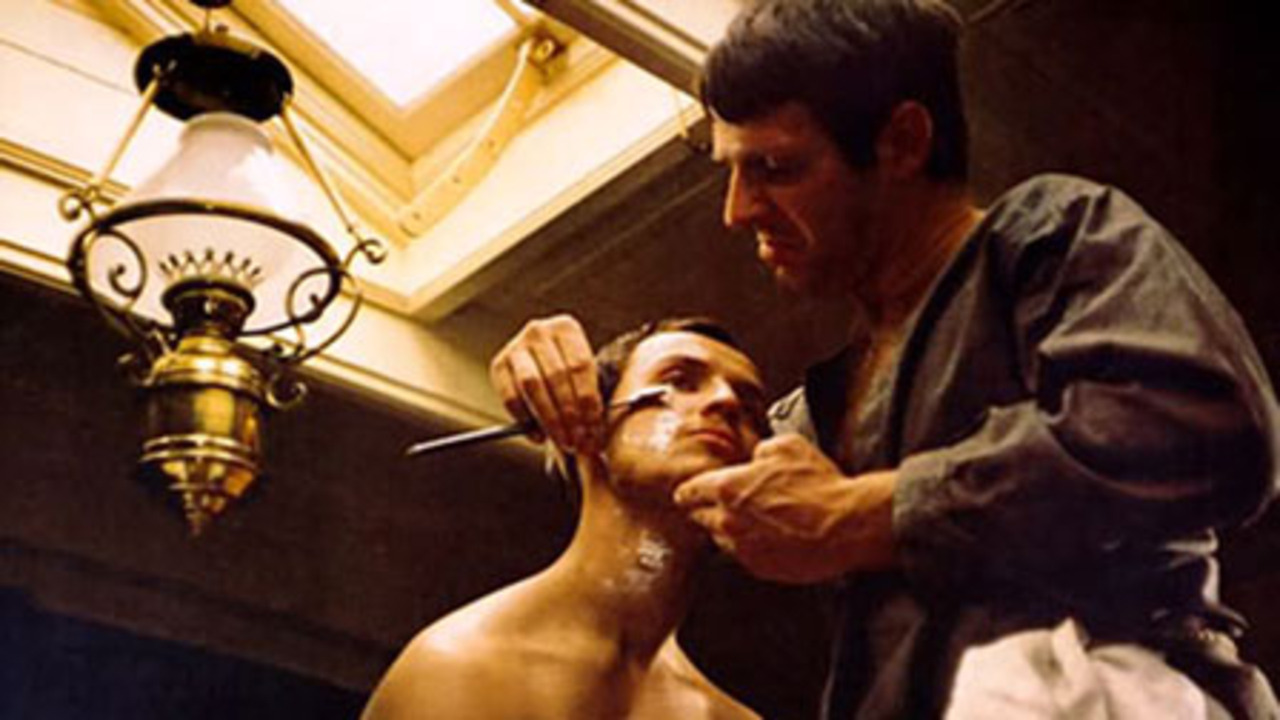 The crew was not happy about having a famous writer onboard, given the danger of their mission and their responsibility for his safety. When Conrad developed a bad cold, that was the moment they had waited for. They put him ashore. He was grabbed by the British police watching coastal traffic. Conrad’s heavy Polish accent didn’t help, and he his friends had a hard time getting him out of jail.
“Describing this anecdote now after many years, I can’t understand why I dropped this project,” Wajda muses years later. “Of course, Sulik’s screenplay was not as good as The Shadow-Line, but its essence was beautiful and it contained a noble film idea. However, at that time I believed it would be easier to adapt Conrad’s story than to write an original screenplay about him.”
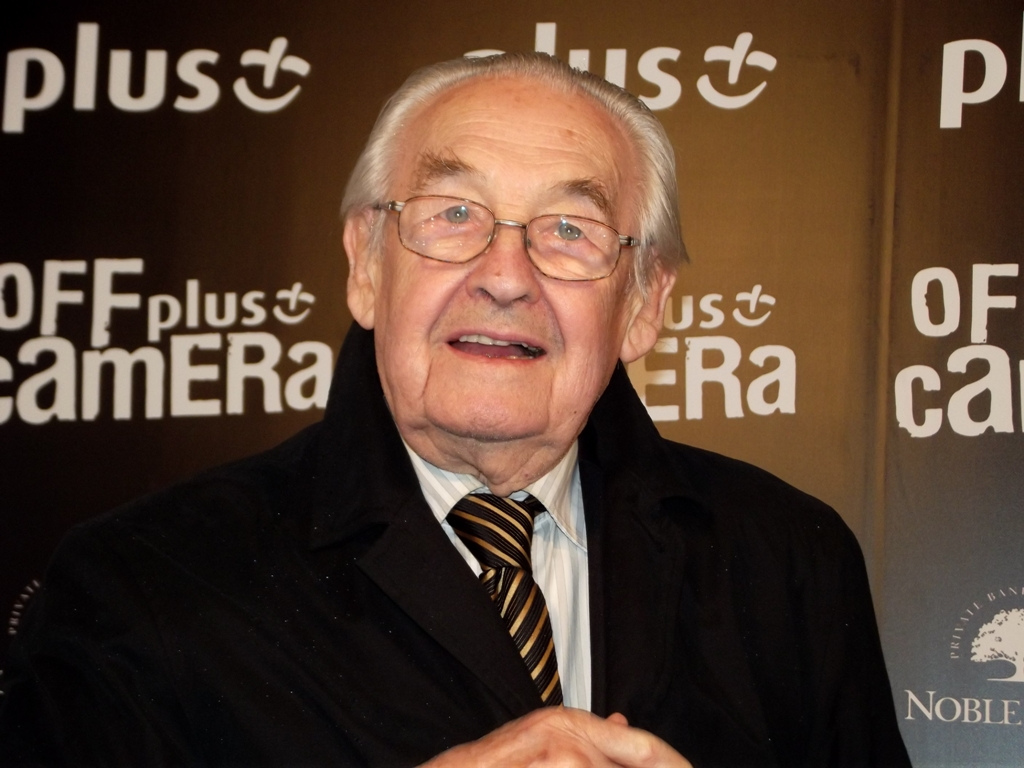
Andrzej Wajda today (Photo: Creative Commons)
After a month of filming, he wrote in his diary in October 1975: “I’ve had enough – I’ve lost heart for illustrating something that was written and meant to be read.”
“It is true that this film is different from my other films; it is ascetic, dry, with a single plot. It is a surprise for me as well. It turned out that Conrad’s short story is so cristalline, concise, and perfect in itself that it does not give in to any transformations. Everything that was added was artificial and unnecessary.”

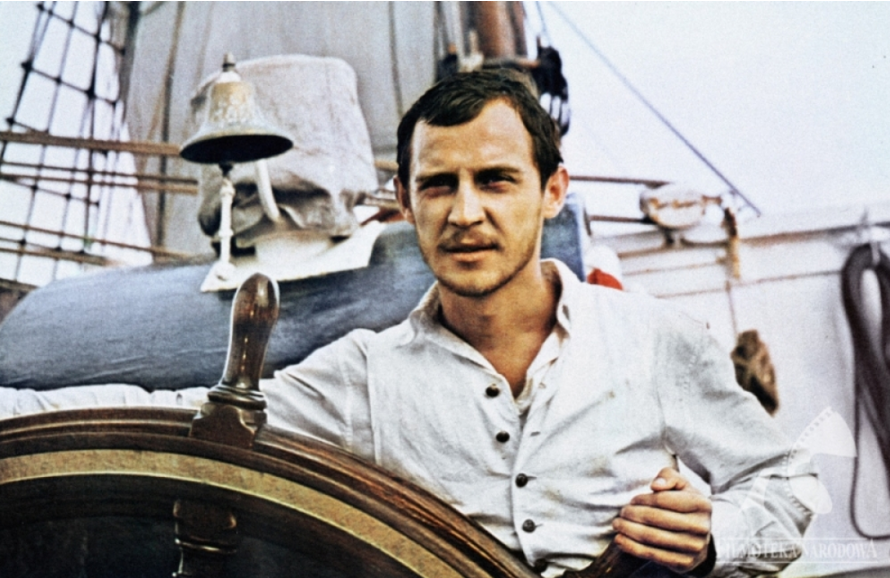
Marek Kondrat as the Captain
In 1981, he wrote: “If you want to be faithful to a novel which you are transferring to the screen, you must demolish it completely in order to put the pieces back together again and give it an opportunity to live on screen. When I think about adaptation I recall what Hamlet said to his mother: ‘I must be cruel, only to be kind.’ I wasn’t cruel enough to The Shadow-Line.”
“Conrad’s novels were our best loved reading during the Nazi occupation. Oh, how we loved to read them! But the problems contained in Conrad’s works, when presented in the reality of the Warsaw Uprising, acquire dramatic value, clarity and a cinematic character, which my film The Shadow Line is missing.”
Still want to give the film a try? It’s online here. You can hear the English beneath the Polish. Below, Marek Kondrat as the Captain in The Shadow-Line.