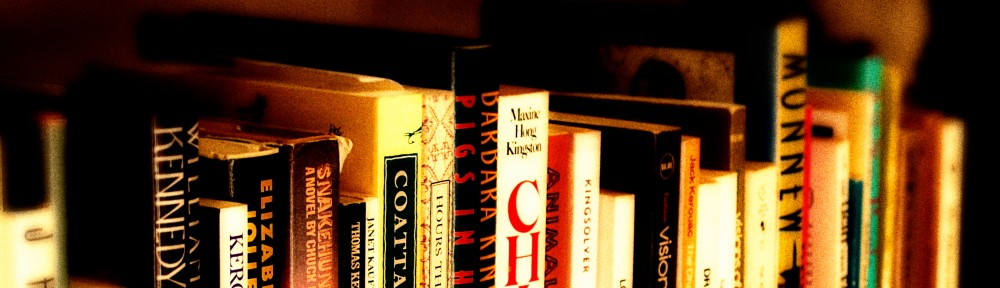
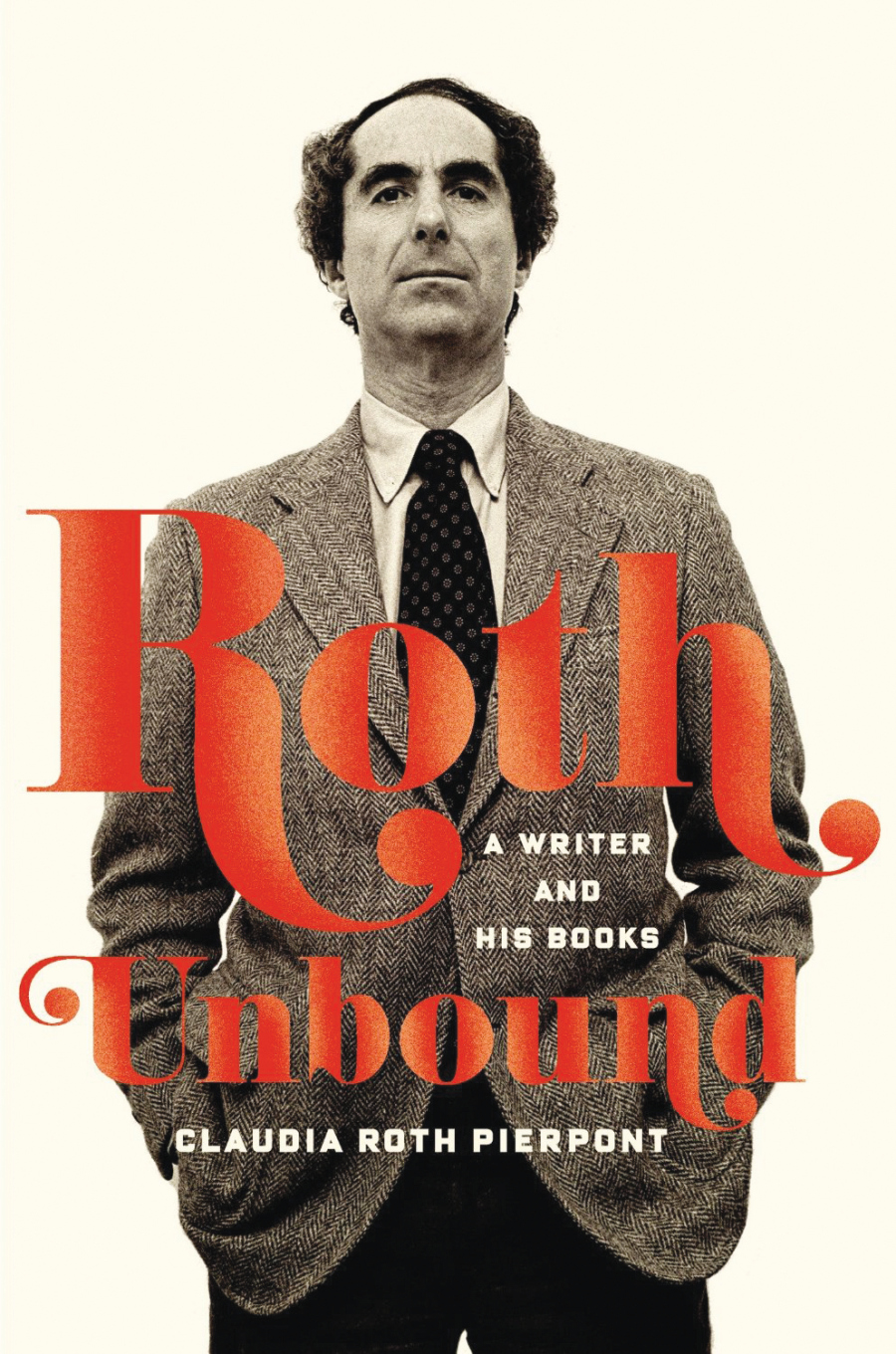
Claudia Roth Pierpont’s Roth Unbound: A Writer and His Books (Farrar, Straus & Giroux) was published to acclaim a few months ago. These excerpts are taken from her chapter on The Ghost Writer, “The Madness of Art”:
 The Ghost Writer, published in 1979, is a novel so seamless that it appears to have been conceived and poured out whole. In fact, it had been brewing for a long time and had grown out of disparate ideas. Roth had wanted to write about Anne Frank since the early years of his career: to change her history, to have her survive, and to bring her to America, as he had brought Kafka in his story of 1973. The subject of the martyred Jewish girl, however, was much harder to approach. The risks of hagiography on the one hand and tastelessness on the other were all too clear. And what would be the dramatic point?
♦♦♦
It is a book of memory, then: we are looking back a long way. The year is 1956. Lonoff, we soon learn, died five years later, in 1961. Zuckerman’s own fortunes after this visit are unknown. The snow and the fading light and the closely attentive prose give the atmosphere, throughout, a Chekhovian glow that has its precedent in the final scene of The Professor of Desire. But where that book ended, Roth is just beginning.
At least part of the breakthrough must be credited to a new protagonist, Nathan Zuckerman. Although Roth has the reputation of a confessional writer, no one is more aware of the importance, for literary freedom, of self-disguise. In an obituary essay on Malamud, published in The New York Times Book Review in 1986 and republished in Roth’s 2001 collection, Shop Talk, Roth points to the contrast between that tightly constrained man and his richly unconstrained art and invokes the German term from Heine, Maskenfreiheit: “the freedom conferred by masks.” One might accurately refer to Nathan Zuckerman as a new mask.
♦♦♦
Father versus Art: an even bigger problem or, at least, a more immediate one. And the choice, for Nathan, is unbearable. In his Paris Review interview, published a few years after the book appeared, Roth described the subject of The Ghost Writer as “the difficulties of telling a Jewish story.” (“In what tone? To whom shold it be told? To what end? Should it be told at all?”) Even back in 1971, in an article he wrote for The New York Times, he had recognized that it would have been “asking the impossible” of many Jews to react to his early stories without anger and fear, “only five thousand days after Buchenwald and Auschwitz.” But in this book he brings the problem home. Nathan is haunted by the image of his bewildered father, standing alone on a darkening street corner after Nathan has refused to repudiate his story, “thinking himself and all of Jewry gratuitously disgraced and jeopardized by my inexplicable betrayal.” Still, he can’t back down.
That night, in the makeshift bedroom of Lonoff’s study, he sits in his undershorts at the great man’s desk. Beside the desk, on index cards pinned to a bulletin board, are two quotations, one ascribed to Robert Schumann, about Chopin, and one by Henry James: “We work in the dark – we do what we can – we give what we have. Our doubt is our passion and our passion is our task. The rest is the madness of art.” The final phrase confuses him. Isn’t it art that is sanity, against the madness of everything else? Yet these are the words that hang over Lonoff’s head every day while he turns his sentences around. Nathan pulls out a pad and begins to write, first a reading list from the books on Lonoff’s shelves, then an account of the remarkable day, featuring Lonoff’s praise of Nathan’s own distinctive literary voice – “I don’t mean style,” Lonoff said, “I mean voice” – and, inevitably, a letter to his father about his art and his voice and his family bonds that will explain everything. But he cannot finish it because he cannot find the right words.
♦♦♦
The Ghost Writer has a formal, almost musical structure: four sections in which the themes intertwine as tightly as in a chamber quartet. The third section, the Anne Frank section, might be called the scherzo, or even quasi una fantasia, and required much rewriting. The first draft, Roth says today, was “overdramatized, and lyric in the worst sense,” since he was intimidated by the subject. He’d written it in the third person (Nathan telling Anne’s story) but then decided to rewrite it in the first person – Anne telling her own story – in order to wash out the overstatement and the saintliness, or what he calls “all that UJA rhetoric.” (The United Jewish Appeal was not known for its literary subtlety.) The girl who wrote the diary would never write in such an elevated tone about herself. Then he translated it back into the third person, now cleansed of the problems of tone. The result is natural and vivid and disconcertingly plausible; humor is continually shadowed by the sorrow of the source. Yet even Nathan finally suspects that this new fiction will not acquit him from the charges of anti-Semitism that his earlier story had brought. Rather, it will seem to his judges “a desecration even more vile than the one they had read.”