Join us at 7 p.m. (PST) on TUESDAY, SEPTEMBER 16, when Another Look presents Yōko Ogawa’s 2003 “The Housekeeper and the Professor,” a surprising story about what it means to live in the present, and about the curious equations that can create a family. The hybrid event will take place in Stanford’s Levinthal Hall, at the Stanford Humanities Center at 424 Santa Teresa Street on the Stanford campus.
Haven’t heard of her? You should. She won the American Book Award and every Japanese literary honor. Moreover, we’ve interviewed Ogawa’s translator Stephen Snyder, and got some responses from the Japanese author herself.
According to Nobel prizewinner Kenzaburō Ōe, “Yōko Ogawa is able to give expression to the most subtle workings of human psychology in prose that is gentle yet penetrating.”
The story: a brilliant math professor has a peculiar problem: ever since a traumatic head injury in a car accident in 1975, he has lived with only eighty minutes of short-term memory. His brain is like a tape that begins to erase itself every eighty minutes. An astute young housekeeper is hired to care for him. Her 10-year-old son becomes intrigued by the mysteries of math and befriends him. And every morning, as the Professor and the Housekeeper are introduced to each other anew, a strange and beautiful relationship blossoms between them. the Professor’s mind is still alive with elegant equations from the past. And the numbers, in all of their articulate order, reveal a sheltering and poetic world to both the Housekeeper and her young son.
According to Pulitzer-winning author Junot Diaz, “It’s a story about love, which is quite different from a love story. It’s one of the most beautiful novels.”
Our panelists for the event:
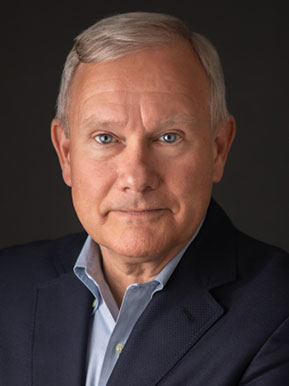
1) Robert Pogue Harrison, director of Another Look and host for the popular radio show Entitled Opinions; he is Stanford’s Rosina Pierotti Professor of Italian Literature, Emeritus.
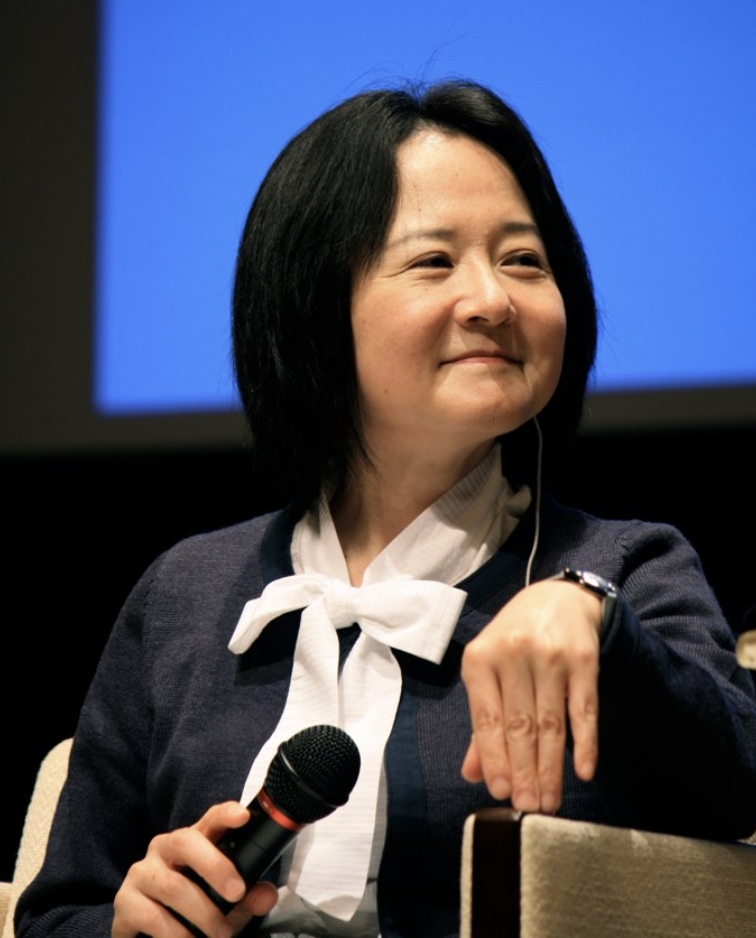
2) Indra Levy, associate professor in East Asian Languages and Cultures, is a senior fellow at the Freeman Spogli Institute for International Studies as well as an associate professor in Comparative Literature. She is the inaugural recipient of the Irene Hirano Inouye Memorial Award, Terasaki Center for Japanese Studies, at UCLA.
3) The third panelist is Rosaley Gai, the daughter of Chinese immigrants. She was swept up in the world of Japanese-language media, anime, and video games, which eventually led to her interest in J-pop and Japanese dramas. At Stanford she is working for a doctorate in Japanese literature and media.
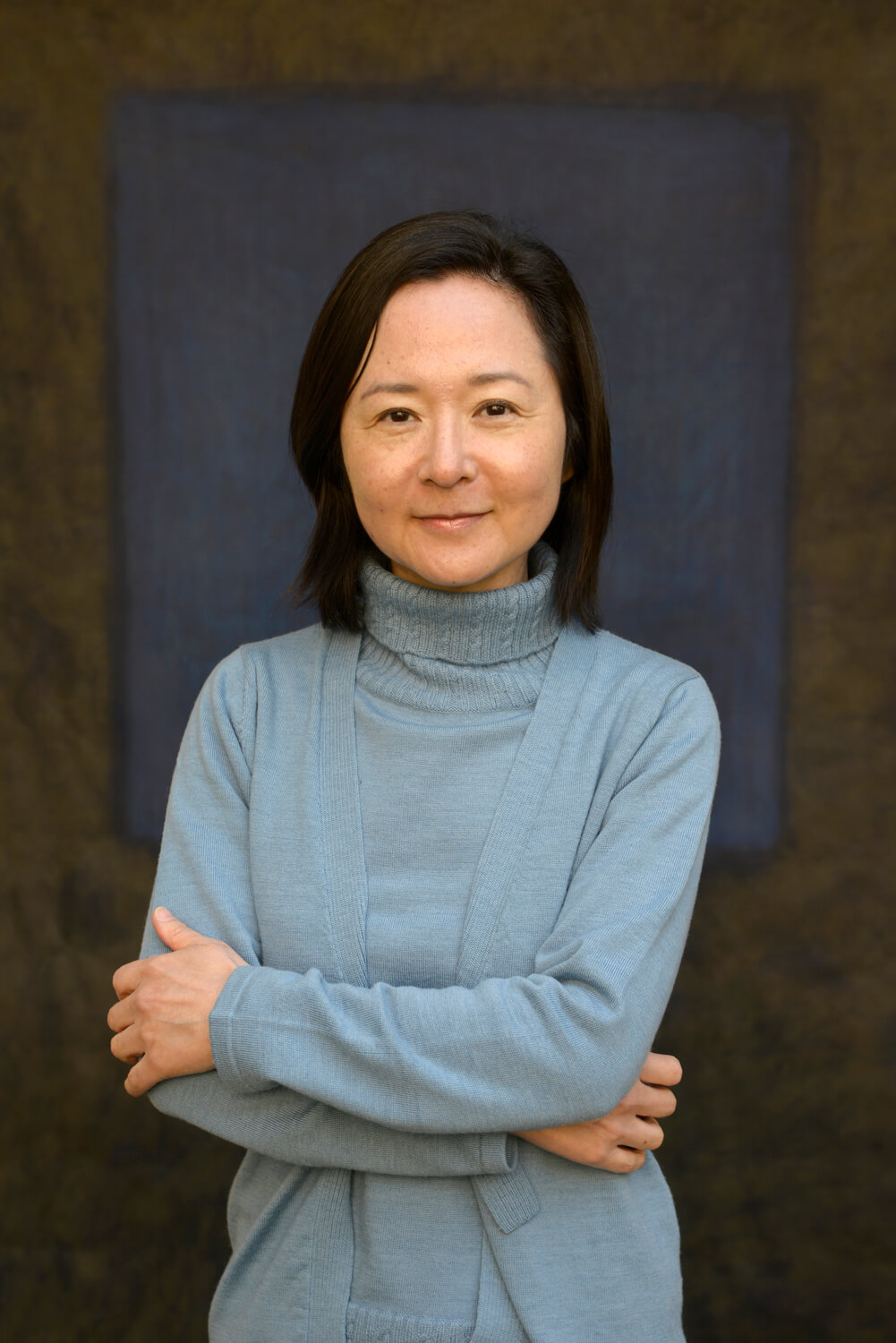
4) And we are adding a surprise fourth for this occasion: Lernik Asserianisthe Director of Stanford Undergraduate Research Institute in Mathematics (SURIM) and a Stanford Summer Bridge Program instructor. She has a PhD in Applied Mathematics at University of Southern California (USC), and is the recipient of a number of awards at Stanford and USC. She spent two-and-a-half years as a student researcher at NASA’s Jet Propulsion Laboratory (JPL) SIRI Internship Program, California Institute of Technology (Caltech) MURF Internship Program, and JPL Year-Round Internship Program, working on various projects in Earth Sciences.
This event is sponsored by Stanford Continuing Studies and the Division of Literatures, Cultures, and Languages. It is free and open to the public. Registration is encouraged, but walk-ins are welcome.
Another Look interviews Yōko Ogawa and translator Stephen Snyder, author of The Housekeeper and the Professor
On Tuesday, September 16, Another Look will spotlight Yōko Ogawa’s The Housekeeper and the Professor, a surprising story about what it means to live in the present and about the curious equations that can create a family.
Don’t forget to register for the September 16 event, in zoom or in person, here:
Ogawa’s book is translated by Stephen Snyder, professor of Japanese Studies at Middlebury College in Vermont and a leading translator of Japanese literature. Both agreed to talk to Another Look for the upcoming event.
In addition to his work with Yōko Ogawa, Snyder has translated Kenzaburō Ōe, Ryu Murakami, and Miri Yu, among others. His translation of Natsuo Kirino’s Out was a finalist for the Edgar Award for best mystery novel in 2004. His translation of Yōko Ogawa’s Hotel Iris was short-listed for the Man Asian Literary Prize in 2011.
Both author and translator offered to answer a few questions about this surprising book, as well as the complex dynamic between translator and author, as we prepare for our Stanford celebration of Ogawa’s book. Cynthia Haven was able to ask both translator and author a few questions.
Questions for author Yōko Ogawa:
Yōko Ogawa generously offered to answer a couple questions for Another as well. She is busy with the serialization of her next novel, so her comments are necessarily brief:
Question #1 for Yoko Ogawa: I’ve read of your interest in The Diary of Anne Frank and its influence on your work. Can you elaborate a little?
One of the major reasons I was drawn to The Diary of a Young Girl is that, within the confinement and restrictions of being locked away, there existed the infinite freedom of writing a diary. The ability to make such seemingly contradictory states coexist gives people vitality. I believe I have continued to pursue this in my fiction.
The Professor can only retain memories for 80 minutes. But by letting his mind play within the infinity of numbers, he enriches his life. Here too, we find the coexistence of the finite and the infinite—of contradiction.
Question #2 for Yoko Ogawa: Can you tell us a little about the author’s interest in mathematics?
The farther something is from language, the more I want to write about it in fiction.
Chess, birdsong, mementos, numbers… All are things that require no words. To express the silent nature of numbers through language—this too contains the allure of contradiction.
Questions for translator Steven Snyder:
Your collaboration with Yōko Ogawa has been a fruitful one. How did your work together begin?
I am extremely fortunate to have been asked to translate so many of Yōko Ogawa’s works. More than twenty years ago, I was asked to translate “A Cafeteria in the Evening and a Pool in the Rain” for a literary journal that ceased publication shortly after I had finished the translation. Yōko’s agent suggested that we send the story to TheNew Yorker, and after it was published there, Picador agreed to publish the first book-length works.
You’ve translated the dystopian The Memory Police, The Diving Pool, Hotel Iris,and of course our fall feature for Stanford’s Another Look book club, The Housekeeper and the Professor. How was the work different on each? How did your understanding of Ogawa’s work change with each translation?
I translated The Diving Pool first, followed by The Housekeeper and the Professor, Hotel Iris, Revenge, then The Memory Police and, most recently, Mina’s Matchbox. The works are quite different—novels, novellas, and linked short stories—and the tone varies considerably from lighter works, such as The Housekeeper and the Professor and Mina’s Matchbox, to much darker ones, such as The Memory Police and Hotel Iris, but Ogawa’s style is consistent. Her prose is always lucid and stately, her imagery always original and striking. As I’ve translated these works – and read many others that have not been translated into English – I feel I’ve come to understand the common themes and the larger authorial vision that unites her work. A reader could explore this by making a careful comparison, for example, between The Housekeeper and the Professor and Hotel Iris. While one work is charming and uplifting and the other extremely dark, they share a common structure and any number of motifs, though employed to very different ends. As I’ve translated successive works, I have also come to feel that I am better able to grasp the essence of Ogawa’s style in Japanese and create an idiom for it in English that evolves from work to work but is also informed by the general consistency of her practice.
What are the challenges of translating Ogawa’s work? What inevitably gets lost in translation?
A great deal is inevitably lost in any translation, especially one between languages as different as Japanese and English. The genius of Japanese linguistic economy – elided pronouns, formulaic nominal patterns repeated verbatim, etc. – is impossible to reproduce in English without making the prose seem nonsensical. English can seem wordier, more explicit, less suggestive, but a consistent translation strategy, especially with the luxury of being able to develop it over several works, can help mitigate the loss. There are also challenges specific to certain works and scenes.
In The Housekeeper and the Professor, perhaps the most difficult scene was the one where the professor helps Root with his homework assignment on palindromes. Palindromes are, by definition, untranslatable. With the help of the editor, I had to find English language palindromes to substitute for the Japanese ones Root and the professor quote or invent. In a moment of translation serendipity, when the professor proposes the final palindrome, in Japanese he says “Reito toire,” a nonsense phrase that translates as “frozen toilet,” but searching through English palindromes, we discovered “I prefer pi”—a choice that could not have been better suited to the theme of the novel.
We’re not the first to showcase The Housekeeper and the Professor. You note it has been a featured book in colleges and cities around the world – why do you think that is so? What reaction have you heard from readers around the world? Any stories about its reception?
I suspect it was adopted as common reading by libraries and colleges because it combines a moving human story with a clever and stimulating introduction to some basic math concepts. I think some of us who have little skill in mathematics are attracted to the gentle, manageable explanations. One town that selected the book for its library reading program invited a guest who had a disability that resembled the professor’s and asked him to discuss the experience of memory loss. Sitting next to him at dinner added a new understanding to my own reading of the novel.
In a New York Times interview in 2019, you said, “Her narrative seems to be flowing from a source that’s hard to identify.” Has it been any easier to identify in the years since? Can you share what you have learned?
Did I say that? I suppose I was referring to the extraordinary range of Yōko’s work and her amazing productivity, but also to the mysterious way she structures a narrative for extraordinary effect. The linkages between the eleven stories in Revenge, for example, are as clever and complex as they are illuminating and central to the power of the work, but it’s difficult to say where that particular narrative impulse originates—even when reading as closely as a translator must.
What’s next for you two? Is there another book in the works?
Yes, I am currently translating Chinmoku hakubutsukan under the working title “The Museum of Silence.”
Prof. Robert Pogue Harrison had a question that is on all our minds: Does Ogawa have a passion for mathematics? How did the idea for this book come to her?
I noticed that in 2006, she worked alongside the mathematician Masahiko Fujiwara to co-write “An Introduction to the World’s Most Elegant Mathematics,” a dialogue on the extraordinary beauty of numbers. Surely that was an influence – The Housekeeper and the Professor was published two years later. What has she said about it?
Professor Harrison is correct, Yōko does indeed have a passion for mathematics, though the influence runs the other way. She published The Housekeeper and the Professor (originally Hakase no aishita suushiki) in 2003 as a result of her longstanding interest in mathematics and, on the basis of its great success in Japan, began the discussion with Professor Fujiwara that resulted in the book mentioned. Like many writers, Japanese or otherwise, she tends to develop great passions for a variety of subjects, many of which result in a novel. Her interest in chess became the wonderful “Holding a Cat, Swimming with an Elephant,” which has not yet been translated into English but has been translated into French by Martin Vergne.
Please join us at 7 p.m. (PST) on Tuesday, September 16, when Another Look presents Yoko Ogawa’s The Housekeeper and the Professor, a surprising story about what it means to live in the present and about the curious equations that can create a family. The hybrid event will take place in Stanford’s Levinthal Hall, Hall at the Stanford Humanities Center at 424 Santa Teresa Street on the Stanford campus.
According to author Kenzaburō Ōe, “Yōko Ogawa is able to give expression to the most subtle workings of human psychology in prose that is gentle yet penetrating.”
The story: a brilliant math professor has a peculiar problem: ever since a traumatic head injury in a car accident in 1975, he has lived with only eighty minutes of short-term memory. His brain is like a tape that begins to erase itself every eighty minutes.
An astute young housekeeper is hired to care for him. Her 10-year-old son becomes intrigued by the mysteries of math and befriends him. And every morning, as the Professor and the Housekeeper are introduced to each other anew, a strange and beautiful relationship blossoms between them. The Professor’s mind is still alive with elegant equations from the past. And the numbers, in all of their articulate order, reveal a sheltering and poetic world to both the housekeeper and her young son.
According to Pulitzer-winning author Junot Diaz, “It’s a story about love, which is quite different from a love story. It’s one of the most beautiful novels.”
We will be announcing panelists soon. Meanwhile, register on the link below for hybrid or in-person attendance (we welcome walk-ins, too, but encourage registrations, which allow us to plan):
On Thursday, April 17, Another Look presented Dino Buzzati’s 1960 The Singularity. The book, originally published in 1960, probes some of the deeper human questions surrounding artificial intelligence . It was republished last year in a new translation by Anne Milano Appel for New York Review Books.
Will Dunn, writing in The New Statesman, called it “a stylish, compelling little mystery” that, although more than six decades old, “predicts … with unsettling accuracy. Its characters are confronted by the presumptuous arrogance of men whose brilliance in engineering disguises how morally and emotionally incapable they are.”
The hybrid event took place in Levinthal Hall at the Stanford Humanities Center. Three of the panelists for the event agreed to share their comments.See the posts below.
Panelists included:
• Stanford Prof. Robert Pogue Harrison, author, director of Another Look, host of the radio talk show and podcast series Entitled Opinions, and a regular contributor to The New York Review of Books
• Stanford Prof. Tobias Wolff, one of America’s leading writers and the founding director of Another Look, as well as a recipient of the National Medal of Arts.
• Stanford Associate Prof. Laura Wittman, is a specialist in modern Italian literature. Some of you will remember her from our 2018 event on William Henry Hudson’s Green Mansions.
• Bryan Cheong received his Bachelor of Science from Stanford University with a degree in applied and computational mathematics before receiving a Masters in Materials Science, also from Stanford. For the past few years he’s been working in the high-tech sector of Silicon Valley. Listen to the podcast on the link below:
A Christian theological subtext underlies Laura’s lamentations about being deprived of a body in her cybernetic afterlife. Many visions of the afterlife in Western culture involved a disembodied soul, a de-corporealized selfhood as it were. Plato gave us the most sublime version of that wholly spiritual or noetic afterlife. Yet Christianity introduced a different hope or expectation into the equation, one which convinced Saint Augustine, who had been sold on Plato’s philosophy, to convert to Christianity. Why?
Because Christianity promised a resurrection of the body. Bodies are the locus of identity. Without bodies there is no recognition. In Dante’s paradise the beatified souls, who exist as points of light, anticipate with surplus of joy the resurrection of their flesh at the end of time. Their bliss is in fact imperfect until they recover in time what time has robbed them of, that is, the bodily matter with which their personal identities and appearances were bound up. Until the restitution of their bodies at the end of time the blessed in Dante’s heaven, they cannot properly recognize one another, as they long to do with their loved ones.
In Paradiso 14 Dante writes of the two groups of saints he meets:
“So ready and eager to cry ‘Amen’ did one chorus and the other seem to me that clearly they showed their desire for their dead bodies, not just for themselves but for their mothers, and fathers, and the others who were dear to them before they became sempiternal flames.”
In that respect all of us on Earth, insofar as we are in our bodies, are more blessed than the saints in Dante’s heaven, not only because we have the extraordinary blessing of proprioperception[1] (which Laura desperately desires), but because we also have the extraordinary capacity to recognize one another in our individuation.
[1]Proprioperceptio, otherwise known as kinesthesia, is your body’s ability to sense movement, action, and location. Proprioception is crucial for balance, posture, and coordination while standing.
Android fiction is very old. It began long before actual androids. It started somewhere in the early 19th century with E.T.A. Hoffman’s story “The Sandman” (1816). I suspect you could back a lot further. Descartes wrote about “animal-machines” in the 17th century.
Generally speaking, the genre of android fiction expresses much anxiety about what it is to be human, particularly in relation to a new technology – whatever the technology in that historical moment happens to be. Think of Frankenstein (1818). Technology is supposed to free humans from nature and from death, to make life better for humans and perhaps to make better humans. And yet it seems to produce monsters. As in Frankenstein, these supposed monsters often reveal something scary about humans themselves; they point the finger at us, who make and use the technology.