
WE’D LOVE TO HEAR FROM YOU! THE WIFE OF MARTIN GUERRE, CONTINUED…
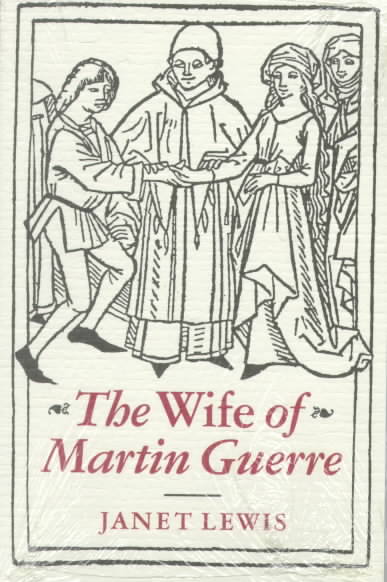 Last night’s discussion of The Wife of Martin Guerre was galvanizing. Clearly, the standing-room-only event had only started to scratch the surface of Janet Lewis‘s troubling novel in the allotted ninety minutes. The lively occasion seemed to end with an explosion of “but… but… but…” as we teased out the implications of the 16th-century tale of imposture.
Is Bertrande a hero of conscience – or a victim of inherited conventions? What are we to make of the imposter Arnaud du Tilh? And, as Stein Visiting Writer Richard Powers noted, isn’t there a moment in every marriage where a husband or wife says to a spouse, “You aren’t the person I married”?
We thought it might be fun to continue the discussion. Send your comments to clh@stanford.edu, and we’ll post them below. (Or leave a comment on the “reply” button below, and we’ll move it into this post.)
As always, we’d love to hear from you.
Comments:
I had rather little sympathy for Bertrande while reading the novel. Her dilemma seemed too narrowly religious in a way that didn’t speak to me, she seemed more rigid that righteous, and her chosen mode of resolution seemed far too damaging to those around her.
But during our discussion, I realized that she was fighting for more than the salvation of her soul (in the strictly religious sense): as many of you pointed out, she was fighting for her very selfhood, for the truth of her mind, for affirmation of her sanity.
But one important piece of evidence for this reading was not mentioned last night: the true nature of the imposter’s crime — which was, in fact, a crime against selfhood. No matter how decent a man he turned out to be, he was still guilty of the most fundamental sort of fraud: that of the usurper of somebody else’s selfhood.
This tragic pair – one whose self-knowledge, sanity, and very selfhood were under attack, and the other an unrepentant denier of selfhood, a sort of “self-snatcher” – are stuck in an inevitable conflict that should trouble even the non-religious modern reader. We all have selves – souls – the deepest and most fundamental part of our being. It seems to me that this is precisely what was at stake in this harrowing novel.
– Glen Worthey
I was not too convinced on what happened to the characters in the story. I thought the story was like a tall tale for me. However, I was intrigued by the theme of truth and lies. The author forced her characters to face with truth and lies and lead to their different responses to the challenge. Isn’t it often easier to live with a lie than dealing with truth? Facing the truth can be very painful. Who likes to be in pain? You can find these kind of examples all over the Old Testament. People prefer to look away from the truth. What choice will we make for ourselves: facing the truth with pain and live happily in a lie? How much truth can one handle?
– Sunny Chen
Thank you. It was a terrific evening. Also the “keepsake give away” was very special – thanks for that.
– Wendy Webb
Thank you so much for a sumptuous reading and discussion of The Wife of Martin Guerre. I so appreciate your saving me a seat as I cam coming up from Carmel to enjoy the spirited conversation. Since my son is a sophomore at Stanford, seeing him during the quarter was an extra bonus!
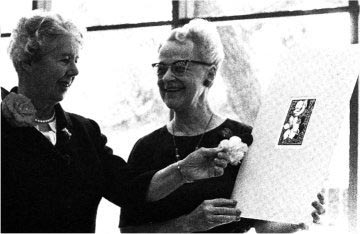 In doing a bit of family history digging, I found out that my grandmother Bernice Taylor FitzGerald and her sister Della Taylor Hoss, were great pals with Janet Lewis. From what my mother remembers, those ladies had many adventures throughout the years: art, book, camping and excursions to Yosemite undertaken as they crisscrossed paths at Stanford.
– Bryndie Beach
I found myself comparing Bertrande to one of those wives who have been married happily for years and finds out her husband is a bigamist. I don’t care how happy you’ve been, the idea of ‘forgiving and forgetting’ would be repugnant. She was lied to in the most fundamental way. As Glen [Worthey] said, “he was…guilty of the most fundamental sort of fraud.”
– Elizabeth Waldo
I had rather little sympathy for Bertrande while reading the novel. Her dilemma seemed too narrowly religious in a way that didn’t speak to me, she seemed more rigid that righteous, and her chosen mode of resolution seemed far too damaging to those around her.
But during our discussion, I realized that she was fighting for more than the salvation of her soul (in the strictly religious sense): as many of you pointed out, she was fighting for her very selfhood, for the truth of her mind, for affirmation of her sanity.
But one important piece of evidence for this reading was not mentioned last night: the true nature of the imposter’s crime — which was, in fact, a crime against selfhood. No matter how decent a man he turned out to be, he was still guilty of the most fundamental sort of fraud: that of the usurper of somebody else’s selfhood.
This tragic pair – one whose self-knowledge, sanity, and very selfhood were under attack, and the other an unrepentant denier of selfhood, a sort of “self-snatcher” – are stuck in an inevitable conflict that should trouble even the non-religious modern reader. We all have selves – souls – the deepest and most fundamental part of our being. It seems to me that this is precisely what was at stake in this harrowing novel.
I was not too convinced on what happened to the characters in the story. I thought the story was like a tall tale for me. However, I was intrigued by the theme of truth and lie. Author forced her characters to face with truth and lie and lead to their different responses to the challenge. Isn’t it often easier to live with lie than dealing with truth. Facing the truth can be very painful. Who like to be in pain? You can find this kind of examples all over the Old Testament. People prefer to look away from the truth. What choice will we make for ourselves: facing the truth with pain and live happily in lie? How much truth can one handle?
I found myself comparing Bertrande to one of those wives who have been married happily for years and finds out her husband is a bigamist. I don’t care how happy you’ve been, the idea of ‘forgiving and forgetting’ would be repugnant. She was lied to in the most fundamental way. As Glen said, “he was…guilty of the most fundamental sort of fraud”