Stanford’s “Another Look” spotlights Marguerite Duras’ The Lover

Stanford’s book club honors the famous French writer’s centenary with a May 12 discussion of The Lover, her autobiographical tale of her scandalous teenage affair with an older Chinese millionaire, set in her native Saigon.

By Cynthia Haven

Long before most Americans could find Vietnam on a map, the French ruled Indochina, and its Chinese, French, and native Annamese denizens lived in an unequal colonial stew. So when a 15-year-old French schoolgirl had a passionate affair with a wealthy 27-year-old Chinese lover in Saigon, it created a scandal. The affair eventually became a book, and the book became a masterpiece.

The writer, Marguerite Duras, would tell the story again and again, throughout her lifetime, but never more compellingly than in The Lover, which received a prestigious Prix Goncourt when it was published in 1984, and sold two million copies.

Now, in Marguerite Duras’s centenary year, the “Another Look” book club is celebrating the author and her book at 7:30 p.m., Monday, May 12, at the Stanford Humanities Center’s Levinthal Hall. The panel will be moderated by Blakey Vermeule, professor of English, with her colleague Paula Moya, professor of English, and Stephen Seligman, a psychiatrist and professor at the University of California, San Francisco. The event is free and open to the public.

Vermeule had read the short novel as a high school student, but on rereading it, “I was gobsmacked,” she said. “It’s one of these masterpieces that gets rediscovered again and again. It’s a very intense book, so powerful it had slipped my mind what a truly great and subtle work of art it is.” With the centenary, she thought it was an excellent moment to revisit the book the New York Times Book Review had called “powerful, authentic, completely successful … perfect.”

Duras’ simple, terse writing style reads “as if language itself were merely a vehicle for conveying passion and desire, pain and despair,” wrote British author and journalist Alan Riding. “The mysteries of love and sex consumed her, but she had no room for sentimentality in her works, or indeed, in her life.”

“I write about love, yes, but not about tenderness,” she had told him in a 1990 New York Times interview. “I don’t like tender people. I myself am very harsh. When I love someone, I desire them. But tenderness supposes the exclusion of desire.”

The Mekong River ferry where the lovers met.

Duras was born in Gia Dinh, near Saigon. Her father fell ill and returned to France, where he died. Her widowed mother, a teacher, was bankrupted in a shady land deal. The family struggled as impoverished colonials in a small tight-knit, gossiping community. Duras recalls an abusive mother who had severe bouts with depression, a drug-addicted brother who beat his sister fiercely and stole from the family (and even its servants), and a beloved younger brother who died young. When she met a Chinese millionaire on the ferry crossing the Mekong River, the teenager saw a doorway to a different world. The affair continued until Duras returned to France to finish her education at 18.

In France, she worked in the French Résistance in a team under the direction future French President François Mitterand, who remained a lifelong friend. After the war, she became a member of the French Communist Party. Duras is often categorized with the writers of the postwar “nouveau roman,” a movement that loosened the grip of plot- and character-driven narrative, blurring the boundaries of time and space, but Duras resists easy categorization. She experimented with novels, plays, films, essays, and memoir. She was fascinated, in particular, by the possibilities of film, most notably writing the screenplay for Alain Resnais’s 1960 classic, Hiroshima, Mon Amour.

She wrote The Lover at 70, when she had become a tiny old woman, her body wracked by alcoholism and cigarettes, giving interviews often read like a parody of what a French avant-garde writer is expected to sound like. She told the story in different ways with widely divergent details, so much so that until the discovery of an unpublished diary, there could be doubts that the affair had happened at all.

“She had an intensive, almost anti-social capacity to tell the story the way she wanted to tell it, in all its violence and ugliness,” said Vermeule. “The need to be utterly solitary, and socially antipathetic – very rarely does one see it in women writers. It’s not a pose they claim,” she said.

“This book is so very psychoanalytic. She’s clearly under that spell. Look at the nonlinearity of the story. As narrrator, she is almost dissociated from herself, moving from first to third person and back.”

Duras quarreled with film director Jean-Jacques Annaud as they collaborated on the 1992 film of the book, and retaliated with 1991’s The North China Lover, as a way of reclaiming her story. But no version before or since had the luster of The Lover. According to Stanford scholar Marilyn Yalom writing in How the French Invented Love, “She could transform a somewhat sordid affair into a mutually passionate romance and project into posterity her vision of love as an irresistable force that penetrates through the skin, regardless of its color.”

That vision continues to transfix readers, and The Lover continues to draw fans, decades after its first publication. In The Independent, South African playright and novelist Deborah Levy wrote in 2011, “The Lover does not just portray a forbidden sexual encounter of mind-blowing passion and intensity; it is also an essay on memory, death, desire and how colonialism messes up everyone.”

“Marguerite Duras was a reckless thinker, an egomaniac, a bit preposterous really. I believe she had to be. When she walks her bold but ‘puny’ female subject in her gold lamé shoes into the arms of her Chinese millionaire, Duras never covertly apologises for the moral or psychological way that she exists.”

 ***

The “Another Look” book club focuses on short masterpieces that have been forgotten, neglected or overlooked – or may simply not have gotten the attention they merit. The selected works are short to encourage the involvement of the Bay Area readers whose time may be limited. Registration at the website anotherlook.stanford.edu is encouraged for regular updates and details on the selected books and events.
 

But did it really happen?

By CYNTHIA HAVEN

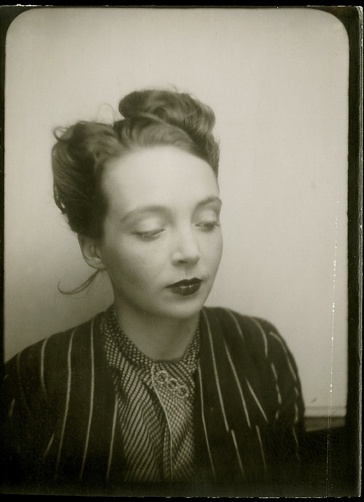
The young Marguerite Duras

“I swear it. I swear all of it. I have never lied in a book. Or even in my life. Except to men. Never.”

 With these words, Marguerite Duras penned a categorical denial of any fanciful invention in her many autobiographical novels and films. One ponders the odd qualification: admitting she “only” lied to men implies she was willing to deceive half the human race.

The denial invites the question: Did she ever tell the truth? She says she was ostracized for her reckless teenage affair with an older Chinese millionaire – yet one classmate remembers Marguerite as secretive and well-behaved, though she boasted mysteriously of leading a double life. The former student clearly recalls Duras appearing at school, flaunting a diamond ring, saying she knew a rich man. This incident represents one contact point between her fiction and the truth. Yet another lycée classmate said, “I just don’t understand this story about a Chinese lover. It wasn’t like today. There were no lovers, especially not Chinese lovers.”

The “real” lover?

One boarder at the Duras domicile described Duras’s mother as a strict teacher able to keep order among her unruly charges; she took him to mass every Sunday. A school counselor described her mother as a great teacher:

“They worship her in Indochina because she’s so dedicated to her profession. She has educated thousands of children … They say she has never given up on a child, not until he could read and write. She would hold classes late into the evening for children she knew would someday be workers … when students lived too far away to go home in the evening, she had them sleep at her house on mats in the living room, or in the school’s playroom…” 

The mad queen of desperate poverty? Not quite. And yet the counselor’s account comes from Duras herself, documented in a later memoir. Duras herself is telling the other side of the story, the side that undermines and argues with her own earlier versions.

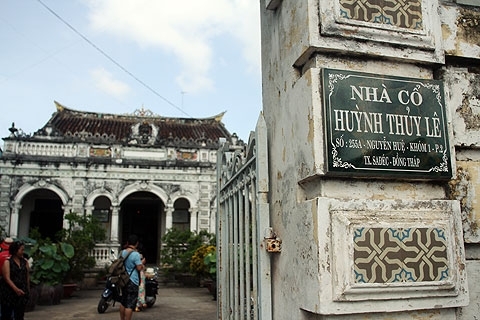
The house with blue tiles … now a tourist attraction

She didn’t always reverse herself. Duras portrays her mother as crazy and desperate, frozen in time and literature as the tenacious colonial mother struggling to save a disastrous investment in 1950’s The Sea Wall, or the seriously depressed and abusive mother in 1984’s The Lover. But the mother wasn’t only a naïve victim of the French bureaucrats in the Land Registry of Cambodia. Far from languishing in her misfortune, she had become a wealthy woman by the time she returned to France in 1950, sending lots of money to her children. She had launched an upper-crust Saigon boarding school and purchased five houses which had proven to be a lucrative investment. She also trafficked in the Indochina piastres that all whites in the colony went in for, according to Duras’s biographer Laure Adler. She was a resilient self-made woman, more than able to get on her feet again after an economic disaster.

Did the Chinese lover exist? It appears so, but the story changed greatly over the years. In The Sea Wall, Duras told the story of the teenage Suzanne courted by “Monsieur Jo,” the unattractive, depraved son of a wealthy planter. In this version he is white, not Chinese, and courts his prey in a seedy nightclub. By 1984, he would morph into the more alluring, nameless Chinese millionaire in The Lover.

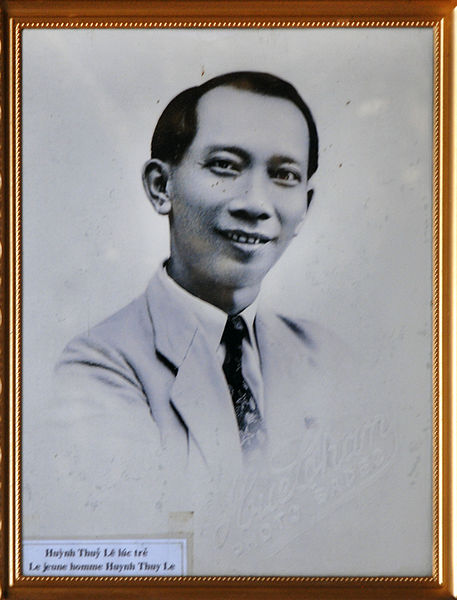
The lover has been identified as Huynh Thuy Le. The mansion with the blue tiles exists: his family home, 140 kilometers southwest of Saigon in Sadec, is now a tourist attraction and welcomes 1,000 visitors a month. The photo shows the gentle, wispy man she describes in the lover, a little wan and eager to please. By the time of her next book on the subject in 1991, The North China Lover, the hero has changed again, and Duras insists that this version is the once-and-for-all “truth”:

Continue reading

Lycée to the teenage Duras: “Don’t take anyone’s advice.”

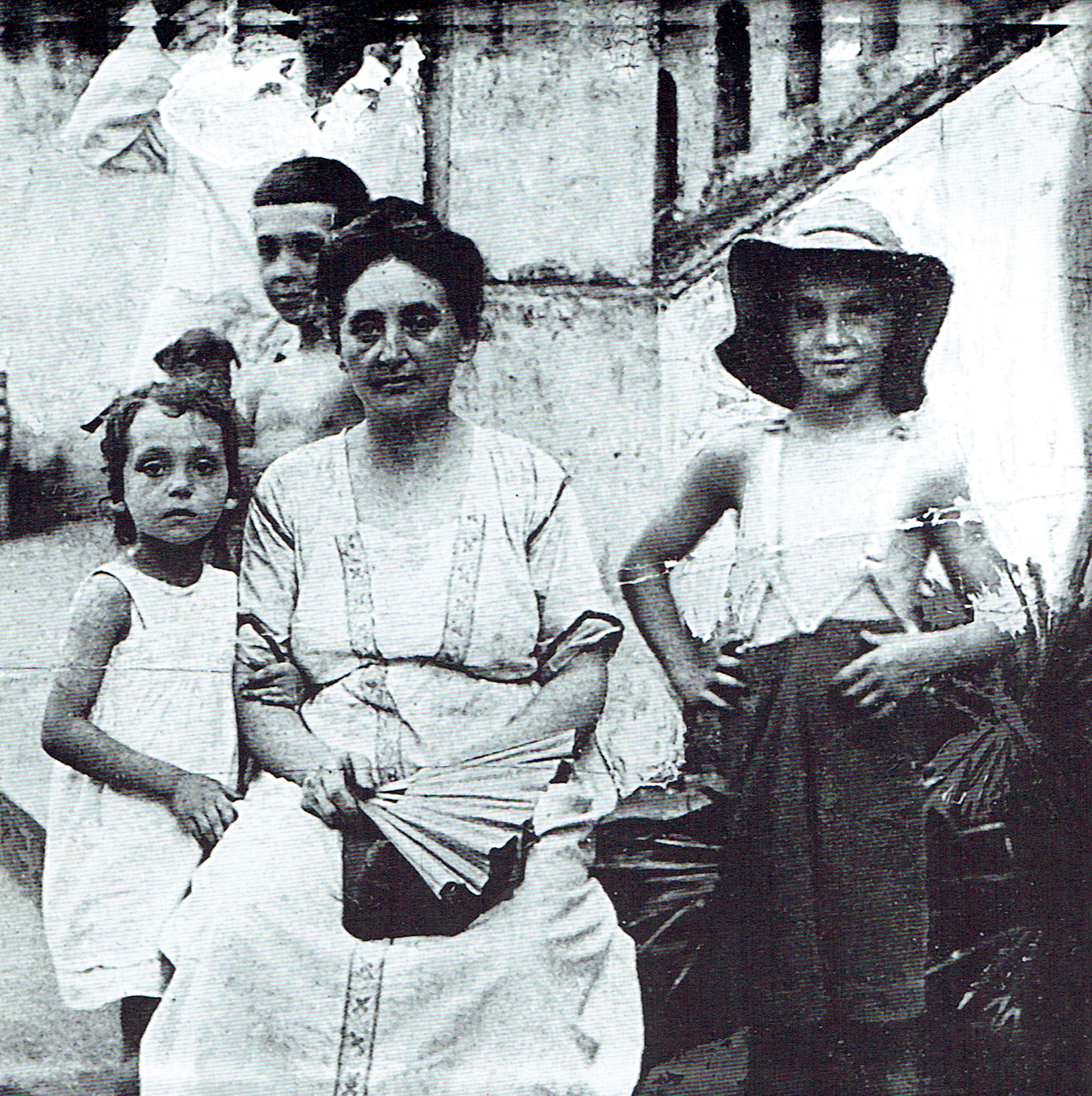
The 6-year-old Duras, her mother, and brothers.

From Marguerite Duras’s 1991 memoir, The North China Lover:

The lycée – the halls are full of students. The child is waiting against a column in the hall. She is isolated, facing outward.

The assistant principal passes by, touches her shoulder. He says:

“I’d like a word with you.”

She follows the assistant principal into his office.

“All right … Of course the students’ mothers have forbidden their daughters to have anything to do with you. You know that …”

The child smiles. She knows it.

“But it’s worse than that. The students’ mothers have informed the head of Lyautey that you aren’t sleeping regularly at the boarding school.” A slight irritation on the assitant principal’s part. “How they found out, I don’t know. You’ve been caught” – he smiles – in the dragnet of the mothers of the students of Saigon. They want their daughters to keep to their own kind. They say” – listen to this – “‘Why does she need a baccalaureate, that little tart? Middle school is enough for people like her …'”

Continue reading

Marguerite Duras on writing and “the doubt of solitude”

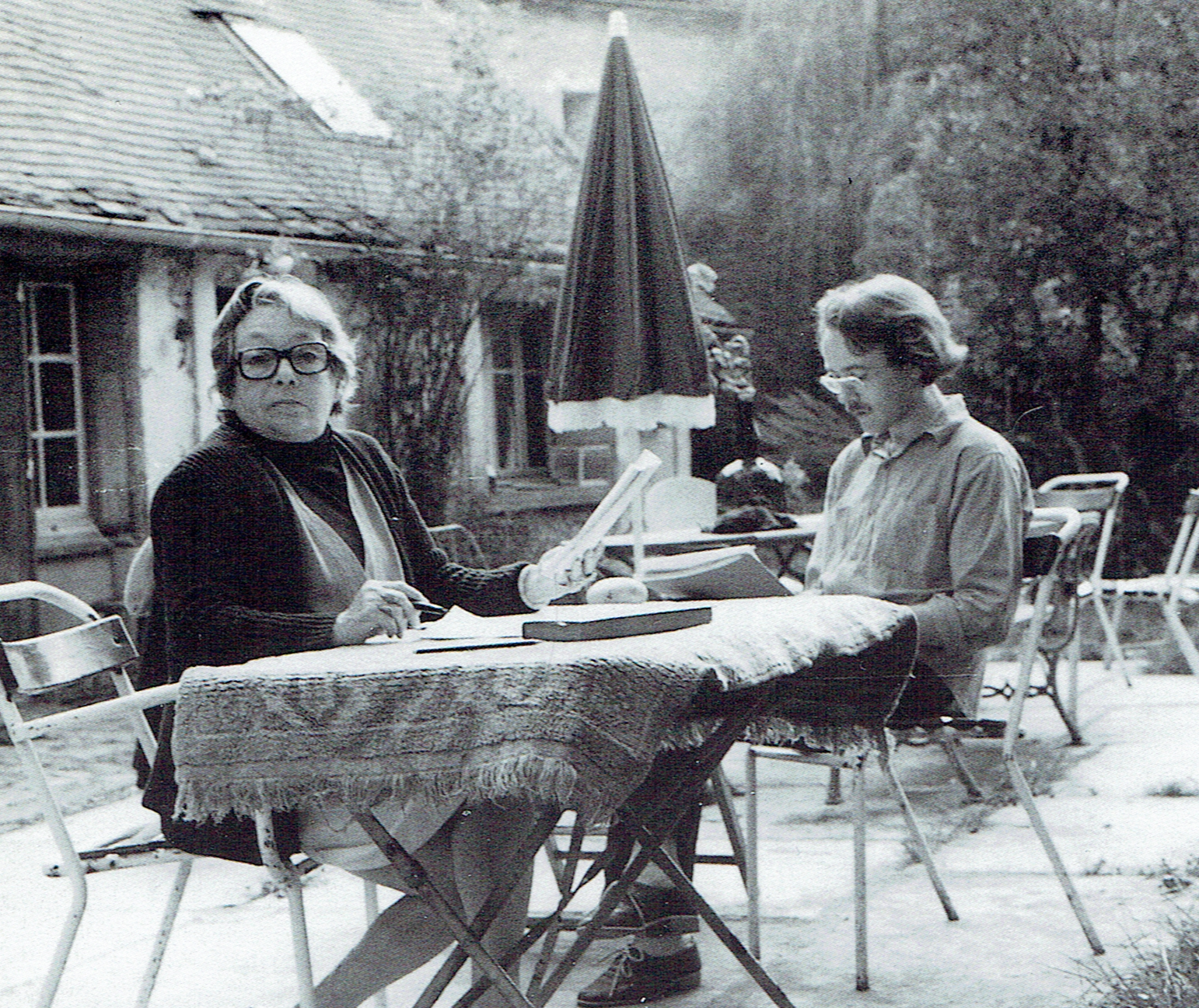
At the “house of writing” with Yann Andrea in the 1990s

One does not find solitude, one creates it. Solitude is created alone. I have created it. Because I decided that here was where I should be alone, that I would be alone to write books. It happened this way. I was alone in this house. I shut myself in – of course, I was afraid. And then I began to love it. This house became the house of writing. My books come from this house. From this light as well, and from the garden. From the light reflecting off the pond. It has taken me twenty years to write what I just said.

***

Finding yourself in a hole, at the bottom of a hole, in almost total solitude, and discovering that only writing can save you. To be without the slightest subject for a book, the slightest idea for a book, is to find yourself, once again, before a book. A vast emptiness. A possible book. Before nothing. Before something like living, naked writing, like something terrible, terrible to overcome. I believe that the person who writes does not have any ideas for a book, that her hands are empty, her head is empty, and that all she knows of this adventure, this book, is dry, naked writing, without a future, without echo, distant, with only its elementary golden rules: spelling, meaning.

***

In life there comes a moment, and I believe that it’s unavoidable, that one cannot escape it, when everything is put in doubt: marriage, friends, especially friends of the couple. Not children. Children are never put in doubt. And this doubt grows around one. This doubt is alone, it is the doubt of solitude. It is born of solitude. We can already speak the word. I believe that most people couldn’t stand what I’m saying here, that they’d run away from it. This might be the reason why not everyone is a writer. Yes. That’s the difference. That is the truth. No other. Doubt equals writing. So it also equals the writer. And for the writer, everyone writes. We’ve always known this.

I also think that without this primary doubt, there can be no solitude. No one has ever written in two voices. One can sing in two voices, and make music, and play tennis; but write? No, never. From the start I wrote books that were called political. The first was Abahn Sabana David, one of the ones I still hold dearest. I think that’s a detail, that a book can be more or less difficult to lead than ordinary life. It’s just that difficulty exists. A book is difficult to lead toward the reader, in the direction of his reading. If I hadn’t begun writing, I would have become an incurable alcoholic. It’s a practical state in which one can be lost and unable to write anymore… That’s when one drinks. As soon as one is lost with nothing left to write, to lose, one writes. So long as the book is there, shouting that it demands to be finished, one keeps writing. One is forced to keep up with it. It’s impossible to throw a book out forever before it’s completely written – that is, alone and free of you who have written it. It’s as horrible as a crime. I don’t believe people who say, “I tore up my manuscript, I threw the whole thing out.” I don’t believe it. Either what was written didn’t exist for them, or else it wasn’t a book. And when it isn’t a book, one always knows it. When it can never be a book, no, that one doesn’t know. Ever.

– From Marguerite Duras’s Writing, 1993

Marguerite Duras as Vietnamese heroine

Marguerite Duras’s 1950 The Sea Wall is one of several autobiographical novels, along with The Lover. The earlier book, which takes place in Indochina of the 1920s, tells of her mother’s desperate fight against the sea. Tricked by the local administrators into purchasing a useless concession of land with her life’s savings, she builds a sea wall to prevent the annual monsoon from flooding the land – but the wall is swept away with the first rains.  In Laure Adler’s Marguerite Duras: A Life, the biographer describes one unintended consequence of the widow’s hopeless struggle:

“Even today in Ho Chi Minh City learned old Vietnamese men will speak to you of Marguerite’s book The Sea Wall with their eyes full of tears. They’re moved not so much by the mother’s despair as by the passion with which Marguerite pays tribute to the men who died in the blistering heat, cutting and laying roads through the swamps for France. The men were chained together. Ordered to work them till they dropped, military leaders, veterans of the French colonial army, rounded up and oversaw political prisoners and poor peasants dying of starvation. Numerous testimonies speak of having seen groups of them dragging dead bodies around. This orally transmitted historical fact has never been properly recorded. Marguerite paid tribute to these unsung heroes who gave their lives for France. There are students in Vietnam today who still tremble with gratitude towards Marguerite Duras. She was the only one to speak of the children of the plain who the moment they were born were condemned to die of hunger, cholera or dysentery. ‘The children simply went back to the land like wild mountain mangoes, like the little monkeys from the mouth of the lagoon.'”