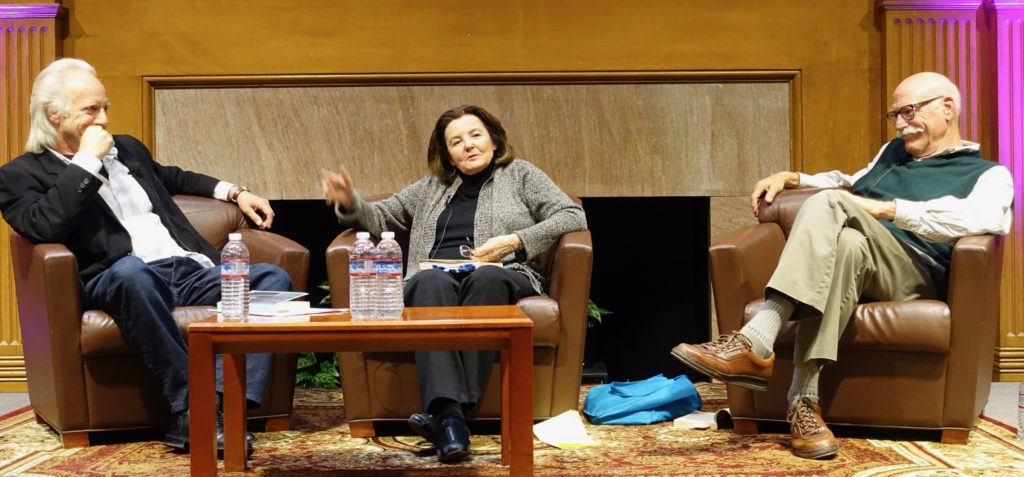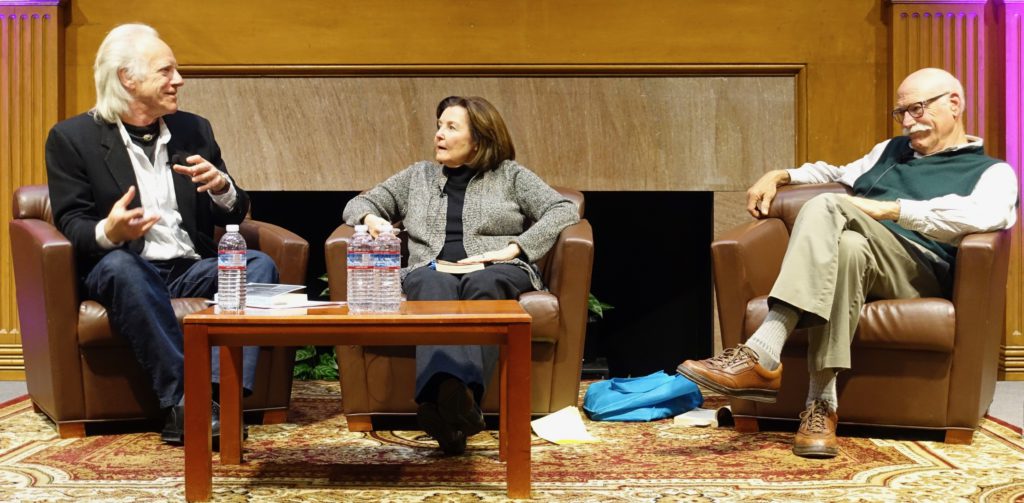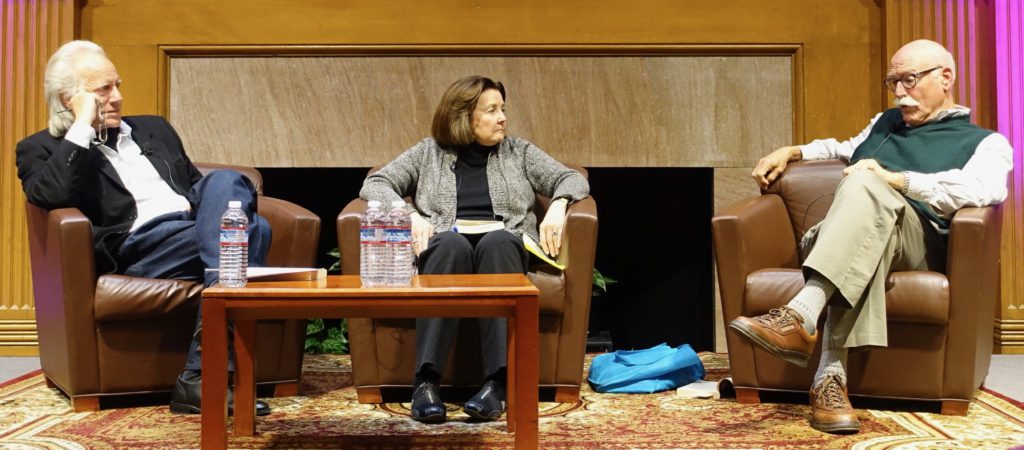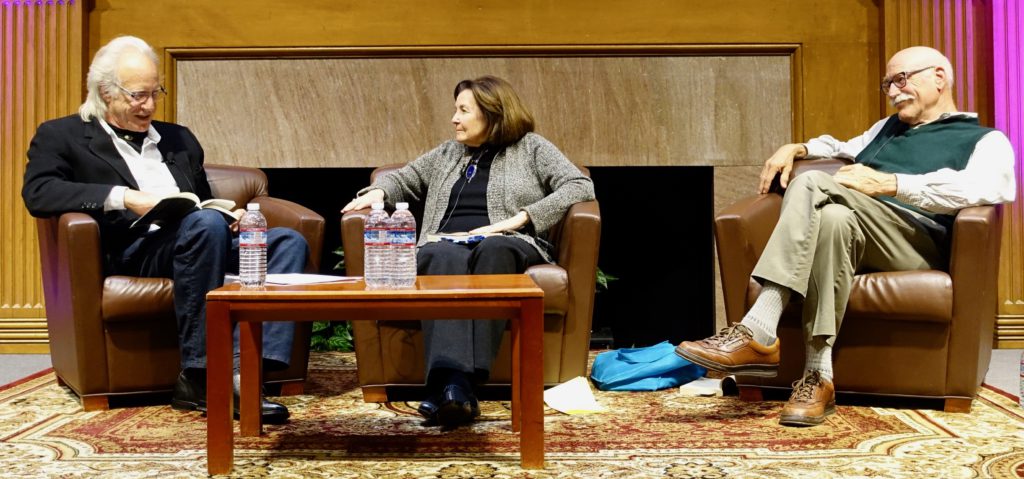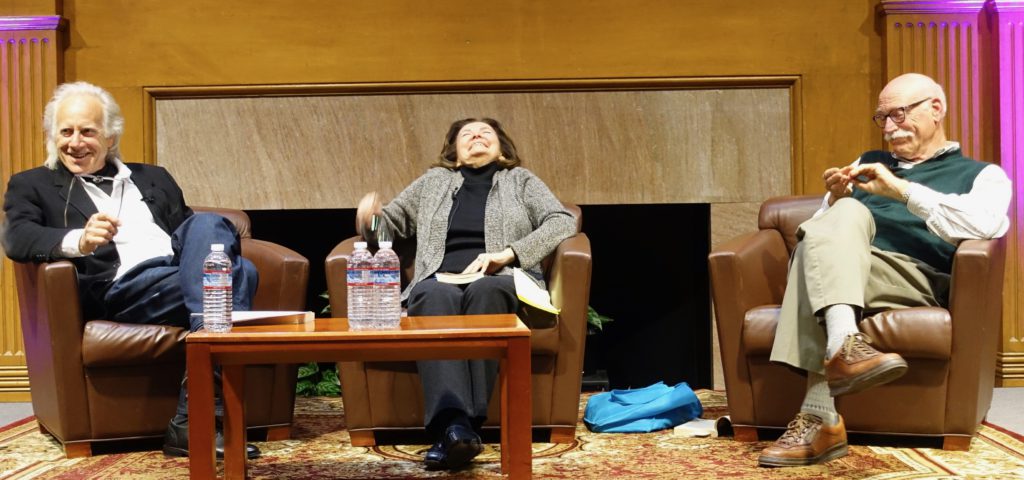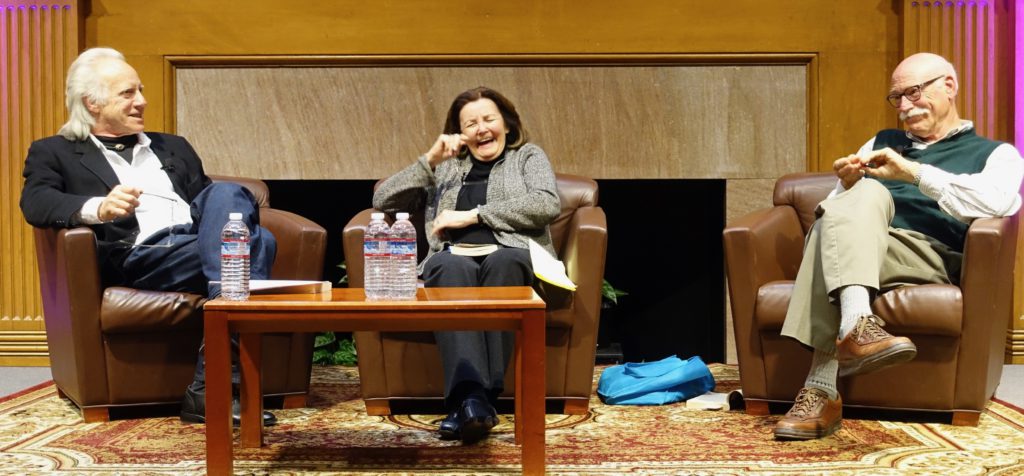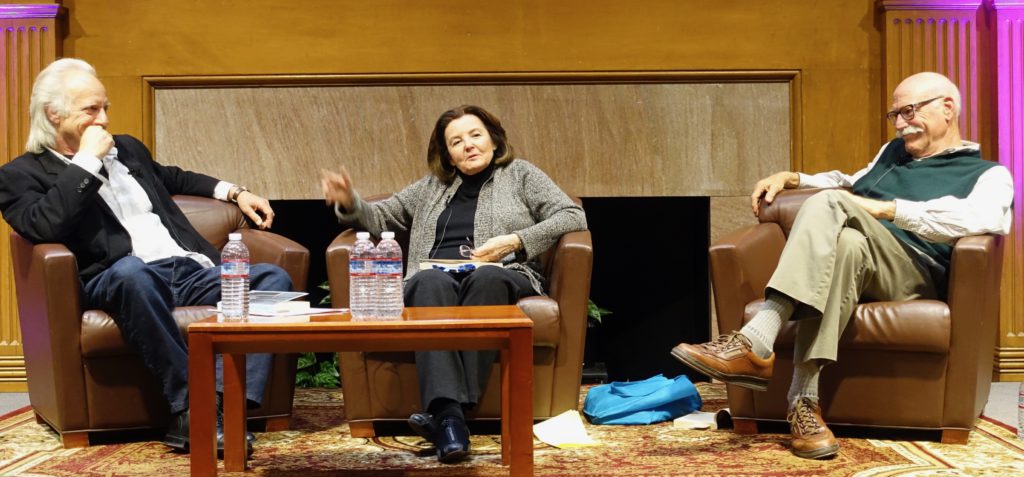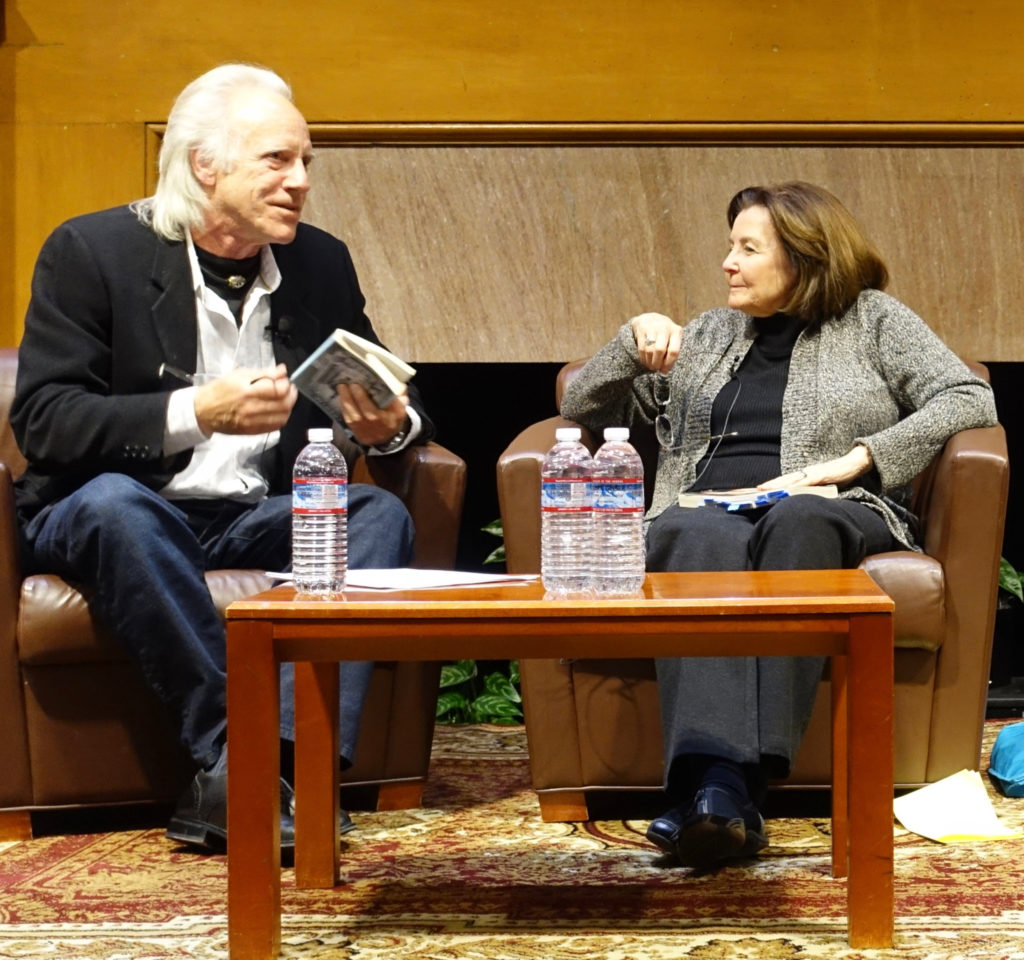
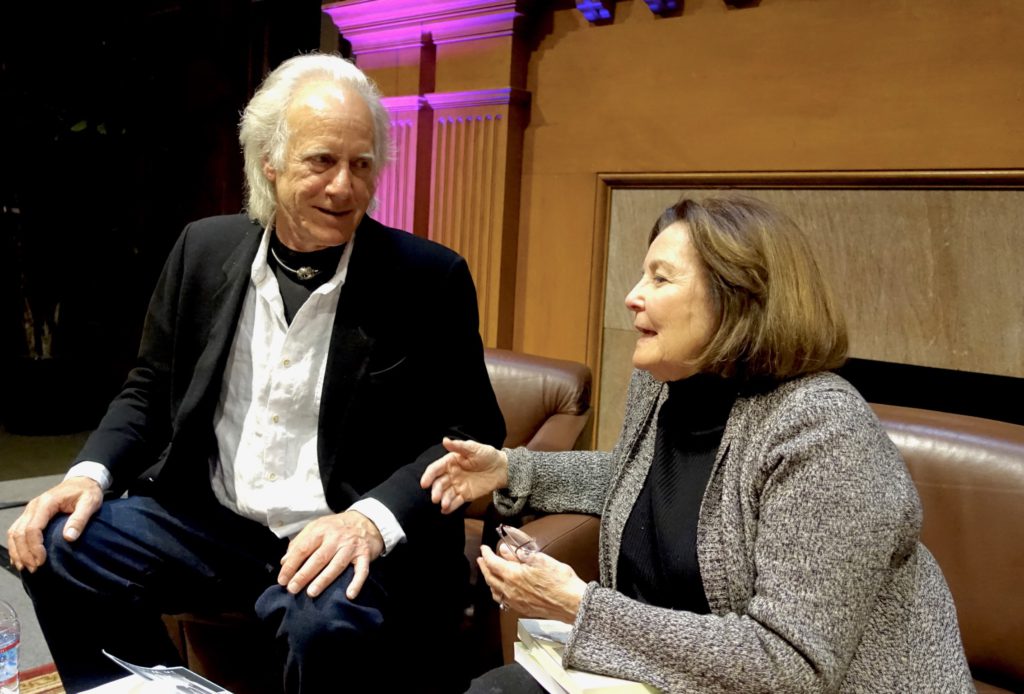
Liddie Conquest discusses Philip Larkin with Robert Harrison. (All photos by David Schwartz)
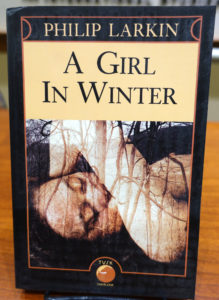
Monday, April 30, marked a notable event in the literary world: perhaps the first-ever discussion of poet Philip Larkin‘s 1947 novel, A Girl in Winter at a top-ranking university. If the event does have a precedent, it’s unlikely to have matched the high-caliber expertise assembled at the Bechtel Conference Center that night. Another Look Director Robert Pogue Harrison moderated the discussion. The Stanford professor also hosts the popular talk show, Entitled Opinions, and contributes regularly to the New York Review of Books. He was joined by renowned author and National Medal of Arts winner Tobias Wolff, professor emeritus of English at Stanford.
Literary scholar Elizabeth Conquest, universally known as “Liddie,” completed the trio of panelists. She knew Philip Larkin personally—he was a close friend of her late husband, historian and poet Robert Conquest—and has written about Larkin’s poetry.
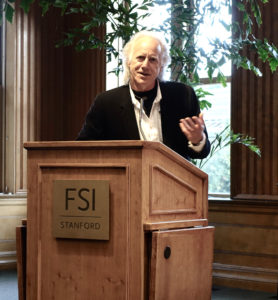
Robert Harrison introduces the book.
Some said it was our best event ever – one compared it to a delightful dance for three, to a “delicious effect.” Another said simply that they wished we had four events a year, rather than three.
Robert’s introduction of Larkin’s forgotten early novel riffed on the opening lines of the overlooked classic, originally titled The Kingdom of Winter: “There had been no more snow during the night, but because the frost continued so that the drifts lay where they had fallen, people told each other that there was more to come. And when it grew lighter, it seemed that they were right, for there was no sun, only one vast shell of cloud over the fields and woods…”
The little-known novel takes place in wartime England, where a young refugee from Europe named Katherine Lind tries to recover her life while working in a provincial library. Meanwhile, she recalls a memorable summer with the Fennel family in England before the war, and a near-romance with the son Robin.
 The sparks were lively and the balance of personalities was effective and harmonious. Toby’s background as a soldier was helpful in explaining Robin’s emotional state at the end of the book, and he also shared some chilling details of the destruction of Larkin’s hometown, Coventry. Liddie reflected on Larkin’s life and poetry – and she also shared a passage he wrote in a 1977 letter to her husband. The three discussed in detail the signficance of the noisy tick-tock of Katherine’s watch. But I won’t spoil it for you by quoting the end of the book, only part of the penultimate paragraph instead:
.